English
  简体中文
简体中文  한국어
한국어 


How Can Current Measurement Offset Make Coulombic Efficiency Appear to Exceed 100%?
One common reason that measured coulombic efficiency…

One common reason that measured coulombic efficiency…

A common end-of-life criterion for lithium-ion cells…

1. Introduction 1.1 Background Arbin DataWatcher is primarily used as…

1. Introduction Battery testing is fundamentally a measurement task. Whether evaluating cycle life…
Four notes most engineers read first.
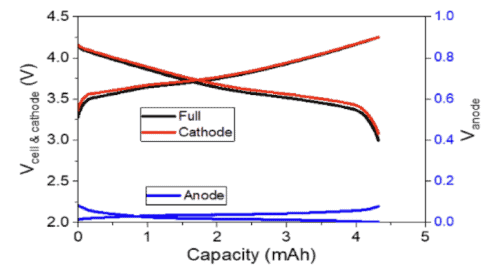
Introduction The Arbin Auxiliary Voltage Input Module enables precise, high-resolution voltage monitoring for battery testing applications that require measurements beyond the standard I/V channels. Typical use cases include monitoring individual cell or module voltages within a larger pack, measuring reference electrodes in three-electrode cells, or comparing BMS data with directly measured values. Each module supports […]
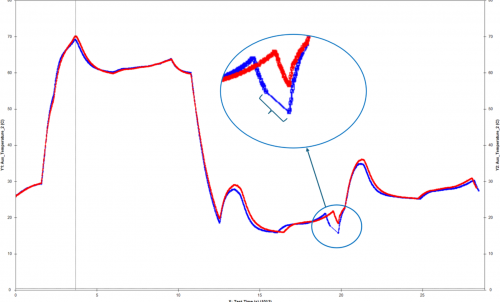
Introduction Battery temperature measurement is essential for evaluating safety, longevity, and performance in modern testing environments. Arbin supports three primary sensor technologies—thermocouples (Type T and K), RTDs (PT100), and thermistors (10kΩ)—each available through dedicated auxiliary input modules. These sensors enable precise temperature control, monitoring, and safety logic throughout battery R&D and production Description Battery testing […]
MTCI Introduction Arbin’s MTCI (Multi-Temperature Chamber Interface) module offers seamless and sophisticated integration with third-party environmental chambers, enabling direct control of temperature and humidity setpoints from within the Arbin test schedule. This streamlined setup allows test engineers to program and adjust environmental conditions alongside electrical cycling parameters, eliminating the need for separate chamber control systems. […]
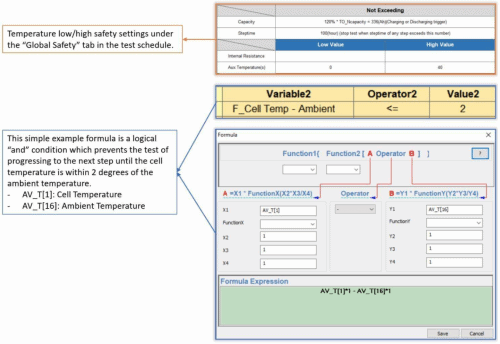
Importance of Temperature Monitoring in Battery Testing Accurate temperature monitoring is a critical aspect of battery testing to ensure both safety and data integrity. One key application is the prevention of thermal runaway or overheating during test procedures. When a battery exceeds a predefined temperature threshold, the test must be safely halted to protect the […]
Send us your test plan. An Arbin applications engineer will recommend a system and write the first schedule with you.