 English
  简体中文
简体中文  한국어
한국어 
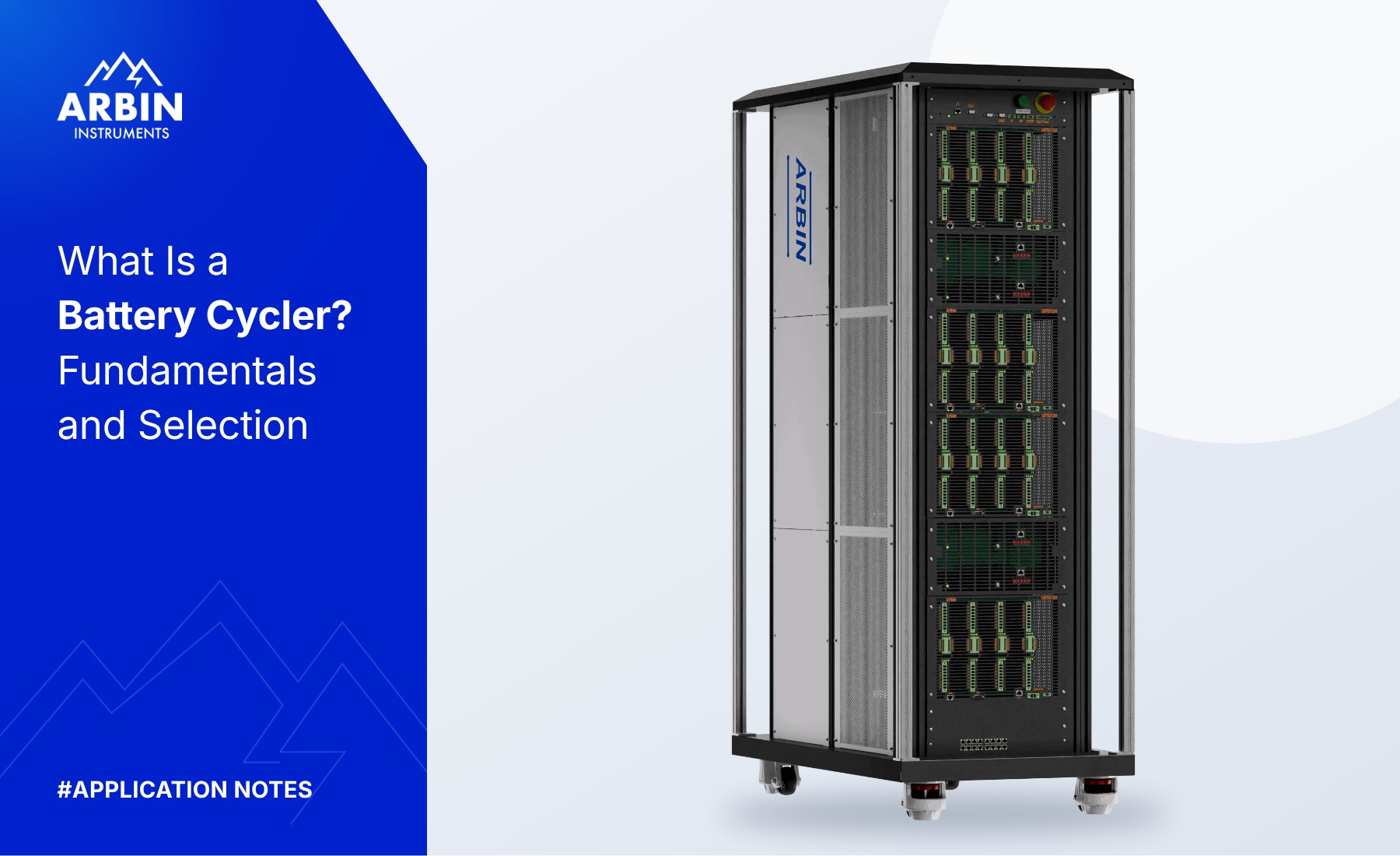


Cell Testing Systems
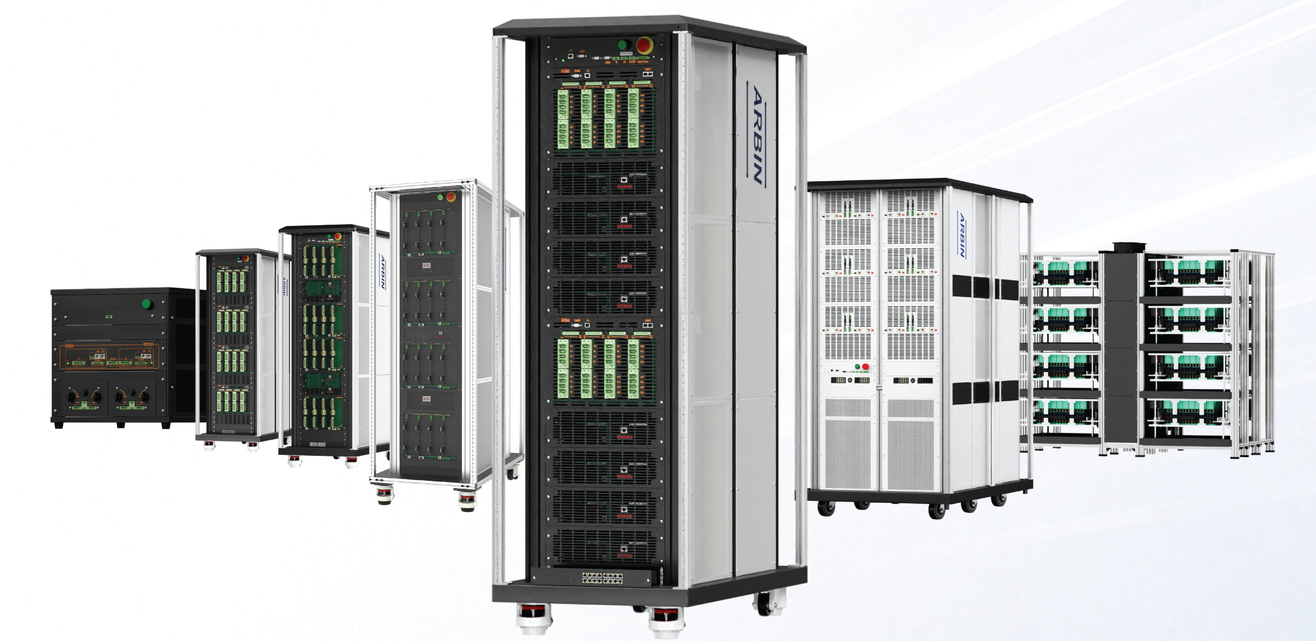
Battery Cell Testing from 10µA to 1,600A
From low-current, high-precision materials research on coin cells to high-current testing of large-format cells, Arbin provides battery cyclers for laboratory R&D and industrial-scale testing - all operated through one software platform.
Accuracy you can audit
Measurement accuracy is held across all voltage and current ranges, with precision published as a separate specification.
Independently verified
Built under an ISO 9001:2015-certified quality system, with calibration through an ISO/IEC 17025-accredited laboratory.
View Certificate (PDF) →35 years of instrumentation
Founded in 1991, reinvesting 30% of profits into R&D, which funds the precision architecture in every test station.
Built for any lab
Scalable channel density in a compact, air-cooled footprint, with open Python and C# APIs for automation you already run.
Find the Right Cell Testing Platform
From µA research cells to 256-channel production QC — explore Arbin's cell testing systems below.
Cell Testers - Laboratory & Industrial Scale
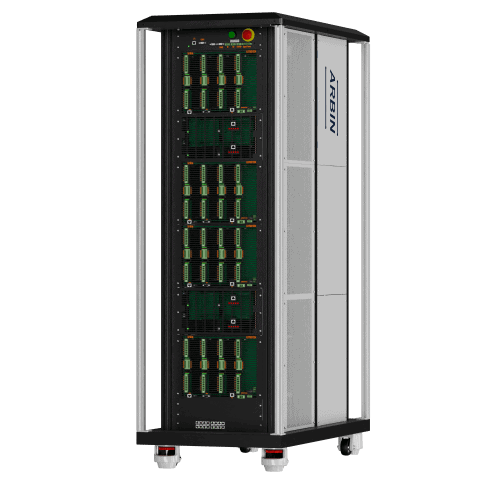
Flagship Product
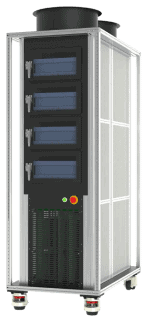
LBTS-Cell
0-5V/0-10V · 10µA–500A
Arbin's core cell testing platform — precision cycling for research through high-throughput cell QC, scalable from a single bench to a full cabinet.
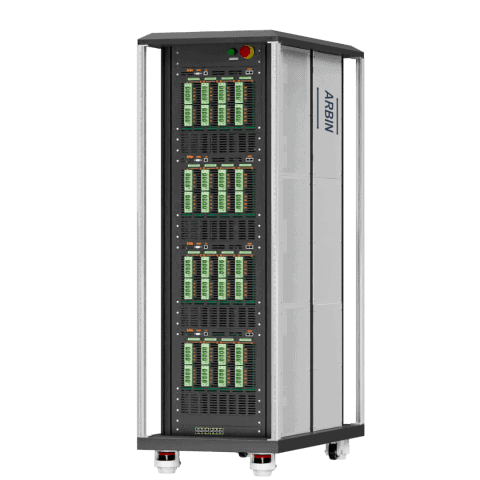
Regenerative
RBT-Cell
0-6V/0-20V · 100A–1,600 A
High-current cell cycling with energy-regenerative architecture - built for high capacity cells, from 100A up to 1,600A in parallel.
Incoming QC & Quality Control
LBTS-Cell High Throughput
0-5V · 1 mA–10 A/channel · 256+ ch
Built for high-volume incoming inspection — maximum channel density per chassis, tuned for QC line speed rather than research-grade range coverage.
Benchtop Systems For Small-Scale R&D
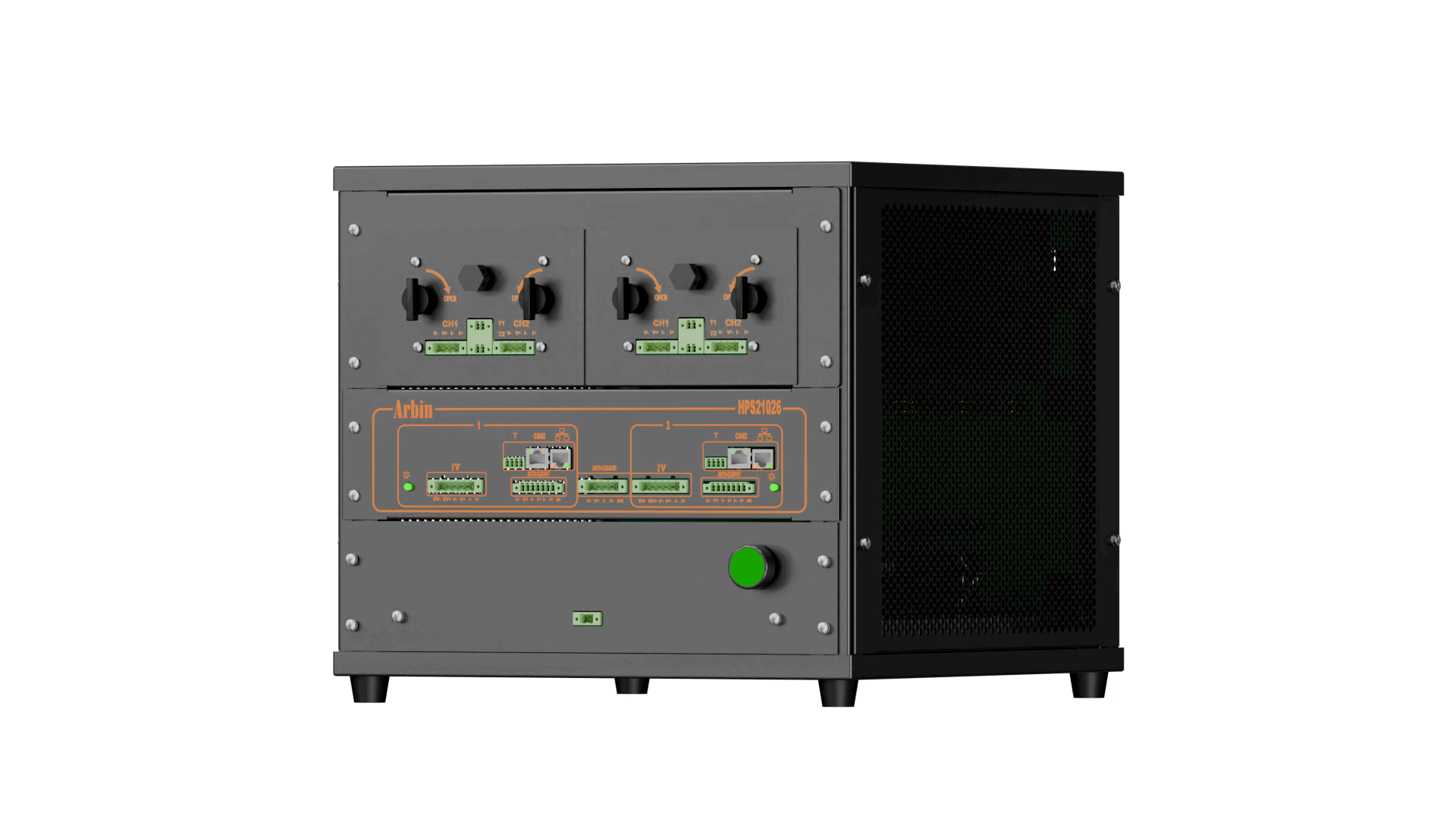
Ultra-High Precision - Optional Integrated Chamber
Ultra-High Precision (HPS)
100 µA–5 A/channel · 2 ch per unit
Arbin's highest-precision benchtop platform — below 10 ppm precision for research that relies on measurement precision.
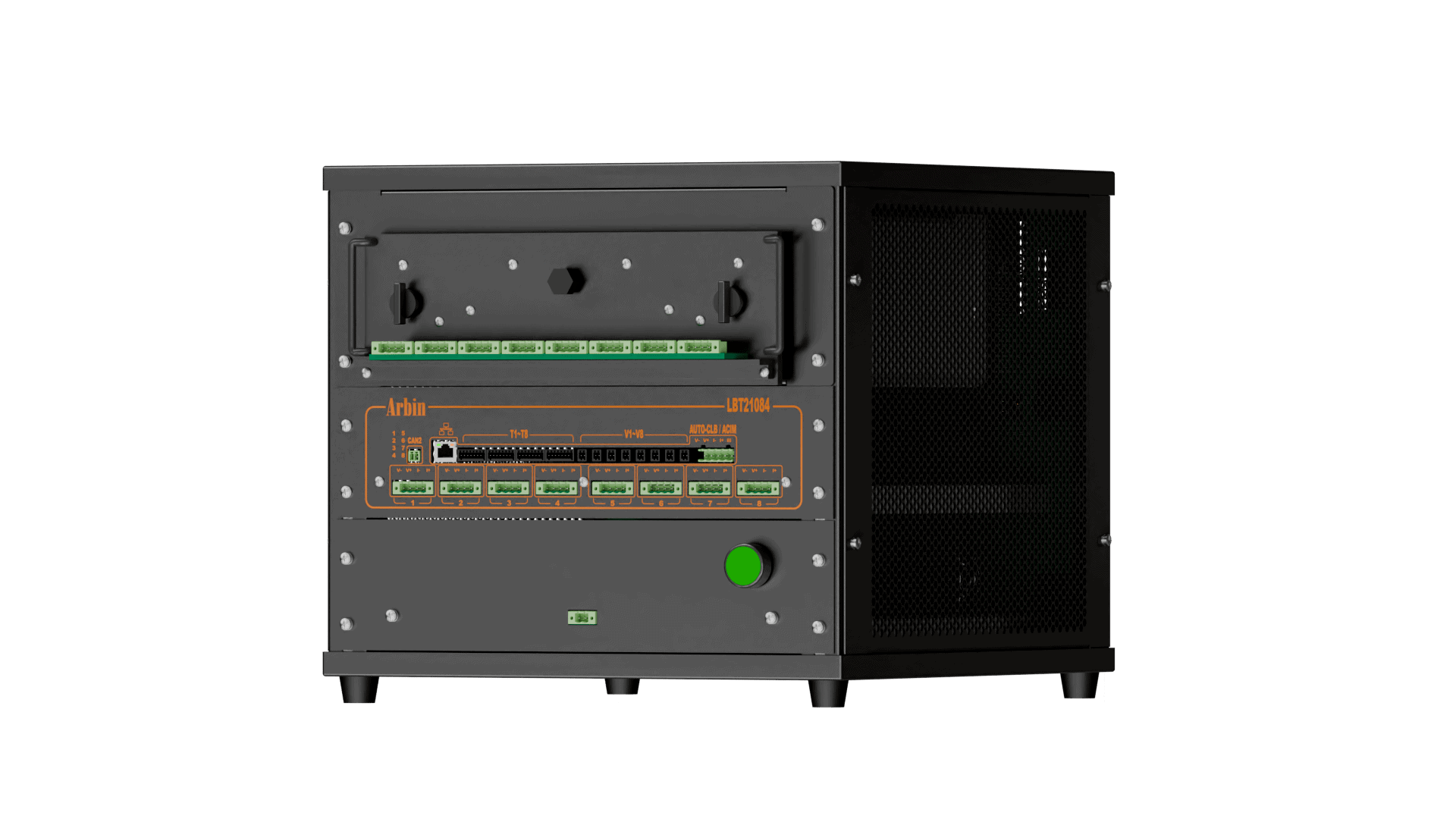
All-Purpose - Optional Integrated Chamber
LBT-Benchtop
0-5V/0-10V · 5A–10A · 8-16Ch
Arbin's workhorse benchtop tester — portable and rackable, built for small-scale research, capacity grading, and everyday cell characterization.
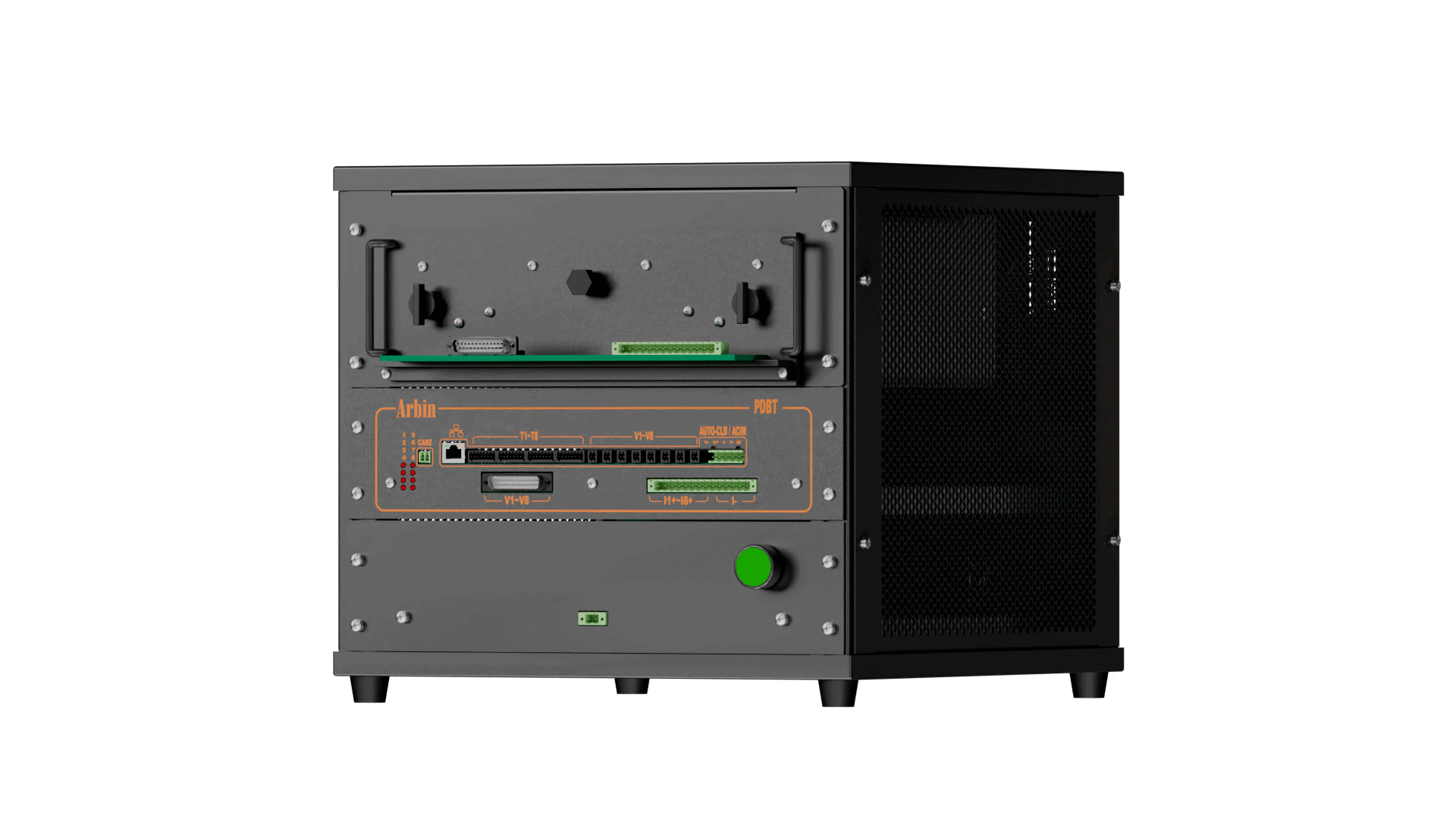
Parallel Cell Testing
PDBT
0-5V · 1 mA–10 A/channel · 8Ch
Parallel-Differential Battery testing is a novel way to use a single cell to test a group of cells in parallel.
Battery Cycler with Integrated Temperature Control

Turnkey Battery Testing - Cycler + Chamber
LBTS-MZTC
5–20 A/channel · 32 ch · 16 chambers
LBTS-Cell cycling with a multi-zone thermal chamber built in — one system, one footprint, no third-party chamber integration required.

Individual Cell-Level Temperature Control
Smart Battery Tray
30–200 A/cell · 4–96 ch
Each cell holder integrates an individual thermoelectric cooler and connects directly to its corresponding LBT test channel, enabling fully independent temperature control on every channel—without shared chambers or complex external cabling.
Which cell testing platform fits your work?
Eight systems across three categories. The comparison table below has the full numbers — this is the reasoning behind which one suits which job.
Not sure which applies? Send your cell format, current and voltage requirement, and channel count, and an application engineer will come back with a specific configuration.
One software platform, every test method
A schedule validated on a benchtop LBT runs unchanged on a 256-channel cabinet, because test design, execution, data and automation belong to one platform rather than four tools bolted together. Every channel is an independent potentiostat and galvanostat, so electrochemical characterization and long-run cycling run on the same hardware and land in one time-aligned dataset.
The MITS platform
Four layers, one codebase — from schedule design through to database and API integration.
What you can run on these channels
Every method below is built and executed in the same platform above, on any system on this page.
Most methods are built through the menu-driven interface, with Lua scripting and ArbinCTI available where a protocol needs external control or adaptive logic. MITS runs on Windows, macOS and Linux from one codebase, and previous generations — MITS 11, MITS 10 and MITS 8 — remain supported.
Side by Side
Compare Arbin Cell Testing Systems
Compare each platform by application, current range, channel range, and temperature-control capability.
| Product | Best For | Current Range | Channel Range | Temperature Control |
|---|---|---|---|---|
| Core Cell Cyclers | ||||
| LBTS-Cell All-Purpose High-precision linear cell cycler | General cell R&D, characterization, lifecycle testing, grading, and incoming quality control. | 10 µA–500 A/channel Wide range of low- and high-current configurations | 4–256 Configuration dependent | MZTC or external chamber Temperature setpoints and safety limits can be synchronized with the test. |
| RBT-Cell Regenerative High-current regenerative cell cycler | High-current cells, fast-charge development, pulse testing, and energy-efficient long-term cycling. | 100–400 A/channel Up to 1,600 A with channel paralleling | 4–64 Voltage and current dependent | MZTC or external chamber Supports synchronized temperature profiles and temperature-based safety limits. |
| LBTS-Cell High Throughput High Throughput High-density cell testing system | Incoming cell quality control, grading, validation, and large-scale repetitive testing. | 1 mA–1 A or 10 A/channel High-density 1 A and 10 A configurations | 192 or 256 Per system | External chamber integration Designed for high-density racks, holders, and controlled test environments. |
| Benchtop & Specialized Research | ||||
| LBT-Benchtop Compact Laboratory Battery Tester | General laboratory research, capacity testing, aging, quality control, impedance, and self-discharge measurement. | 100 µA–10 A/channel 1 A, 5 A, and 10 A models | 8–16 8 channels with integrated chamber | Benchtop or integrated chamber Available as a standalone cycler or an all-in-one temperature-controlled system. |
| HPS Ultra-High Precision High-Precision Battery Tester | Coulombic-efficiency testing, materials research, and early detection of small battery degradation trends. | 100 µA–5 A/channel Six automatically selectable current ranges | 2 Per benchtop unit | Benchtop or integrated chamber Integrated version provides independent temperature control for both cell positions. |
| PDBT Parallel Testing Parallel Differential Battery Tester | Cell-to-cell comparison, parallel current-sharing behavior, cell matching, and self-discharge measurement. | 1 mA–5 A Four current ranges | 8 Parallel differential channels | Integrated chamber One controlled chamber with eight integrated cell fixtures. |
| Integrated Temperature-Control Systems | ||||
| LBTS-MZTC Turnkey Integrated cycler and multi-zone thermal system | Multi-temperature cell development, validation, and electro-thermal characterization in one complete system. | 5, 10, or 20 A/channel Four current ranges per channel | 32 Integrated test channels | 16 isolated chambers Thirty-two integrated cell fixtures with independently managed temperature setpoints. |
| SBTR Cell-Level Thermal Smart Battery Tray | Fast-charge and high-rate testing of 18650, 21700, and large-format 46xx cylindrical cells. | 30–200 A/cell Configuration and cell-format dependent | 4–96 Standalone trays or integrated racks | Individual TEC per cell Independent closed-loop heating and cooling for every cell position. |
Product-family ranges are summarized for comparison. Available current, channel-count, voltage, and thermal-control combinations depend on the selected system configuration.
Built on high-precision measurement
A cycler is a metrology instrument, and its value over a test programme depends on whether the specification it was sold on still holds months later. The four points below cover where Arbin's measurement architecture comes from, how it is verified, and what it measures to.
A complete test system, not just a cycler
A cycler on its own rarely produces a usable result, because the quality of the data depends as much on how the cell is held, cooled and measured as it does on the channel driving it. Arbin specifies all six layers together against your cell format and test plan, so the connections, thermal control, auxiliary measurement and software are matched to the electrical configuration rather than assembled around it afterward.
Battery cycler & test channels
Channel selection follows the cell rather than the catalogue, since the voltage window, peak current, pulse requirements and measurement resolution together determine which channel architecture applies and how many will fit in a chassis.
Cell holders & cabling
Contact resistance enters the measurement directly, which is why every connection is 4-wire Kelvin and why holders, trays and racks are matched to the cell geometry and the test current rather than adapted from a general-purpose fixture.
Temperature control
Temperature is either a controlled variable or an uncontrolled source of error, so the approach depends on how tightly the study needs it held — a synchronized external chamber, multi-zone MZTC chambers, or independent thermoelectric control at each cell position.
Auxiliary measurements & EIS
Signals recorded on separate instruments are difficult to reconcile afterward, so auxiliary temperature, reference-electrode measurements and integrated Gamry EIS are captured on the same timebase as voltage and current in a single dataset.
Test software, data & automation
The same platform runs from a benchtop unit to a 256-channel cabinet, so a validated schedule transfers without rework, and the resulting data is queried directly from the database rather than exported and reassembled.
Calibration & technical support
A specification only means something if it still holds months into a study, which is why calibration is handled through Arbin's ISO/IEC 17025-accredited laboratory and supported by engineers who work on the test programmes themselves.
Every layer is specified against your cells, not sold as a bundle. Send us what you are testing and an application engineer will come back with a configuration matched to it.
Contact UsThe six parameters, and where we land on each
These six parameters decide whether the numbers a cycler returns are good enough to draw a conclusion from, six months into a test. The right-hand column is the question worth putting to every vendor on your shortlist.
| Parameter | What it decides | Arbin cell systems | Ask any vendor |
|---|---|---|---|
| Resolution | The smallest change the circuitry can represent at all. Below it, an effect is simply absent from the data. | 24-bit One part in 16,777,216, on voltage and current alike, on every system on this page. | How many bits? 16-bit is the common industry standard, and it is 256 times coarser. |
| Precision | The noise floor. It sets whether a small real difference is visible or buried. | ±0.01% FSR 100 ppm, specified separately for voltage, current and time. | Is precision a hardware specification, or derived from averaged calculations and slow logging? |
| Accuracy | Whether the value is correct, not merely repeatable. An instrument can be precisely wrong. | ±0.02% FSR Published as its own figure, never merged with precision. | Can you give accuracy and precision as two separate numbers? |
| Timebase | Capacity is a time integral, so clock error is capacity error. Rarely published. | 5 ms minimum step Time accuracy under 20 ppm, with accumulated error held in check. | What is your time accuracy, and the accumulated error over a long test? |
| Stability | Whether the rated specification still holds after months, and as lab temperature shifts. | ~0.000185% / °C Patented shunt design, developed with Sandia's metrology group. | What is the temperature coefficient of your accuracy specification? |
| Range switching | Whether one channel covers microamps and full-rate current while keeping its specification. | 2 or 4 ranges Per channel, auto-selecting, including during constant-voltage control. | Does the accuracy specification still apply on the lowest range? |
Arbin has built cell cyclers to these parameters since 1991, including a three-year ARPA-E program with Ford Motor Company and Sandia National Laboratories aimed specifically at high-precision, high-current testing.
Tell us what you are testing
Most configurations are settled in a single conversation, because the four things below narrow the options far faster than a catalogue does. Send them across and a sales engineer will come back with the system that fits, the channel count it takes, and what it needs from your facility.
