 English
  简体中文
简体中文  한국어
한국어  Deutsch
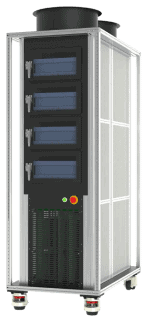
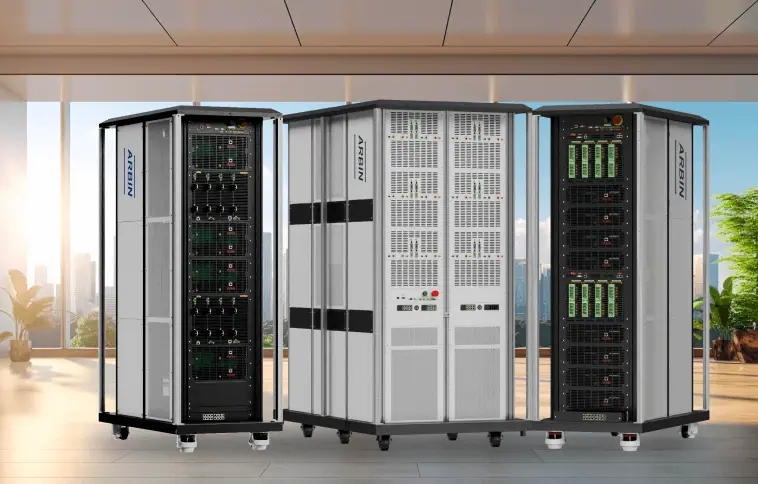






High-Density Battery Cell Testing
LBTS-Cell High Throughput
Purpose-built for incoming quality control, cell grading, validation, and large-scale repetitive testing - with up to 256 independent test channels in a single rack.
192 - 256
Channels per chassis
±0.02% / ±0.01%
FSR accuracy / precision
1A or 10A
Per channel current
24-bit
1 part in 16,777,216
Accuracy you can audit
Measurement accuracy held across all voltage and current ranges, with precision published as a separate specification.
Independently verified
Designed and manufactured under an ISO 9001:2015-certified quality system, supported by an ISO/IEC 17025-accredited testing and calibration laboratory.
35 years of instrumentation
Founded 1991. Arbin reinvests 30% of profits into R&D, funding the precision architecture provided with every Arbin test station.
Built for any lab
Scalable channel density in a compact, air-cooled footprint, with open Python and C# API for the automation you already run.
Highlights of the LBTS-Cell High Throughput Series
Four hardware decisions that separate the LBTS-Cell High Throughput from a conventional cycler, and what each one changes about the data you create.
Up to 256 Channels
high-density cell testing
Test more cells in less space
Run up to 256 independent cell tests in a single chassis, reducing tester footprint while increasing overall laboratory throughput. Each channel remains independently controlled, so cells can start, stop, or fail without interrupting the rest of the batch.
2 Current Ranges
auto-selecting, every channel
Provides the widest range of accurate output and measurement
Arbin was first to put multiple current ranges on a single test channel. Ranges select automatically, including during constant-voltage control, and the rated specification follows them.
Built for Cell Grading & QC
repeatable testing at scale
Turn large cell populations into usable data
Designed for incoming quality control, grading, sorting, and repetitive validation. Apply the same test procedure across hundreds of cells while maintaining independent measurement and control on every channel.
Precision at High Channel Count
±0.01% precision · 24-bit resolution
More channels without sacrificing measurement quality
High throughput does not require low-quality data. Every channel retains Arbin's precision measurement architecture, 24-bit voltage and current measurement, and independent control.
More cells. Same measurement confidence.
High-throughput testing should increase the number of cells under test—not lower the quality of the data. LBTS-Cell High Throughput combines channel density with Arbin’s independent control, precision measurement and flexible test scheduling.
High density by design
Concentrate 192 or 256 independent channels in one cabinet to test more cells without multiplying floor space.
Independent channel control
Run, pause and monitor each cell separately—even when channels share a common test program.
Two ranges per channel
Maintain a dedicated low-current range while preserving the full 1 A or 10 A capability of each channel.
Repeatable at scale
Apply consistent procedures across large cell populations for screening, grading, validation and lifecycle work.
256 independent positions
Illustrative channel map. Every tile represents one independently controlled test channel.
LBTS-Cell or LBTS-Cell High Throughput?
Both platforms provide precision, independent cell testing. Choose based on whether your priority is maximum test flexibility or maximum channel density.
LBTS-Cell
Optimized for battery R&D, characterization, and applications requiring a wider operating range and greater test flexibility.
Applications and Test Methods
Each channel operates as an independent potentiostat and galvanostat, so one chassis covers electrochemical characterization and long-run cycling at the same time.

Incoming QC and cell grading
Grade and sort incoming cells against your own pass criteria. Up to 256 channels per chassis with per-channel independence, so one failed cell never stalls a batch.

Impedance and electrochemical analysis
Every channel acts as an independent potentiostat/galvanostat. Native DCIM plus integrated Gamry EIS to 100 kHz put cycling and impedance in one time-aligned dataset.

Automated and adaptive testing
Drive the tester from your own software. ArbinCTI over TCP/IP plus Lua scripting support BMS emulation, digital twins, and adaptive fast-charge strategies.
Supported Test Methods
Electrochemical
- GITT — galvanostatic intermittent titration
- PITT — potentiostatic intermittent titration
- Cyclic and linear sweep voltammetry
- Chrono-amperometry and potentiometry
- EIS to 100 kHz
- Symmetric-cell testing
- Multi-electrode and reference-electrode work
Cycling and lifetime
- Battery life cycle testing
- dQ/dV analysis
- High-precision coulombic efficiency
- Self-discharge current measurement
- DCIR and pulse characterization
- Real-world drive-cycle simulation
- High-speed pulse testing
Production and QC
- Incoming quality control
- Cell-level grading and sorting
- Formation and cell finishing
- End-of-line testing
- Fast-charge optimization
Voltage, Current, and Channel Ranges
Two high-density configurations optimized for incoming quality control, cell grading, and large-scale repetitive testing.
| Voltage Range | Current Ranges per Channel | Channels per Chassis |
|---|---|---|
| 0 to 5 V | 1 mA / 10 A | 192 |
| −5 to 5 V | 1 mA / 1 A | 256 |
All configurations use independent channels, 24-bit voltage and current measurement, ±0.02% FSR accuracy, and ±0.01% FSR precision.
Comparing systems?
High channel count alone does not make a high-throughput tester. These four parameters determine how efficiently you can test large cell populations while maintaining useful, repeatable data.
| Parameter | Why It Matters | LBTS-Cell High Throughput | Ask Any Vendor |
|---|---|---|---|
|
Channel Density
|
More channels per chassis reduce rack space, infrastructure, and the number of separate testers required to process a large population of cells. |
Up to 256 channels
256 × 1 A or 192 × 10 A independent channels in a single chassis.
|
How many fully independent test channels fit in one chassis at my required current? |
|
Precision
|
QC and grading depend on separating real cell-to-cell variation from tester uncertainty. Poor precision can make good cells look different—or different cells look the same. |
±0.01% FSR
100 ppm measurement and control precision with 24-bit voltage and current measurement.
|
Is precision published separately from accuracy, and does the specification apply to every channel? |
|
Channel Independence
|
Large batches rarely behave identically. A failed, completed, or out-of-spec cell should not interrupt the test running on neighboring channels. |
Fully independent
Every channel has independent control, measurement, safety limits, and test scheduling.
|
Can every channel start, stop, change state, or enter a safety condition without affecting the rest of the batch? |
|
Current Range
|
A lower measurement range improves resolution and accuracy when measuring small currents, while a higher range provides the current needed for normal cycling. |
Dual-range architecture
1 mA / 1 A on the 256-channel configuration and 1 mA / 10 A on the 192-channel configuration.
|
Does each channel include a dedicated low-current measurement range, or is the full-scale range used for every measurement? |
Software and Safety
The two questions a lab asks after the specifications check out: can my team actually drive it, and what happens when a cell misbehaves.
MITS Software
MITS scales from basic charge–discharge cycling to complex protocols with nested conditions. Most tests can be built through the menu-driven interface, while Lua scripting and ArbinCTI are available for advanced automation and external control
- ✓ 30+ programmable control types, 90+ meta variables, and up to 9 nested loops
- ✓Up to 127 reusable sub-schedules, so a validated procedure gets called rather than rebuilt
- ✓Adaptive logging raises acquisition rate during transients and state transitions
- ✓DataWatcher queries the SQL database directly — filter by channel, barcode, or cycle count, overlay up to 9 plots
- ✓PostgreSQL, Microsoft SQL Server, and Apache Kafka streaming
- ✓ArbinCTI TCP/IP API plus Lua scripting for BMS emulation and adaptive control

Safety Architecture
Protection is distributed across channel hardware, an independent controller, and step-level software limits. Critical safeguards remain active independently of the test sequence.
- ✓Independent safety monitoring checks voltage, current, and temperature limits without relying on the test control loop
- ✓Hardware E-Stop with all-pole disconnection, plus a dry-contact circuit for facility-wide remote trip
- ✓Hardware voltage clamps on high-current modules; protective fuses in every I/V channel board
- ✓Test Object profiles auto-set thresholds from the cell spec and block a test on reverse polarity
- ✓Behavioral checks flag abnormal rates, voltage excursions, and capacity anomalies
- ✓Tri-color light tower, audible alarms, thermoswitches, variable-speed ventilation


Auxiliaries and Optional Accessories Available to Enhance Testing

Thermal and Environmental
- MZTC - 8 independently controlled mini-chambers, 10°C to 60°C at 20°C ambient
- Holders for coin, cylindrical, pouch, and custom cell formats; up to 8 cells per chamber
- Seamlessly communicate and control third-party temperature chambers in real-time
- Synchronized multi-channel test logic; temperature-driven step control and automated standby modes
- Chamber temperature and humidity logged alongside electrical measurements for complete test traceability

Electrochemical Impedance Spectroscopy
- Integrated Gamry EIS multiplexed across Arbin test channels; eliminates dedicated instruments
- DCIM — Fast DC impedance measurement in under 1 second; enhances standard cycling workflows
- Up to 4 independent Gamry systems enable parallel EIS across many channels simultaneously
- Frequency range: 10 µHz to 100 kHz; full impedance characterization to 10 kHz
- EIS data time-aligned with voltage, current, and temperature for seamless test integration
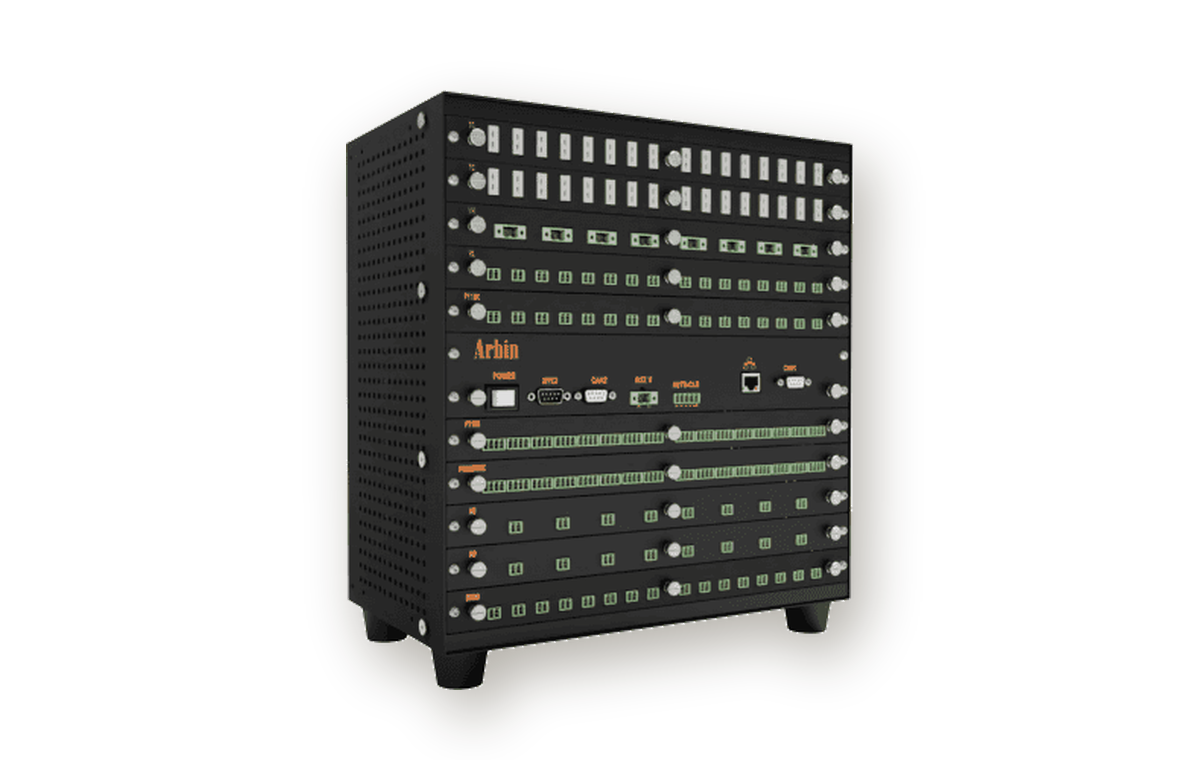
Auxiliaries
- Temperature sensing — real-time thermal monitoring for chambers and cell surfaces
- Auxiliary voltage inputs — monitor individual cell voltages or reference electrodes within packs
- Analog & Digital I/O — control external devices like pumps, fans, valves, and safety interlocks
- CAN Bus interface — direct communication with Battery Management Systems
- SMBus interface — read and write smart battery registers during testing
- Uninterruptible Power Supply (UPS) — detect power loss and safely pause or resume tests
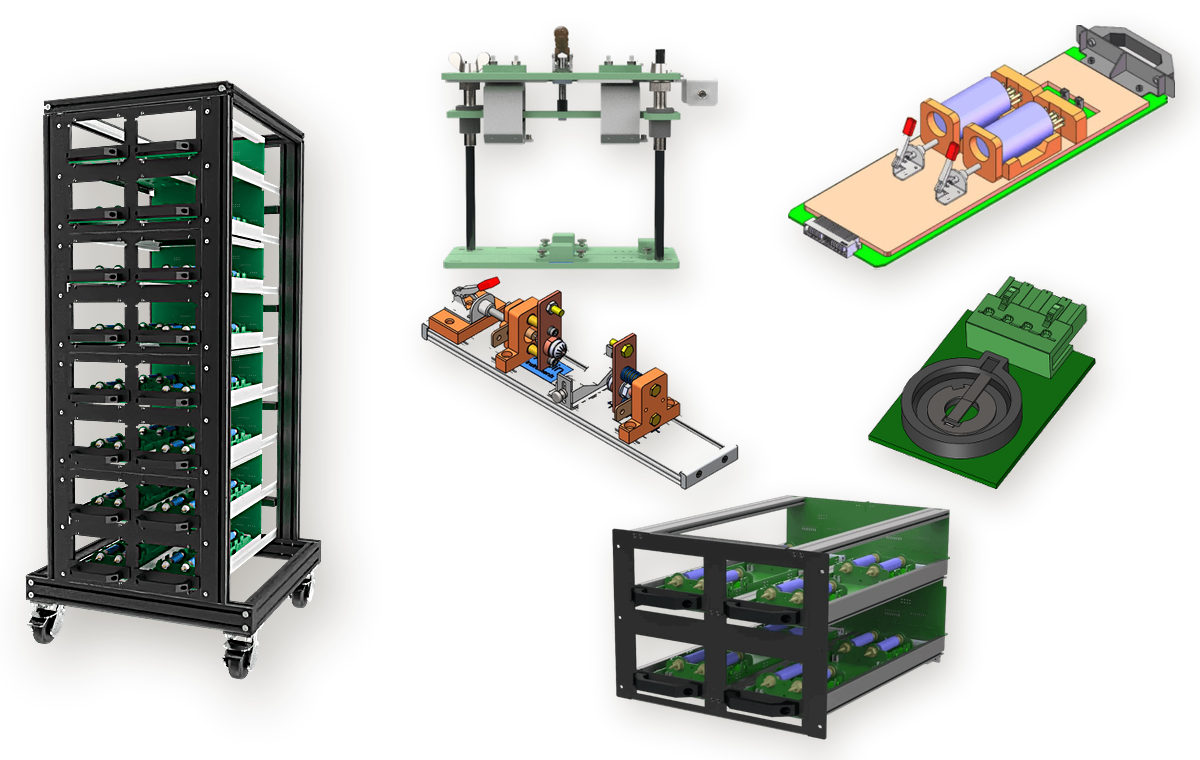
Holders & Fixtures
- Custom-engineered holders for coin, cylindrical, pouch, and application-specific cell formats
- Support high-current test configurations; flexible contact design accommodates diverse cell geometries
- Modular rack systems enable scalable test density and simplified reconfiguration across channels
Tell us what you're testing
Share your cell format, voltage and current requirements, channel count, and test objectives. An Arbin sales engineer will recommend the appropriate system configuration and supporting options.
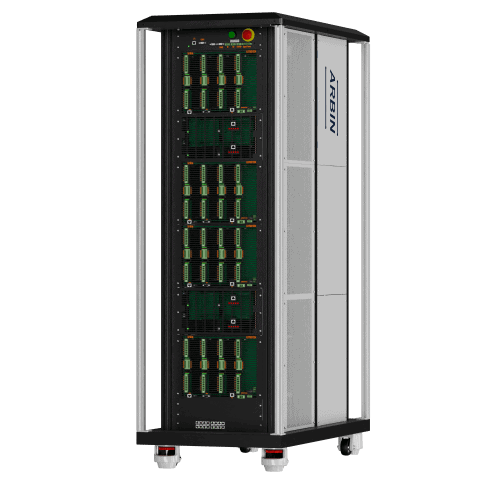
LBTS-Cell
Full range of cell testing solutions from 1A up to 500A per channel using Arbin's high precision LBT hardware
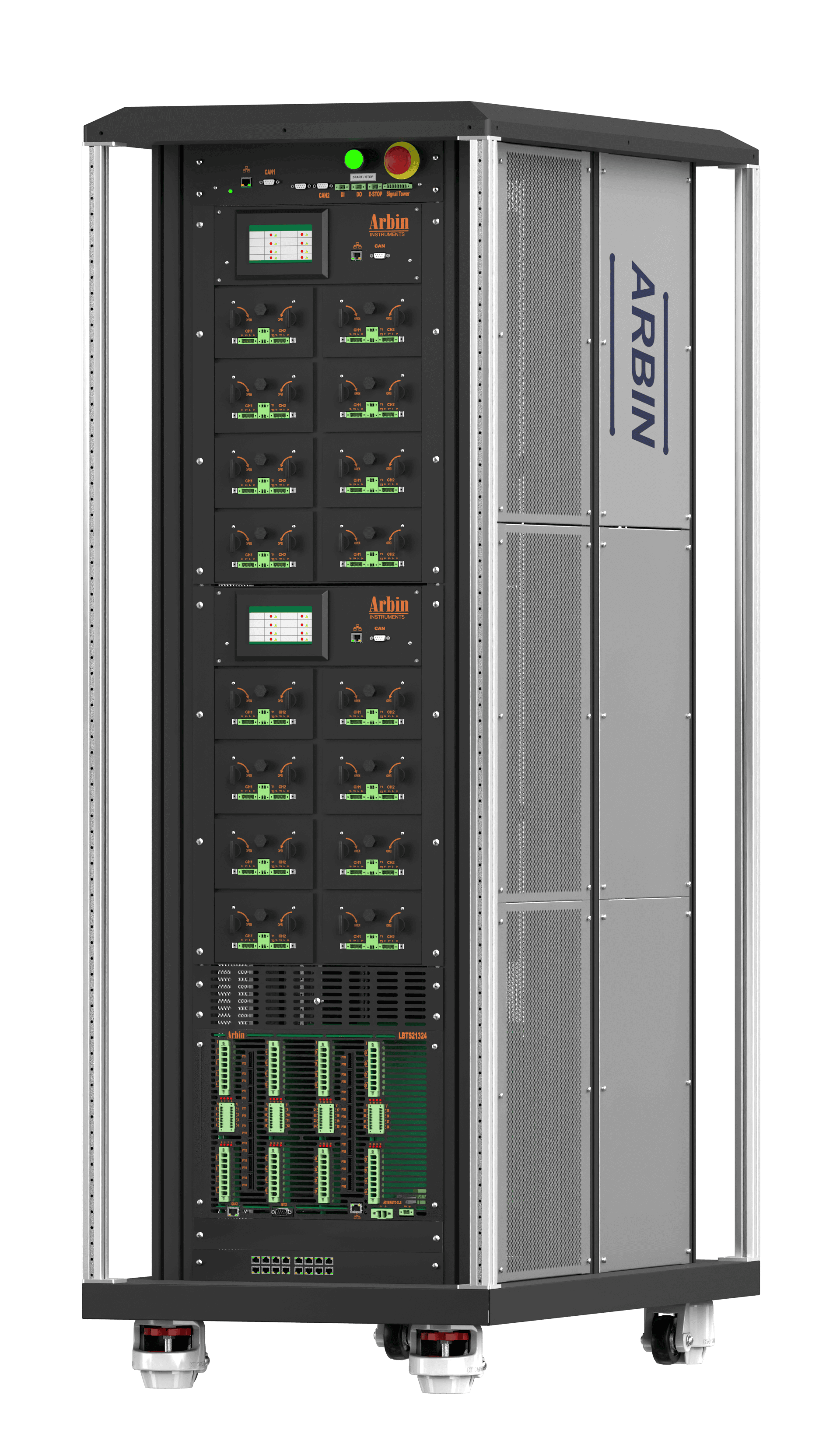
LBTS-MZTC
Turn-key high-precision cell testing solution integrated with Arbin’s patented Cell-Isolating Thermal Chamber
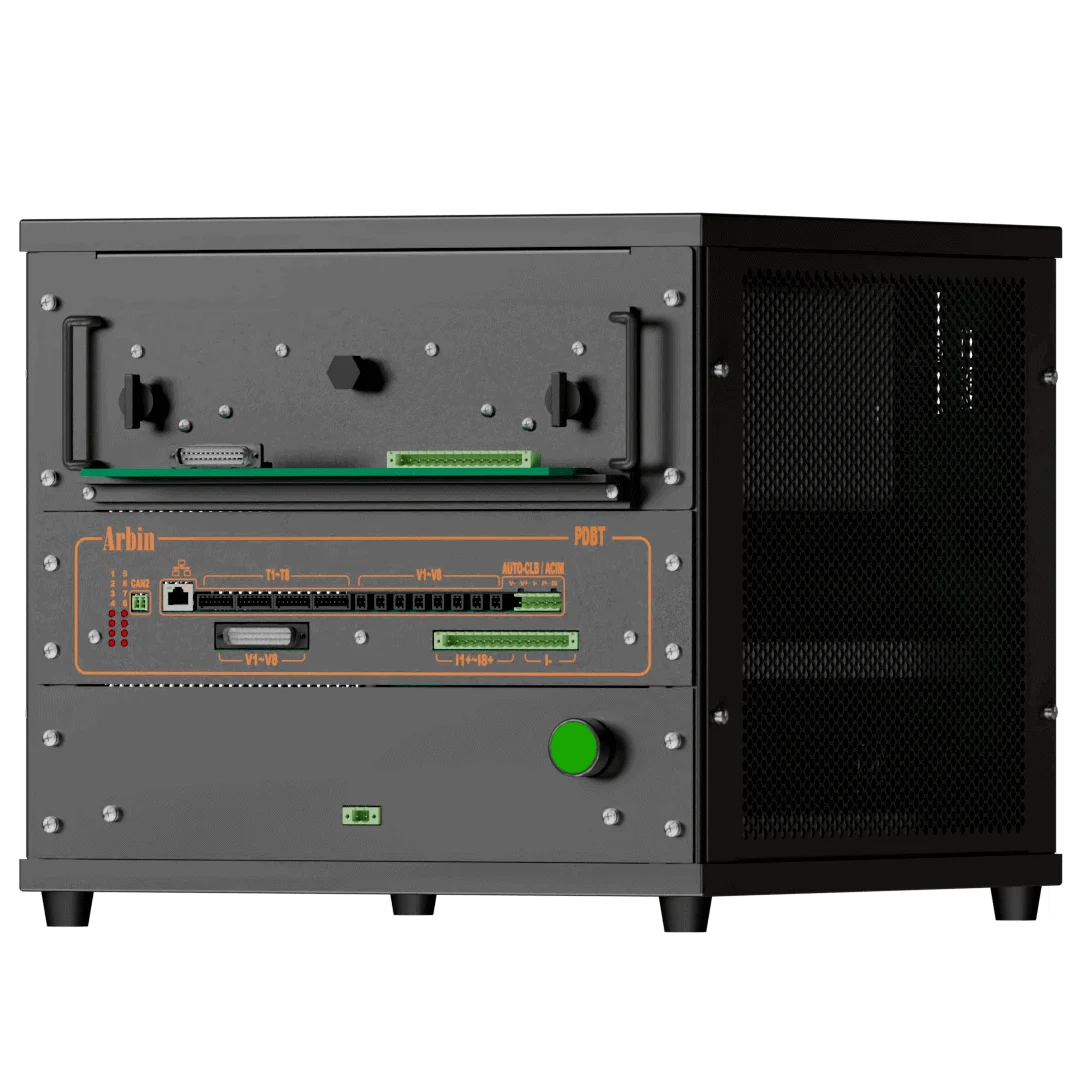
PDBT
Parallel-Differential Battery testing is a novel way to use a single cell to test a group of cells in parallel.
