English
  简体中文
简体中文  한국어
한국어 
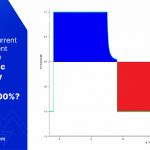
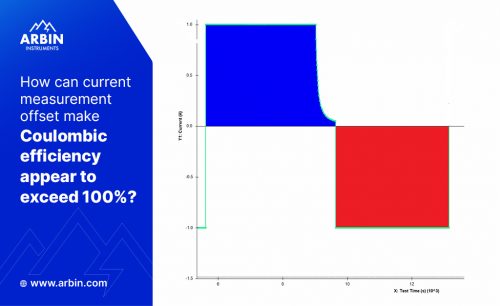
How Can Current Measurement Offset Make Coulombic Efficiency Appear to Exceed 100%?
One common reason that measured coulombic efficiency…

One common reason that measured coulombic efficiency…

A common end-of-life criterion for lithium-ion cells…

1. Introduction 1.1 Background Arbin DataWatcher is primarily used as…
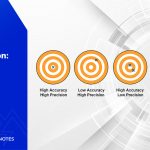
1. Introduction Battery testing is fundamentally a measurement task. Whether evaluating cycle life…
Four notes most engineers read first.
One common reason that measured coulombic efficiency (CE) can appear to exceed 100% is a current measurement offset. In this example, assume the cycler has a constant negative current offset e. This means the measured current is lower than the true current by e throughout the test. To simplify the analysis, assume an ideal battery […]
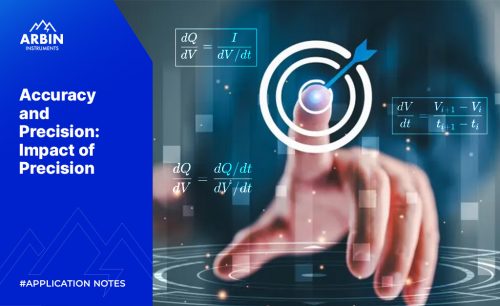
We previously examined the impact of measurement accuracy in an earlier article. In this article, we shift our focus to the influence of a battery tester’s precision on battery research. In many research applications, parameters such as dV/dt and dQ/dV are widely used. The reliability of these measurements depends heavily on the precision of the […]
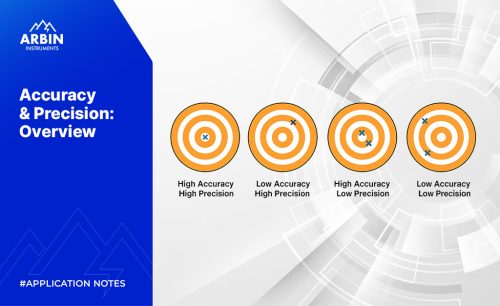
In the previous article, we introduced the concepts of accuracy and precision, along with a brief overview of their influence on battery testing. In this article, we will take a deeper look at the impact of accuracy. We will take an example about the impact on capacity measurement and Coulombic Efficiency measurement. As we all […]
1. Introduction Battery testing is fundamentally a measurement task. Whether evaluating cycle life, coulombic efficiency, voltage response, or degradation mechanisms, the quality of conclusions depends on the quality of the data. Two concepts govern data integrity in any battery test system: accuracy and precision. Although often mentioned together, they describe different aspects of measurement performance. […]
Send us your test plan. An Arbin applications engineer will recommend a system and write the first schedule with you.