SINCE 1991

Battery test equipment for cells, modules and packs

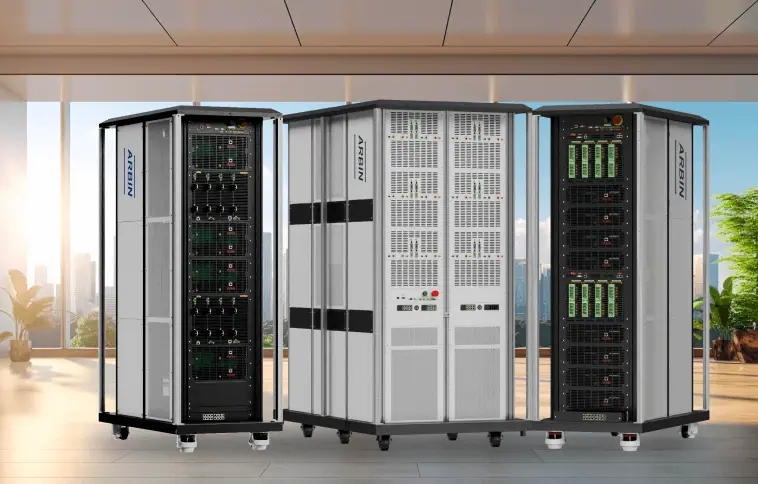
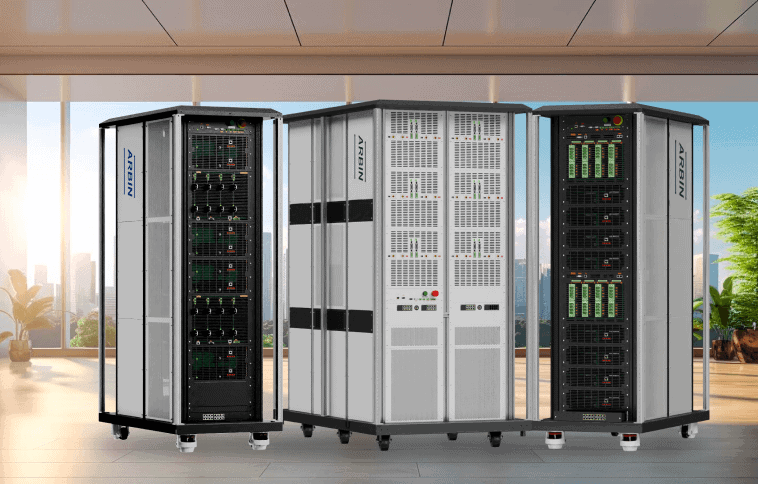
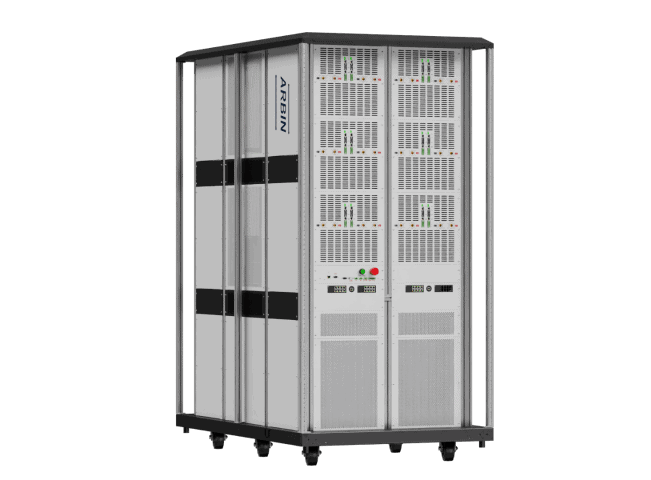
Arbin builds battery cyclers - linear, regenerative and turnkey solutions - at all levels ranging from a coin cell to a megawatt pack. One measurement architecture across the whole range, so data from a bench matches data from a production floor.

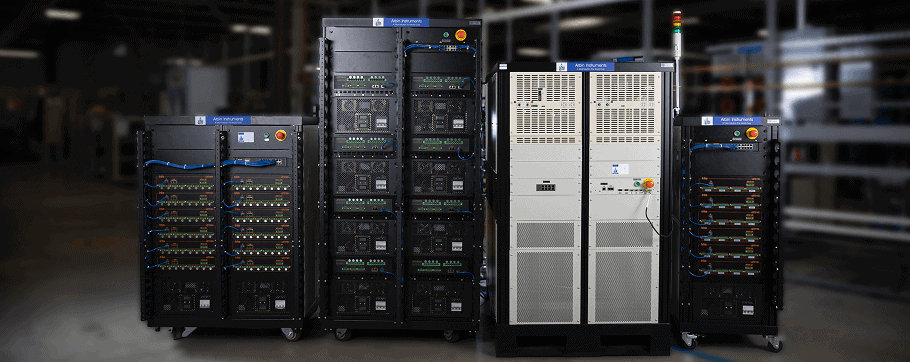
arbin product lineup hero web

Accuracy you can audit

Measurement accuracy is held across all voltage and current ranges, with precision published as a separate specification.

Independently verified

Built under an ISO 9001:2015-certified quality system, with calibration through an ISO/IEC 17025-accredited laboratory.

35 years of instrumentation

Founded in 1991, reinvesting 30% of profits into R&D, which funds the precision architecture in every test station.

Built for any lab

Scalable channel density in a compact, air-cooled footprint, with open Python and C# APIs for automation you already run.

Software & Test Methods

One platform for every system

A schedule validated on a benchtop LBT runs unchanged on a 256-channel cabinet, because test design, execution, data and automation belong to one platform rather than four tools bolted together. Every channel is an independent potentiostat and galvanostat, so electrochemical characterization and long-run cycling run on the same hardware and land in one time-aligned dataset.

MITS Pro — Manage Test
Schedule
A multi-step charge and discharge schedule in MITS, with grouped steps and per-step control type, control value and stop and log limit columns.

Schedules are built step by step in the editor, then assigned to any channel on any system. Nothing is rewritten when the test moves from a bench to a cabinet — and it is the same editor on Windows, macOS and Linux.

The MITS platform

Four layers, one codebase — from schedule design through to database and API integration.

The MITS application launcher on a lab workstation, with the test design and control tools grouped on one screen.
Test design & control

MITS Pro

30+ programmable control types and 90+ meta variables
Up to 9 nested loops and 127 reusable sub-schedules
Adaptive logging raises acquisition rate through transients
Test Object profiles set safety thresholds from the cell spec
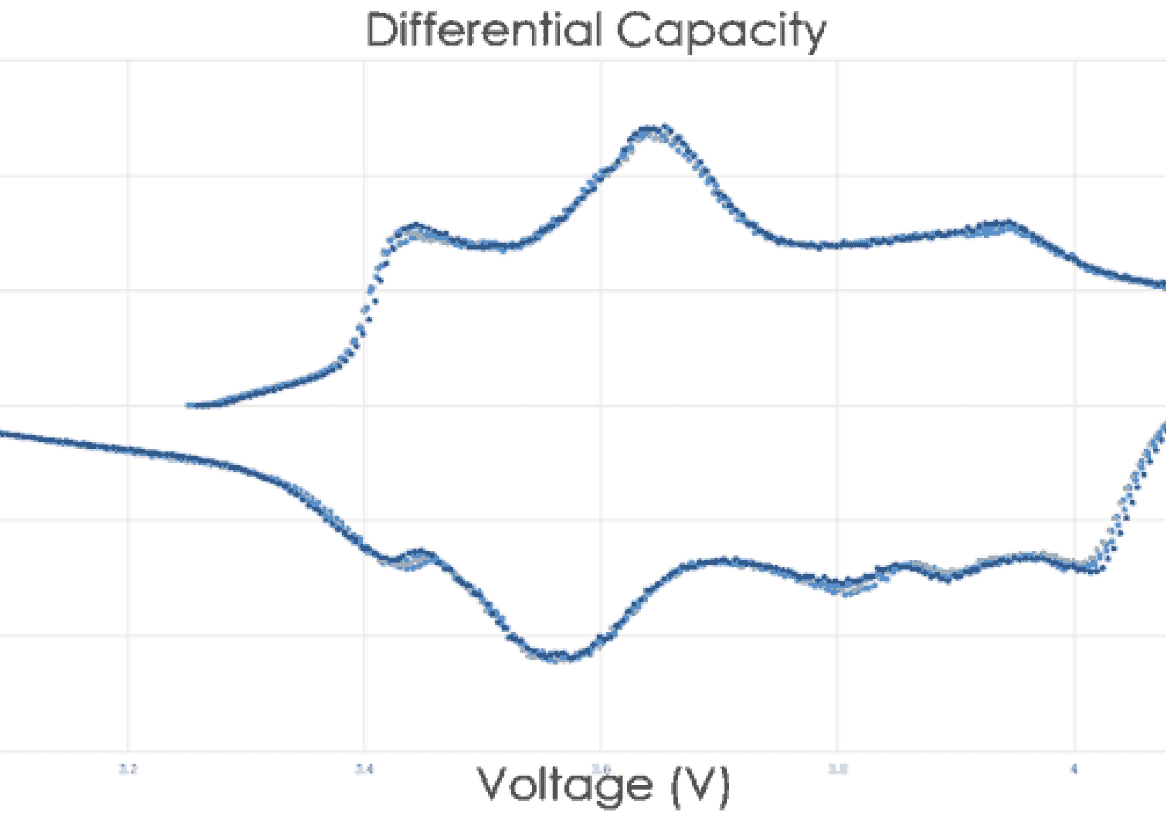
DataWatcher comparing up to nine plots in one grid, with a dQ/dV overlay of two cycles from the same cell.
Data & analysis

DataWatcher

Queries the SQL database directly — no export step
Filter by channel, barcode or cycle count
Overlay up to 9 plots for side-by-side comparison
PostgreSQL, Microsoft SQL Server and Apache Kafka streaming
A lookup table driving a current setpoint through ArbinCTI, mapping a three-dimensional input surface onto a meta variable.
Automation & integration

ArbinCTI & Lua

TCP/IP API with Python and C# clients
Lua scripting for BMS emulation, digital twins and adaptive fast-charge
Custom Test Instructions in C#/.NET for logic beyond standard commands
Connect to LIMS, MES or in-house systems for automated data exchange
Networked Arbin cyclers reporting into one central data server, viewed from a single client workstation.
Multi-system management

CDS & CMCS

CDS — centralize data from every cycler onto one local or cloud server, with automatic backup
CMCS — oversee and control networked cyclers from one client PC via ArbinViewer
Email and SMS notifications on tester status and test progress
User accounts and permission levels across the whole cycler fleet

What you can run on these channels

Every method below is built and executed in the same platform above, on any system on this page.

Electrochemical
GITT — galvanostatic intermittent titration
PITT — potentiostatic intermittent titration
Cyclic and linear sweep voltammetry
Chrono-amperometry and potentiometry
EIS to 100 kHz — integrated Gamry
Symmetric-cell testing
Multi-electrode and reference-electrode work
Cycling and lifetime
Battery life cycle testing
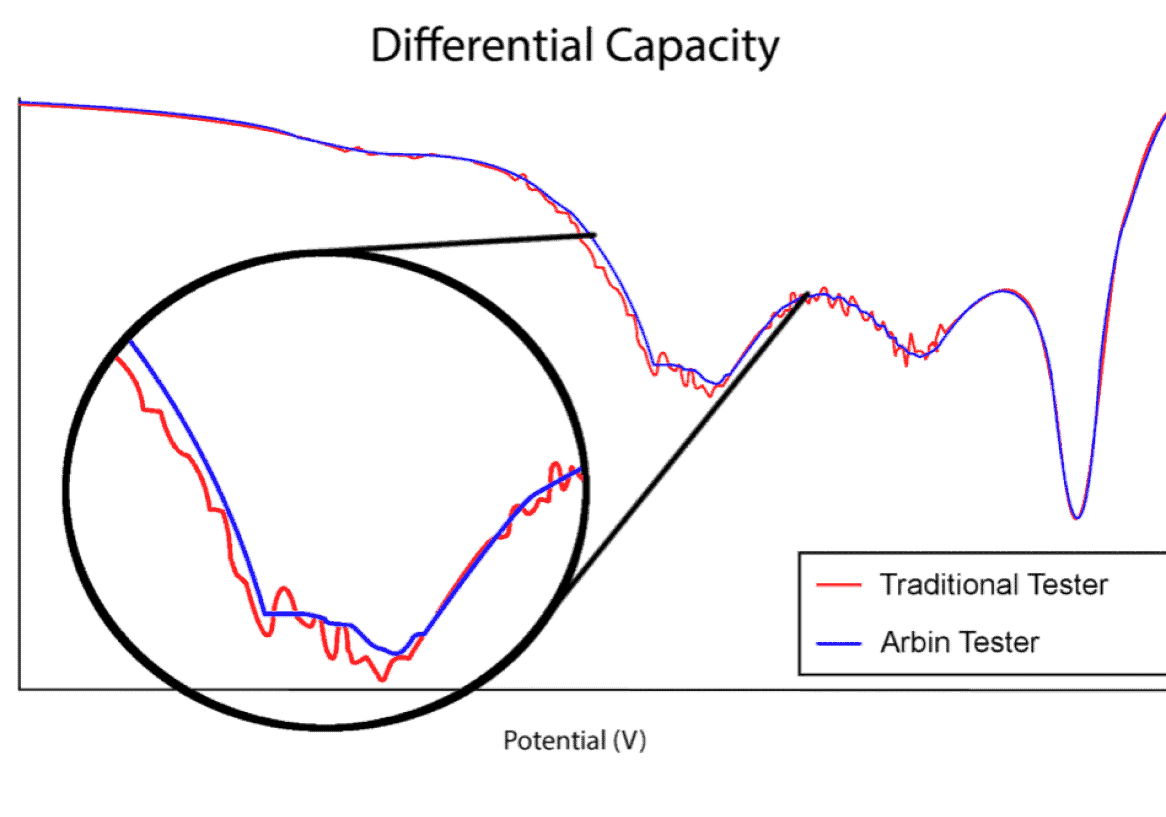
dQ/dV analysis
High-precision coulombic efficiency
Self-discharge current measurement
DCIR and pulse characterization
Constant-power and constant-resistance cycling
Real-world drive-cycle simulation
Production and QC
Incoming quality control
Cell-level grading and sorting
Formation and cell finishing
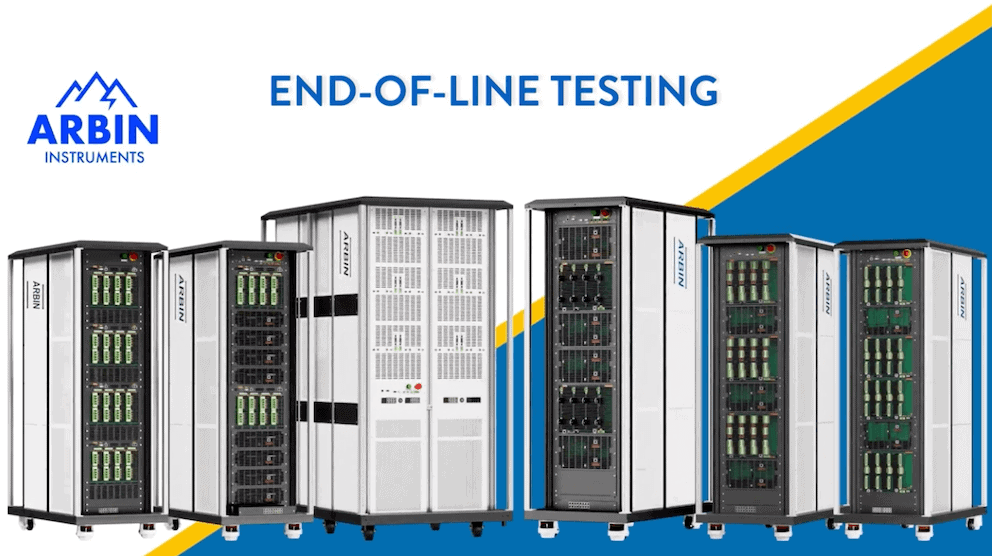
End-of-line testing
Fast-charge optimization
Temperature-controlled cycling with chamber sync

Beyond the Cycler

Build the Complete Battery Test Laboratory

The cycler is the center. Temperature control, fixtures, auxiliary measurement and electrochemical instruments attach to it, so one system covers the whole test lab.

At the center Arbin Battery Cycler
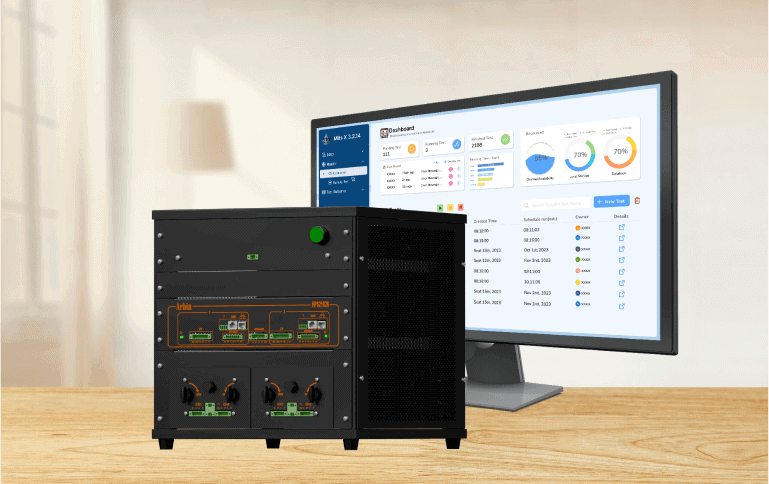
An Arbin laboratory battery cycler chassis.

10 µA to 1,600 A across the range, every channel independently controlled. Everything around it attaches to this chassis and is configured in one schedule.

An Arbin multi-zone temperature chamber.

Control the environment

Temperature Control

Arbin MZTC chambers give each zone its own setpoint. A compatible third-party chamber can be driven from the same schedule instead.

Temperature control →
A range of Arbin cell holders, fixtures and battery racks.

Connect the cell

Cell Holders & Fixtures

Purpose-built holders for coin, cylindrical, pouch and prismatic cells, plus racks that keep contact repeatable across a batch.

Holders & fixtures →
An Arbin auxiliary measurement chassis.

Expand measurement

Auxiliary Measurements

Temperature, sense voltage and analog I/O logged on the same time base as the channel data, in one dataset rather than two.

Auxiliary options →
A Gamry potentiostat used for integrated impedance measurement.

Add electrochemistry

Electrochemical Add-Ons

Integrated Gamry EIS on compatible systems, sequenced from the same schedule as the cycling steps.

EIS application notes →
Calibration Keep measurement confidence where the spec says it should be. Services →
Installation & Training Configure the system and get the lab running on it. Services →
Technical Support Ongoing help from Arbin's own applications engineers. Support →
Why Arbin

Built on high-precision measurement

A cycler is a metrology instrument, and its value over a test schedule depends on whether the specifications it was sold on still hold over the year. The four points below cover where Arbin's measurement architecture comes from, how it is verified, and what it measures to.

Independently recognized

R&D 100 Award-winning precision

The high-precision architecture in Arbin's current systems came out of a three-year ARPA-E program run with Ford Motor Company and Sandia National Laboratories, aimed specifically at holding precision at high current. The resulting design now runs across the full cell testing range.

Accredited

Accredited calibration

Systems are manufactured under an ISO 9001:2015-certified quality system, and calibration is carried out through an ISO/IEC 17025-accredited testing and calibration laboratory. Accreditation to that standard means the values on a calibration certificate are traceable to national measurement standards.

View ISO 9001 Certificate (PDF) →
Since 1991

35 years, and still R&D-funded

Arbin has built battery cyclers since 1991 and reinvests 30% of profits into R&D, which funds ongoing development of the measurement architecture. Equipment delivered over 30 years ago remains in service, and support for previous software generations continues alongside the current release.

Open by design

Open interfaces and direct data access

Python and C# APIs, Lua scripting and the ArbinCTI interface allow the tester to be driven from existing lab software, and test data can be queried directly from PostgreSQL or Microsoft SQL Server without an export step.

Measurement specifications
±0.02%
FSR accuracy, published as its own figure and never merged with precision
±0.01%
FSR precision — 100 ppm, specified separately for voltage, current and time
24-bit
Resolution on voltage and current alike — one part in 16,777,216
10 nA
Lowest controlled current, scaling to 1,600 A paralleled
Global support

Supported from your region

Arbin systems are running in more than 55 countries. Alongside the 65,000 sq ft headquarters and production facility in College Station, Texas, regional offices carry their own service and applications engineers, so installation, calibration and support happen locally rather than remotely.

North & South America

College Station, Texas

Headquarters

762 Peach Creek Cut Off Road
College Station, TX 77845, USA

+1 979 690 2751 [email protected] [email protected]
Europe, Middle East & Africa

Munich, Germany

Arbin Europe

Frankfurter Ring 193a
80807 Munich, Germany

+49 89 26209 3875 [email protected] [email protected]
China

Beijing, China

Arbin Instruments

Rm. 1705, Lucky Tower A, Building No. 3
Dong San Huan Bei Lu, Chaoyang District
Beijing 100027, P.R. China

+86 10 64635926 [email protected]
India

Pune, India

Arbin Instruments India Pvt. Ltd.

Plot 55A/7, Hadapsar Industrial Estate
Pune, Maharashtra 411013, India

+91 70 2088 3402 [email protected] [email protected]
Korea

Bucheon, South Korea

Arbin Korea

6F, Jinsung Plaza, 533-7, Sang Dong
Wonmi-Gu, Bucheon-Si, Kyunggi-Do 420-861, Korea

+82 32 321 1431 [email protected]
Taiwan

Jhubei City, Taiwan

Arbin Taiwan

6F.-11, No.87-1, Guangming 6th Rd.
Jhubei City, Hsinchu County 302, Taiwan

+886 3 558 8143 [email protected]
Southeast Asia & Oceania

Di An City, Vietnam

Arbin Instruments Vietnam

205, GS1 Street, Dong Hoa Ward
Di An City, Binh Duong Province, Vietnam

+84 96 54 55 56 9 [email protected] [email protected]

Side by Side

Compare Arbin Battery Testing Systems

Compare Arbin systems by application, voltage range, current capability and channel count — from laboratory cell research through module, pack and production-scale formation.

Comparison of Arbin cell, module, pack and formation systems
Product Best For Voltage Range Current Range Channel Range
Core Cell Cyclers
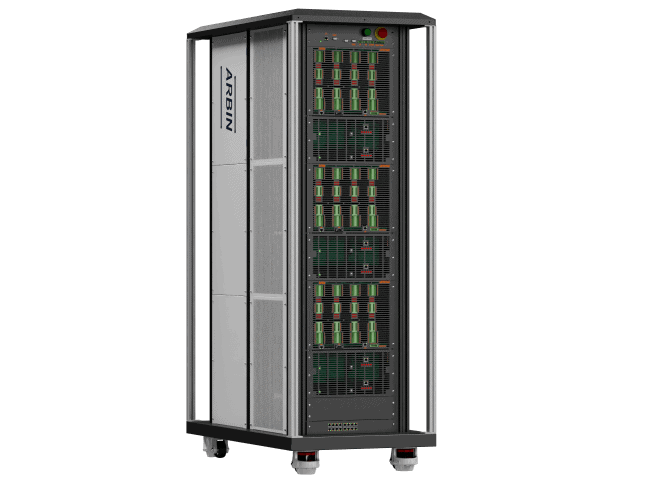
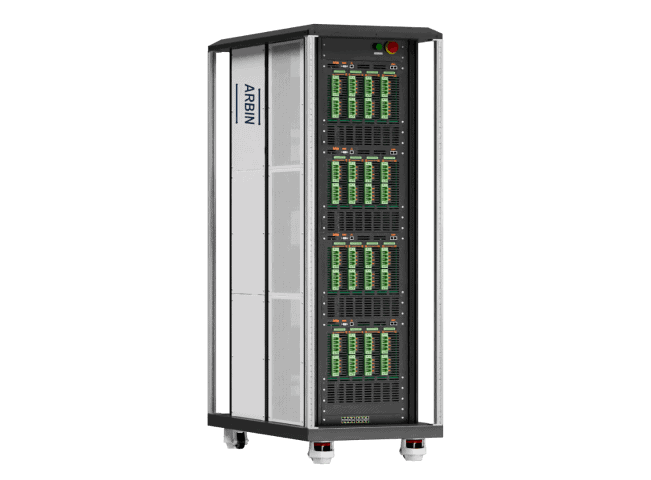
LBTS-Cell All-Purpose High-precision linear cell cycler General cell R&D, characterization, lifecycle testing, grading and incoming quality control. 0–5 V / 0–10 V Configuration dependent 10µA–500A/channel Wide range of low- and high-current configurations 4–256 Configuration dependent
RBT-Cell Regenerative High-current regenerative cell cycler High-current cells, fast-charge development, pulse testing and energy-efficient long-term cycling. 0–6 V / 0–20 V Configuration dependent 100–400A/channel Up to 1,600A with channel paralleling 4–64 Voltage and current dependent
LBTS-Cell High Throughput High Throughput High-density cell testing system Incoming cell quality control, grading, validation and large-scale repetitive testing. 0–5 V 1mA–1A or 10A/channel High-density 1A and 10A configurations 192 or 256 Per system
Benchtop & Specialized Research
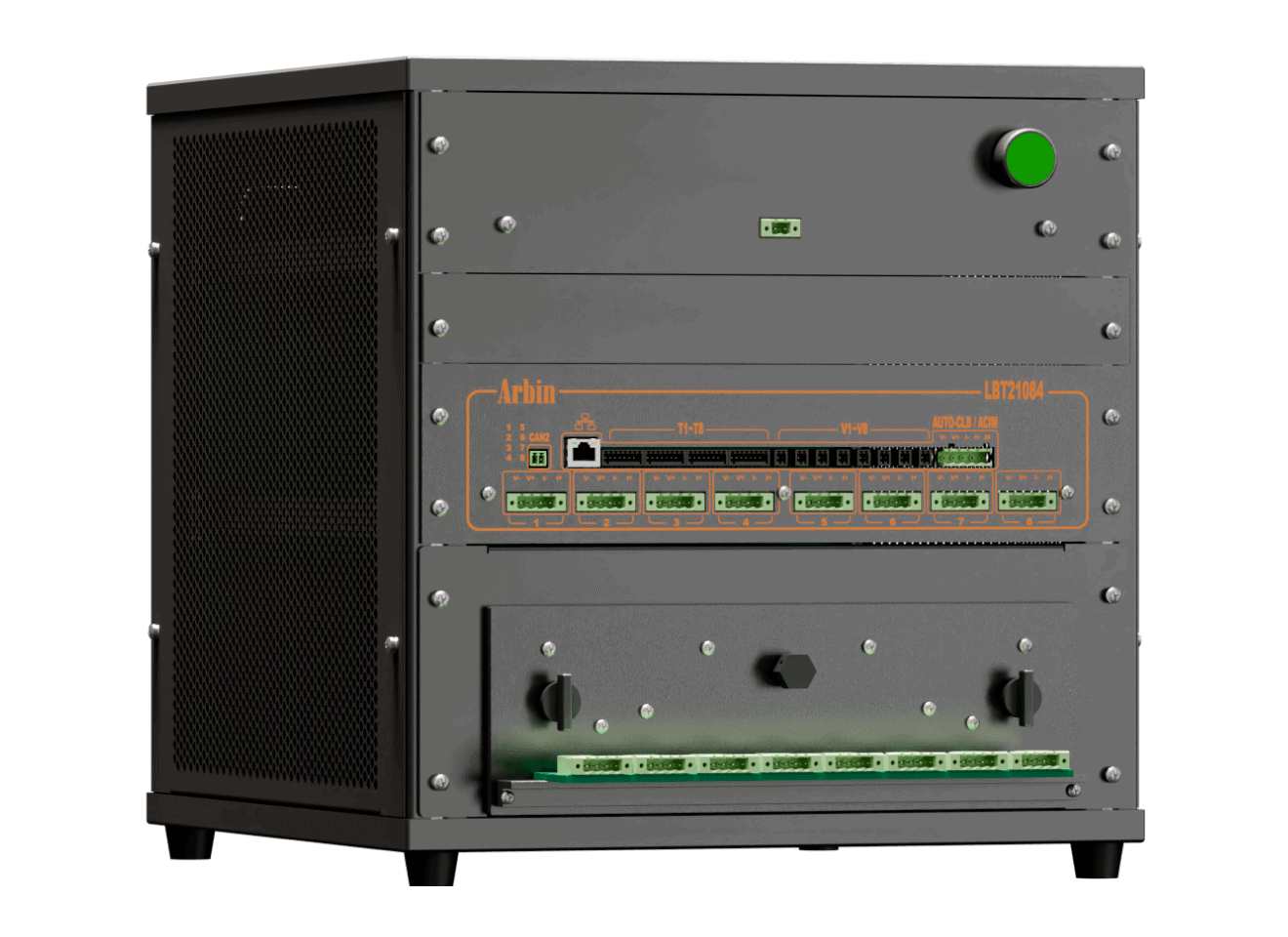
LBT-Benchtop Compact Laboratory Battery Tester General laboratory research, capacity testing, aging, quality control, impedance and self-discharge measurement. 0–5 V 100µA–10A/channel 1A, 5A and 10A models 8–16
HPS Ultra-High Precision High-Precision Battery Tester Coulombic-efficiency testing, materials research and early detection of small battery degradation trends. ±6 V 100µA–5A/channel Six automatically selectable current ranges 2 Per benchtop unit
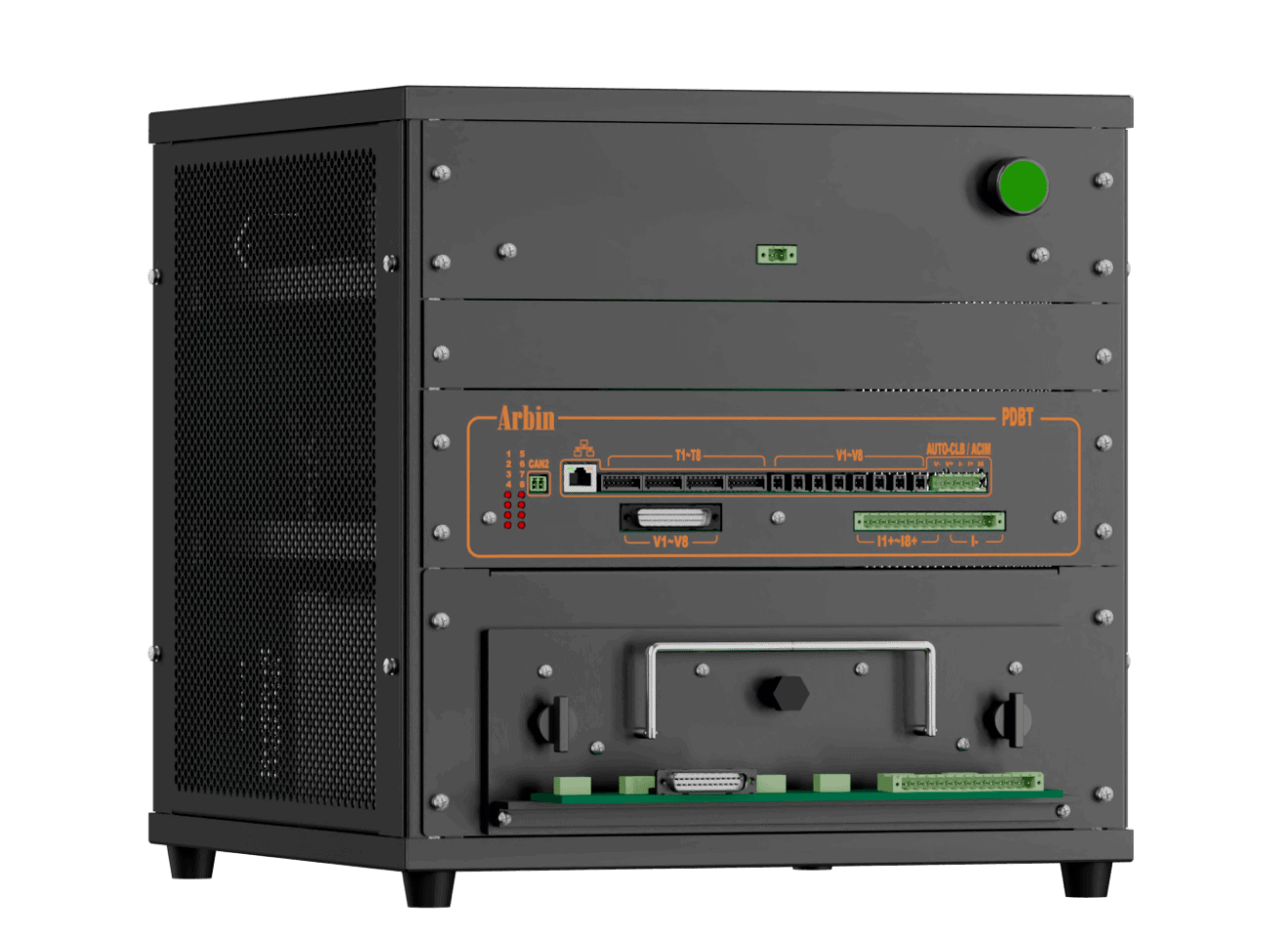
PDBT Parallel Testing Parallel Differential Battery Tester Cell-to-cell comparison, parallel current-sharing behavior, cell matching and self-discharge measurement. Cell-level See product configuration 1mA–5A Four current ranges 8 Parallel differential channels
Integrated Cell Test Systems
LBTS-MZTC Turnkey Integrated cycler and multi-zone thermal system Turnkey cycler with integrated multi-zone temperature chamber with 16 independent temperature zones. Cell-level Configuration dependent 5, 10 or 20A/channel Four current ranges per channel 32 Integrated test channels
SBTR Integrated Thermal Smart Battery Tray Dedicated TEC and closed-loop temperature control for every individual cell.. Cell-level Depends on paired cycler 30–200A/cell Configuration and cell-format dependent 4–96 Standalone trays or integrated racks
Module & Pack Testers
LBTS-Module Linear Laboratory module testing Module R&D, characterization, cycle-life testing and BMS validation. 20–100 V Up to 80A/channel Higher current through channel paralleling Up to 32 Per chassis
RBT-Module Regenerative High-current module and small-pack tester High-current module cycling, drive profiles, BMS validation and incoming quality control. 30–200 V 75, 150 or 300A/channel Up to 1,800A with channel paralleling 2–24 Configuration dependent
RBT-Pack Regenerative High-voltage battery pack tester EV and energy-storage pack validation, life-cycle testing and drive-cycle simulation. 300–1,500 V 100, 150 or 200A/channel Higher current through channel paralleling Up to 6 Configuration dependent
Cell Formation & Finishing
SPT Cell Formation Formation Series Parallel Technology formation solution Production-scale cell formation, aging, self-discharge monitoring and grading. Application-specific Configured around cell requirements Application-specific Formation architecture configured around cell requirements 336 or 128 336 for 18650/21700; 128 for 46xx

Product-family ranges are summarized for comparison. Available voltage, current and channel-count combinations depend on the selected system configuration.

Next Step

Tell us what you are testing

Whether you are testing a cell, module or pack, share your requirements and we’ll help configure the right system. Start with the details below. If you don’t have every answer yet, send what you know and a sales engineer will help work through the rest.

Cell, module or pack

Battery chemistry, format, capacity, and minimum and maximum voltage. Include dimensions or terminal details if available.

Current, channels and tests

Maximum charge and discharge current, the lowest current you need to measure, and how many batteries you want to test at once. Include power limits, pulse requirements and test profiles where relevant.

Software and integration

Tell us whether MITS will run the test independently or connect to your software, PLC or HIL system. Include auxiliary measurements, communication interfaces and data storage requirements.

Temperature and test setup

Required temperature range, shared or independent temperature zones, and any holders or fixtures you need. For larger systems, include available space, electrical supply and facility constraints.

Frequently asked questions

Choosing battery test equipment

What is a battery cycler?

A battery cycler is a programmable instrument that charges and discharges a cell, module or pack on a defined schedule while measuring voltage, current, capacity and energy. Beyond the electrical channel, a test-grade cycler also coordinates temperature, auxiliary measurements, BMS communication and simulated load profiles, so the data reflects the conditions the battery will actually see.

What is the difference between cell, module and pack testers?

The voltage of the device under test (DUT) is the deciding factor. Cell systems here run at ±5 to 20 V and compete on measurement quality or channel density. Module systems run 20 to 200 V and compete on current and integration. Pack systems run 300 to 1,500 V, are regenerative by necessity at that power, and are bought largely on CAN and BMS integration and on facility fit. A pack tester is not a cell tester scaled up: resolution drops from 24-bit to 16-bit at pack scale, which is why the specification is published per class.

What is the difference between precision and accuracy on a datasheet?

Accuracy is how close a reading is to the true value; precision is how repeatable it is. They are different numbers and should be published separately, never merged into one figure. For degradation work precision usually matters more, because the question is whether a small change between cycle 400 and cycle 500 is real. Resolution is a third thing again: the number of counts the converter can express, which sets the floor on what either figure can mean.

Can Arbin integrate temperature control?

Three ways, and the right one depends on whether cells need to be at different temperatures at the same time. A third-party chamber under MITS control gives one condition to everything inside the chamber. The Arbin system can control multiple chambers at once, with cells inside the chamber synchronized to transition together. Any system can be paired with Arbin's MZTC stand-alone mini chambers for individual climate zones. The LBTS-MZTC provides an integrated cycler + chamber system with sixteen thermally isolated mini-chambers from 10 to 60 °C at ±0.5 °C. The SBTR puts a thermoelectric plate against each cell, for per-cell surface temperature on cylindrical formats.

When should I use a regenerative battery tester?

When current or power is high and the duty cycle is long. A linear system dissipates discharge energy as heat, which the facility then has to remove. A regenerative system returns it, at 80 to >90% for the RBT-Module and Pack series. For short characterization runs the saving rarely justifies it; for channels cycling at high rate for months, it changes both the electricity bill and the cooling load.

How do I choose a current range?

Start with the maximum charge and discharge current, then check the lowest current you need to measure accurately, because that is what most specifications hide. A system with two or four auto-switching ranges per channel keeps the measurement meaningful across both ends of the same test.

Can different Arbin systems share the same software?

Yes. Every system on this page is written and run in MITS, across Windows, macOS and Linux, so a schedule developed on a benchtop research channel runs on a pack tester without being rebuilt. Data from all of them lands in one format, and the Central Data Solution aggregates it across a facility rather than leaving files on individual machines.

Not sure which system you need?

Voltage, current, channel count and cell format is enough to configure one. Tell us the test and an applications engineer will come back with the tester, fixtures, thermal equipment and software options together, rather than a channel in isolation.

Configure your system
Scroll to Top