 English
  简体中文
简体中文  한국어
한국어  Deutsch
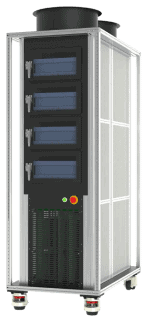


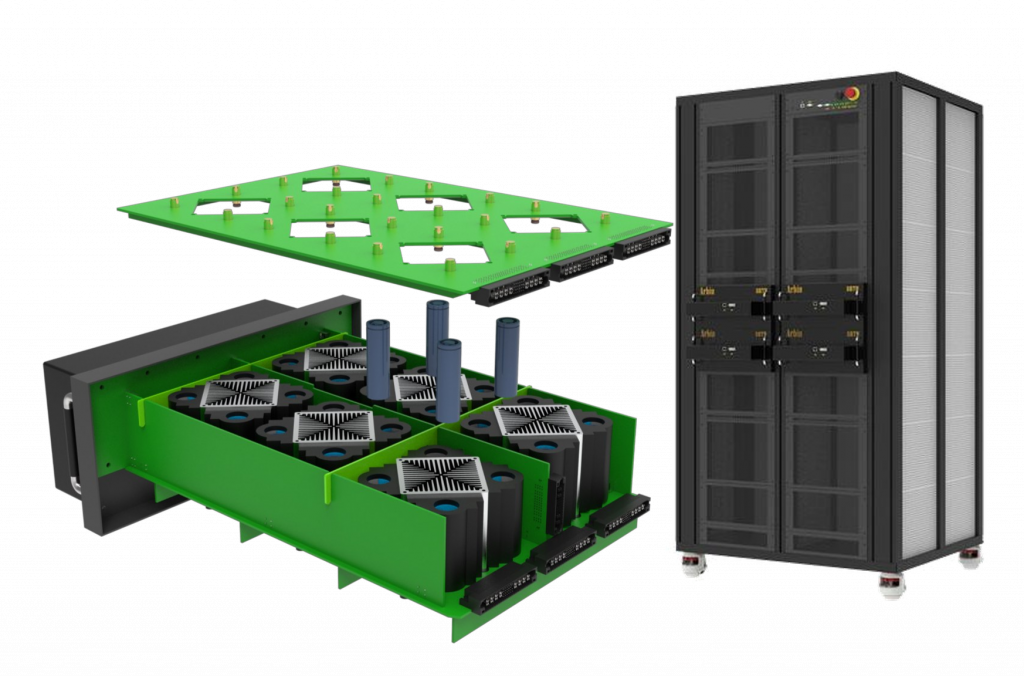
Smart Battery Tray - Integrated Cell-Level Thermal Control
SBTR Series
Arbin's SBTR gives every channel its own closed-loop thermoelectric cooler, so fast-charge and high-rate discharge testing on 18650, 21700, and large-format 4680-class cells stays accurate at up to 200A per cell, without waiting on a shared environmental chamber to catch up.
4 - 96
Channels per chassis
±0.02% / ±0.01%
FSR accuracy / precision
30A - 200A
Per channel
±2°C
Cell-Level Temperature Accuracy
Accuracy you can audit
Measurement accuracy held across all voltage and current ranges, with precision published as a separate specification.
Independently verified
Designed and manufactured under an ISO 9001:2015-certified quality system, supported by an ISO/IEC 17025-accredited testing and calibration laboratory.
35 years of instrumentation
Founded 1991. Arbin reinvests 30% of profits into R&D, funding the precision architecture provided with every Arbin test station.
Built for any lab
Scalable channel density in a compact, air-cooled footprint, with open Python and C# API for the automation you already run.
Highlights of the SBTR Series
Four thermal-control innovations that turn temperature from a chamber condition into a precisely controlled test parameter for every cell.
Market Leading Specifications
100 ppm precision, 24-bit resolution
See cell behavior - not tester uncertainty
Voltage and current measurement precision reaches 100 ppm (±0.01% FSR) and 200ppm (±0.02%) accuracy. 24-bit resolution provides fine control and measurement granularity across each current range.
Subtle shifts in resistance, voltage response, and coulombic efficiency remain visible and repeatable—helping you distinguish real cell behavior from measurement noise.
Independent Cell-Level Thermal Control
dedicated TEC for every cell
Control the cell — not just the chamber
Every cell position has its own thermoelectric module with closed-loop temperature feedback and independent control. Each cell can actively heat or cool in response to changing test conditions.
This keeps the programmed temperature focused on the individual cell rather than relying on the ambient temperature surrounding an entire tray.
Improved Test Repeatability
stable temperature throughout cycling
Separate cell behavior from thermal variability
Temperature directly influences capacity, internal resistance, cycle life, and fast-charge performance. SBTR actively maintains the cell's thermal condition while the electrical load changes.
Reducing uncontrolled temperature variation makes results more repeatable and gives greater confidence that measured differences come from the cell itself.
Built-In Safety Features
safety monitoring for every channel
Onboard computation and independent safety
Each channel computes capacity, energy, internal resistance, and efficiency in real time. Voltage, current, and temperature are all checked against safety limits independently of the test control loop.
Chamber-level cooling was never built for this
A shared environmental chamber conditions an entire tray to one setpoint. When cells are pushed to high current, that setpoint stops meaning much for any single cell
Chamber-Only Testing
Arbin SBTR
Hold the temperature you programmed — even while the cell is generating heat
SBTR does more than condition the air around a battery. Each cell is thermally coupled directly to its own TEC, allowing the system to actively remove or add heat as electrical loading changes.
Active control as cell heat increases
The SBTR was tested to determine how much cell-generated heat could be continuously regulated while maintaining the programmed TEC setpoint.
Temperature control under real charge and discharge
A Panasonic NCR21700T cell was cycled under active SBTR temperature control at 20°C ambient to demonstrate performance during high-rate electrical loading.
SBTR controls the cell.
Applications and Test Methods
Each channel operates as an independent potentiostat and galvanostat, so one chassis covers electrochemical characterization and long-run cycling at the same time.

Fast-Charge Protocols
Maintain controlled cell temperatures during high-rate charging to separate true fast-charge behavior from uncontrolled thermal variation.

Temperature-Dependent Aging Studies
Evaluate degradation mechanisms at multiple temperature conditions while maintaining repeatable, cell-level thermal control throughout cycling.
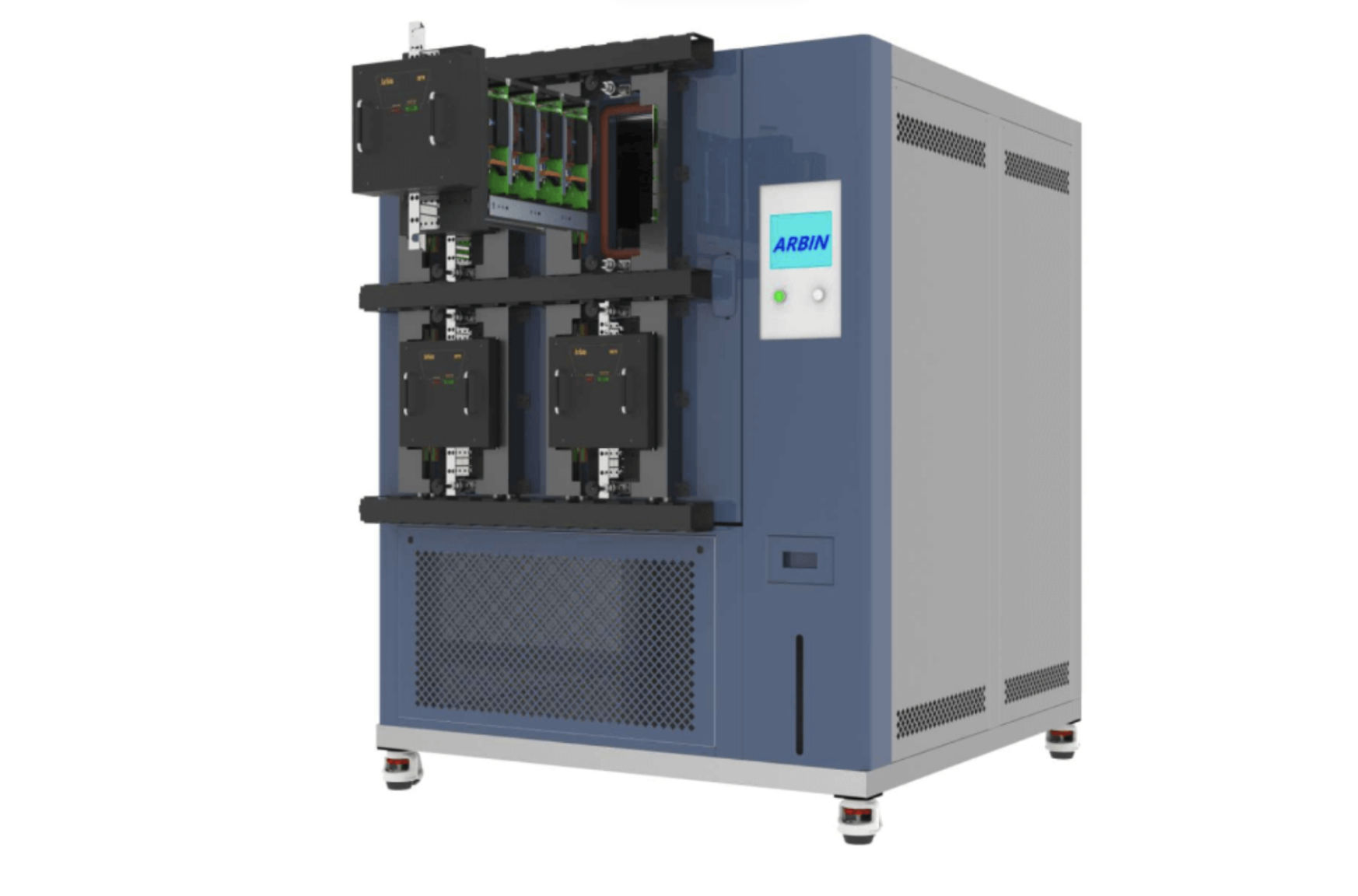
Thermal/High-Rate Characterization
Maintain controlled cell temperatures during fast charge and high-rate discharge to evaluate battery behavior under defined thermal conditions.

Scalable Multi-Temperature Testing.
Run larger electro-thermal test matrices with independent cell-level temperature control, reducing dependence on chamber stabilization and shared setpoints.
Supported Test Methods
Electrochemical
- GITT — galvanostatic intermittent titration
- PITT — potentiostatic intermittent titration
- Cyclic and linear sweep voltammetry
- Chrono-amperometry and potentiometry
- EIS to 100 kHz
- Symmetric-cell testing
- Multi-electrode and reference-electrode work
Cycling and lifetime
- Battery life cycle testing
- dQ/dV analysis
- High-precision coulombic efficiency
- Self-discharge current measurement
- DCIR and pulse characterization
- Real-world drive-cycle simulation
- High-speed pulse testing
Production and QC
- Incoming quality control
- Cell-level grading and sorting
- Formation and cell finishing
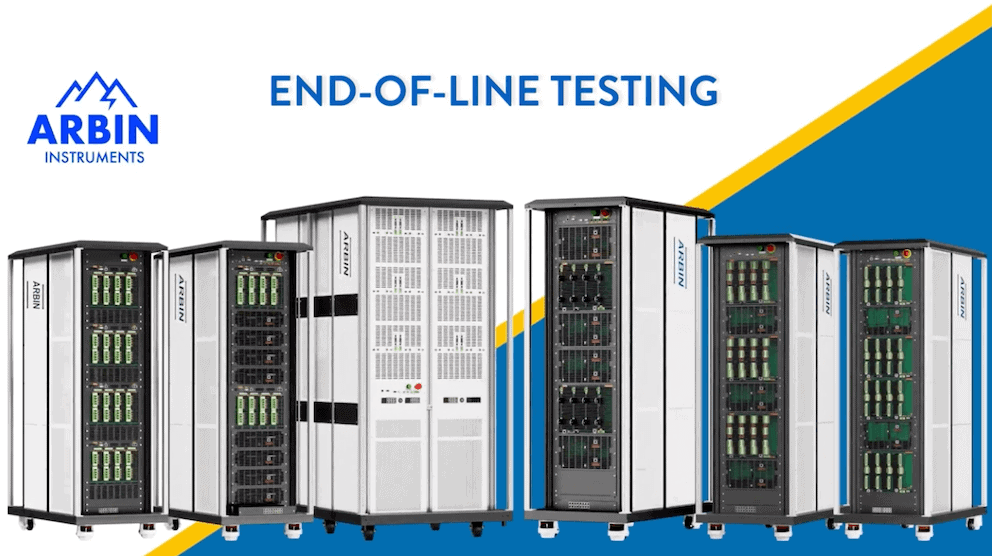
- End-of-line testing
- Fast-charge optimization
Voltage, Current, and Channel Ranges
Choose the cell format, current capability, and channel density that fits your electro-thermal test program.
| Configuration | Max Current / Cell | Channels | Battery Size | Control Accuracy |
|---|---|---|---|---|
| SBTR-OTO-16CH-30A | 30 A | 16 | 18650, 21700 | ±2°C |
| SBTR-OTO-8CH-50A | 50 A | 8 | 18650, 21700 | ±2°C |
| SBTR-OTO-4CH-200A | 200 A | 4 | 4680, 4695, 46120 | ±2°C |
| LBTS-SBTR Integrated Rack | Configurable | Up to 96 | 18650 through 46120 | ±2°C |
Software and Safety
The two questions a lab asks after the specifications check out: can my team actually drive it, and what happens when a cell misbehaves.
MITS Software
MITS scales from basic charge–discharge cycling to complex protocols with nested conditions. Most tests can be built through the menu-driven interface, while Lua scripting and ArbinCTI are available for advanced automation and external control
- ✓ 30+ programmable control types, 90+ meta variables, and up to 9 nested loops
- ✓Up to 127 reusable sub-schedules, so a validated procedure gets called rather than rebuilt
- ✓Adaptive logging raises acquisition rate during transients and state transitions
- ✓DataWatcher queries the SQL database directly — filter by channel, barcode, or cycle count, overlay up to 9 plots
- ✓PostgreSQL, Microsoft SQL Server, and Apache Kafka streaming
- ✓ArbinCTI TCP/IP API plus Lua scripting for BMS emulation and adaptive control

Safety Architecture
Protection is distributed across channel hardware, an independent controller, and step-level software limits. Critical safeguards remain active independently of the test sequence.
- ✓Independent safety monitoring checks voltage, current, and temperature limits without relying on the test control loop
- ✓Hardware E-Stop with all-pole disconnection, plus a dry-contact circuit for facility-wide remote trip
- ✓Hardware voltage clamps on high-current modules; protective fuses in every I/V channel board
- ✓Test Object profiles auto-set thresholds from the cell spec and block a test on reverse polarity
- ✓Behavioral checks flag abnormal rates, voltage excursions, and capacity anomalies
- ✓Tri-color light tower, audible alarms, thermoswitches, variable-speed ventilation


Auxiliaries and Optional Accessories Available to Enhance Testing

Electrochemical Impedance Spectroscopy
- Integrated Gamry EIS multiplexed across Arbin test channels; eliminates dedicated instruments
- DCIM — Fast DC impedance measurement in under 1 second; enhances standard cycling workflows
- Up to 4 independent Gamry systems enable parallel EIS across many channels simultaneously
- Frequency range: 10 µHz to 100 kHz; full impedance characterization to 10 kHz
- EIS data time-aligned with voltage, current, and temperature for seamless test integration
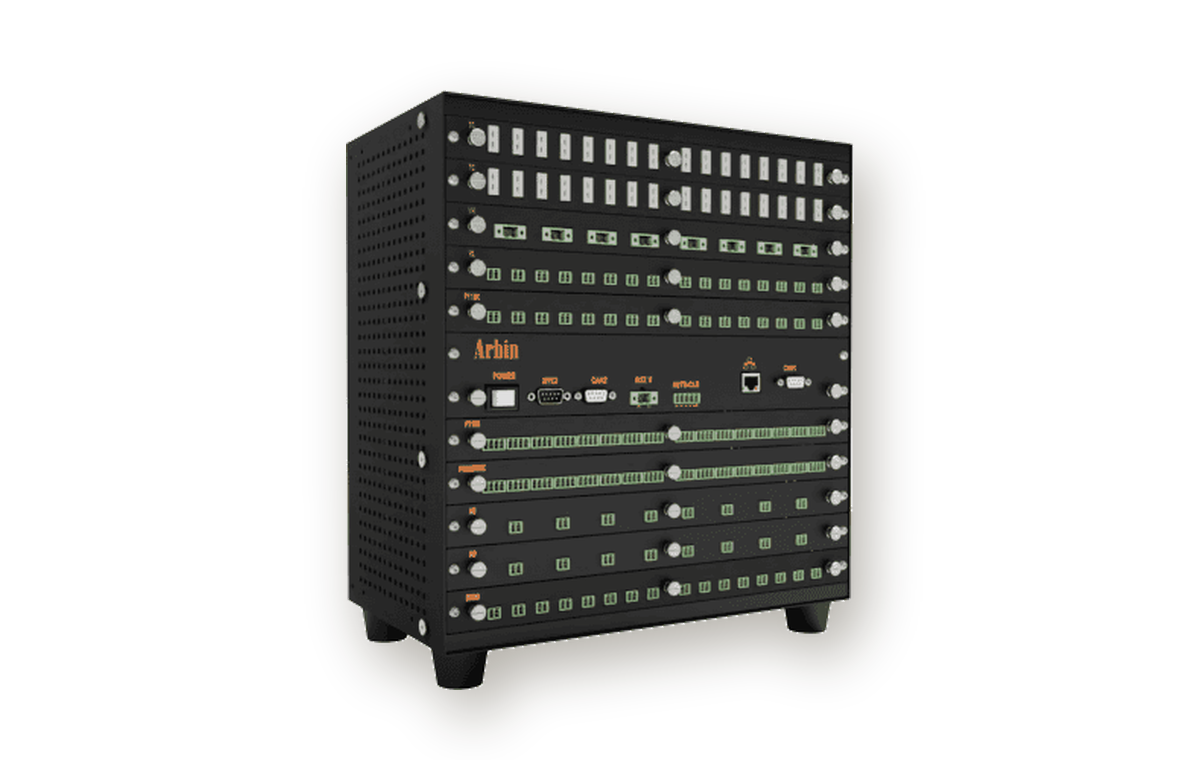
Auxiliaries
- Temperature sensing — real-time thermal monitoring for chambers and cell surfaces
- Auxiliary voltage inputs — monitor individual cell voltages or reference electrodes within packs
- Analog & Digital I/O — control external devices like pumps, fans, valves, and safety interlocks
- CAN Bus interface — direct communication with Battery Management Systems
- SMBus interface — read and write smart battery registers during testing
- Uninterruptible Power Supply (UPS) — detect power loss and safely pause or resume tests

CTI & External Controls
- Custom Test Instructions (CTI) — script test logic beyond standard commands, written in C#/.NET
- Application Programming Interface (API) — connect MITS Pro to LIMS, MES, or in-house systems for automated data exchange
- External device control — drive third-party power supplies, DAQs, or lab instruments directly from the test schedule
- Custom hardware drivers — integrate vendor-specific communication protocols not natively supported out of the bo
Tell us what you're testing
Share your cell format, voltage and current requirements, channel count, and test objectives. An Arbin sales engineer will recommend the appropriate system configuration and supporting options.
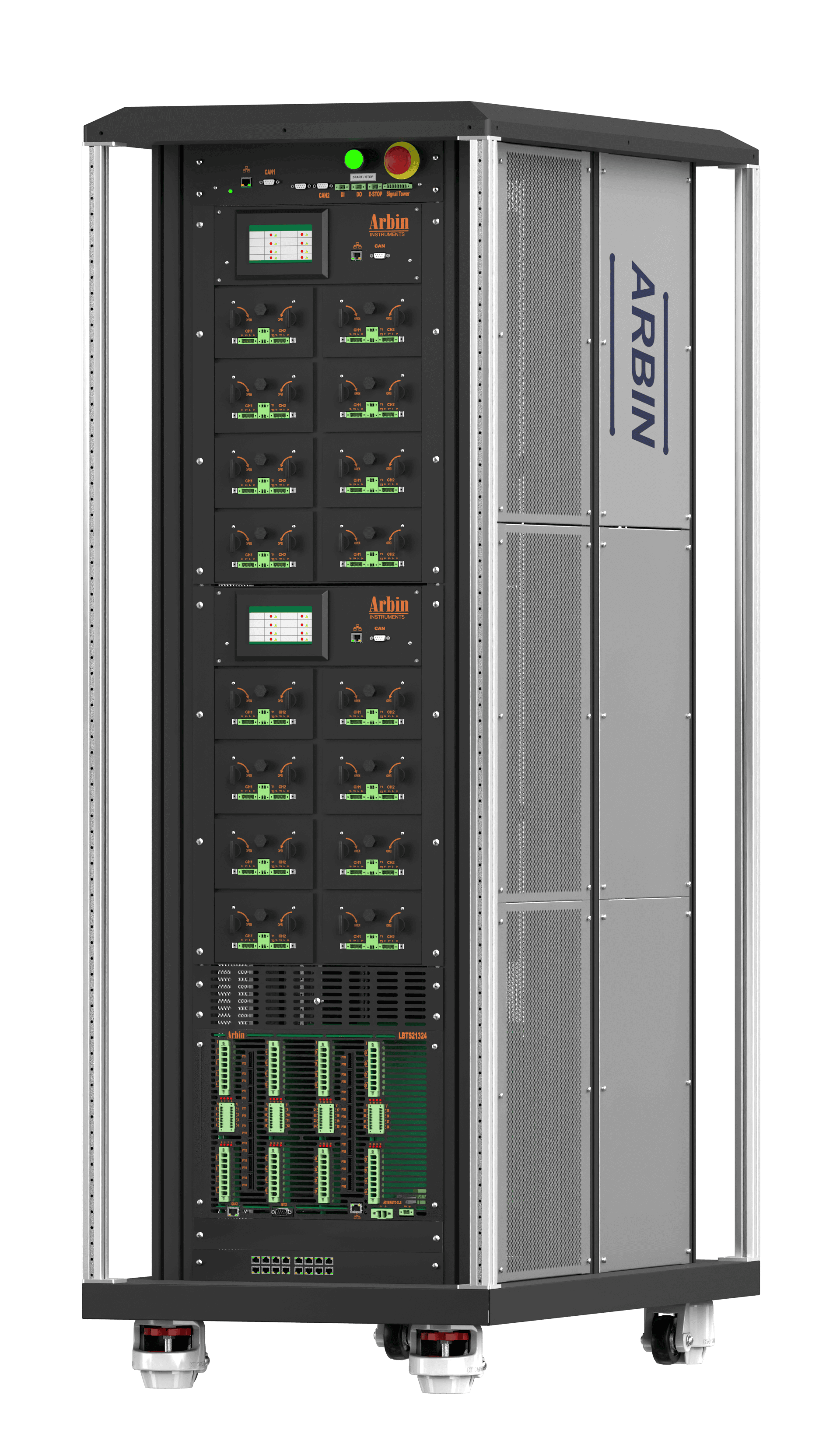
LBTS-MZTC
Turn-key high-precision cell testing solution integrated with Arbin’s patented Cell-Isolating Thermal Chamber
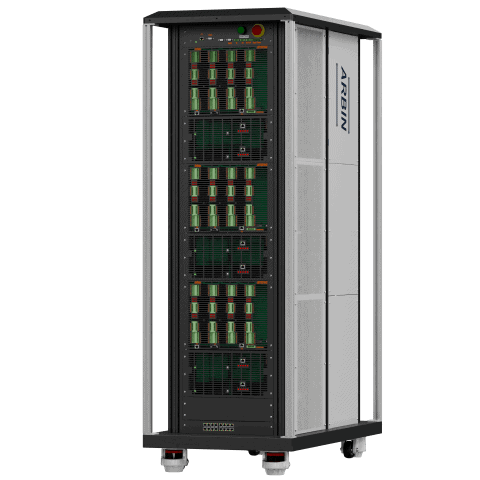
LBTS-Cell High Volume
The perfect solution for high-volume testing. Ideal for incoming quality control and large-scale testing.
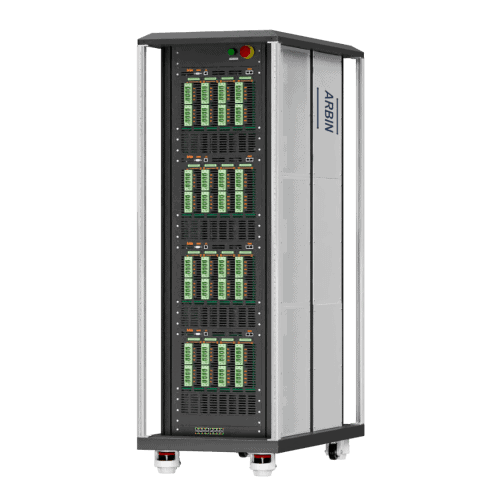
RBT-Cell
High current cell testing solutions utilizing Arbin's regenerative technology for efficient and reliable testing.
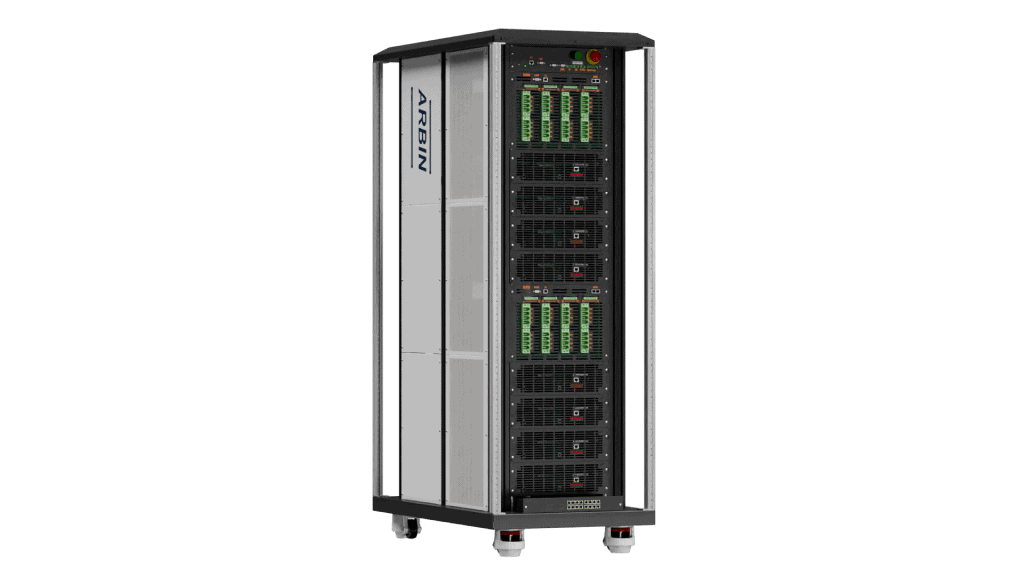
RBT-Module Series
The RBT system ensures high power density and efficiency, while its regenerative circuitry returns power to the grid, making it economical for testing.
