 English
  简体中文
简体中文  한국어
한국어 
Since 1991
Battery test equipment for cells, modules and packs
Arbin builds battery cyclers – linear, regenerative and turnkey solutions – at all levels ranging from a coin cell to a megawatt pack. One measurement architecture across the whole range, so data from a bench matches data from a production floor.
Find the right equipment
Start with what you're testing
Choose the battery level or manufacturing process you work with. Each path narrows the relevant voltage, current, channel count and system architecture.

01 / Cell
Battery Cell Testing
Low-current research, high-throughput cycling and high-current testing for individual cells.
Explore cell testers →
02 / Module
Battery Module Testing
Linear and regenerative systems for module development, characterization and validation.
Explore module testers →
03 / Pack
Battery Pack Testing
Regenerative high-voltage testing for EV, energy-storage and other high-power battery packs.
Explore pack testers →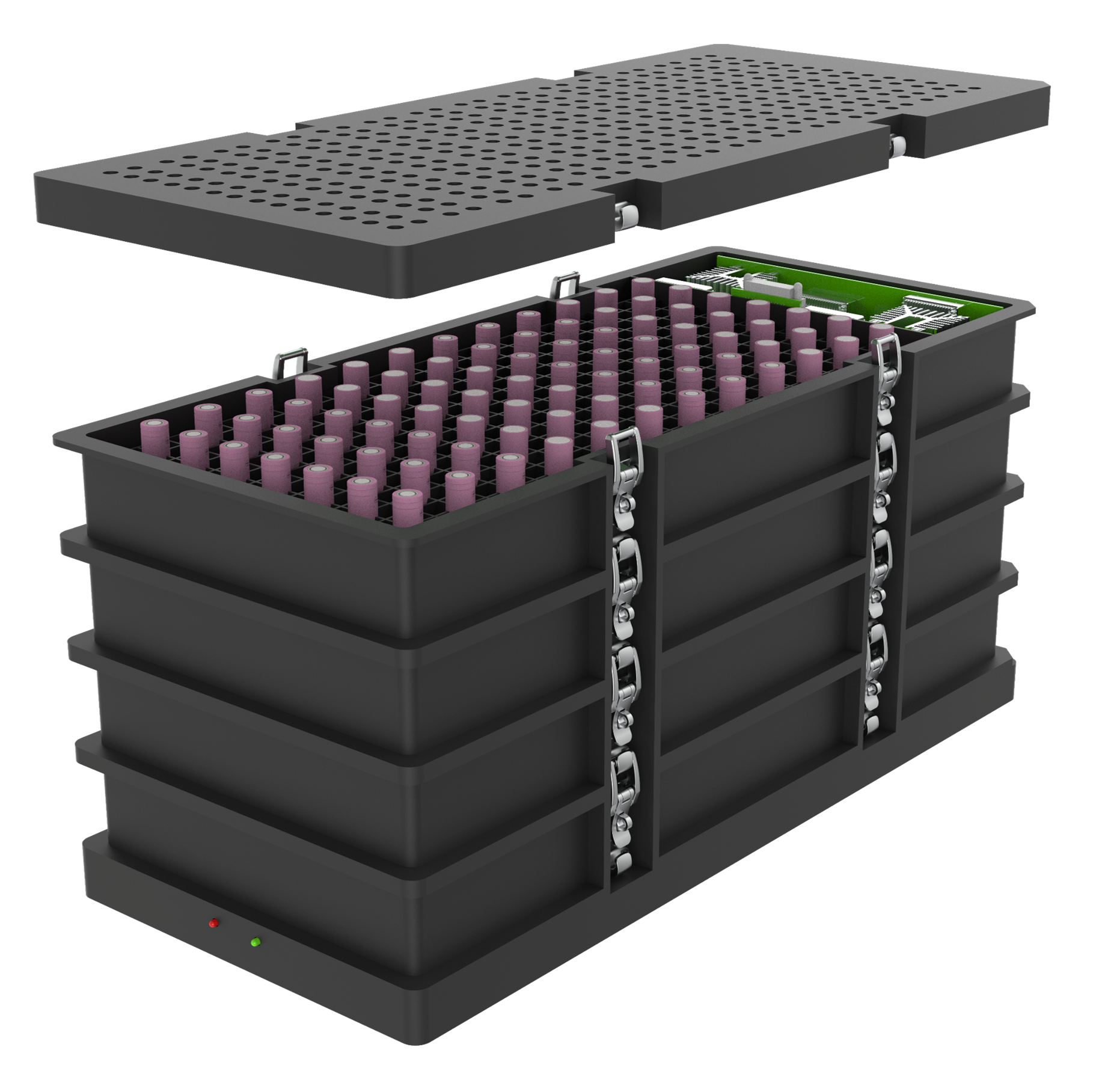
04 / Formation
Cell Formation
High-throughput formation, grading and finishing solutions for battery manufacturing.
Explore cell formation →One platform for every system
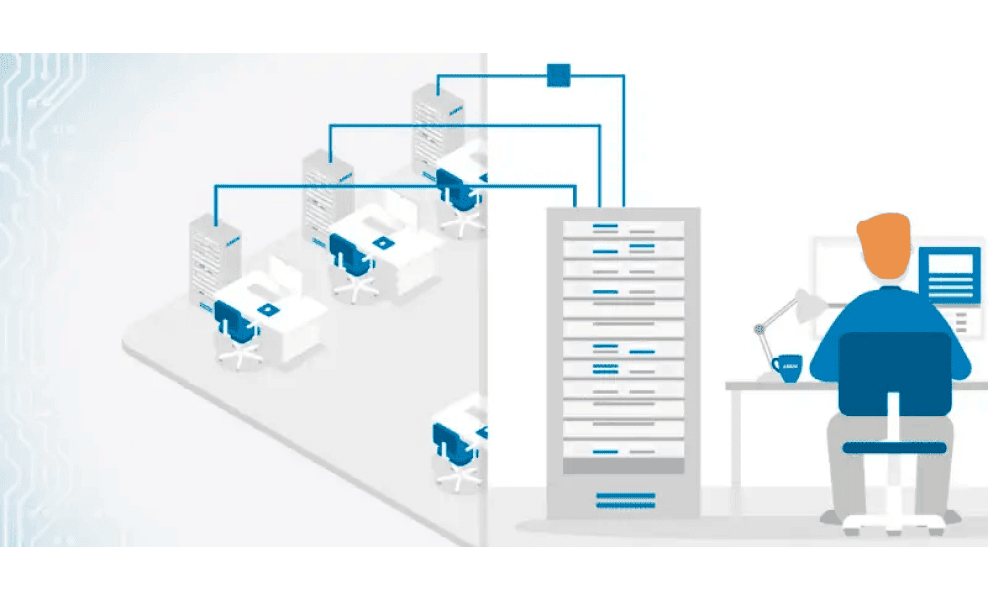
A schedule validated on a benchtop LBT runs unchanged on a 256-channel cabinet, because test design, execution, data and automation belong to one platform rather than four tools bolted together. Every channel is an independent potentiostat and galvanostat, so electrochemical characterization and long-run cycling run on the same hardware and land in one time-aligned dataset.
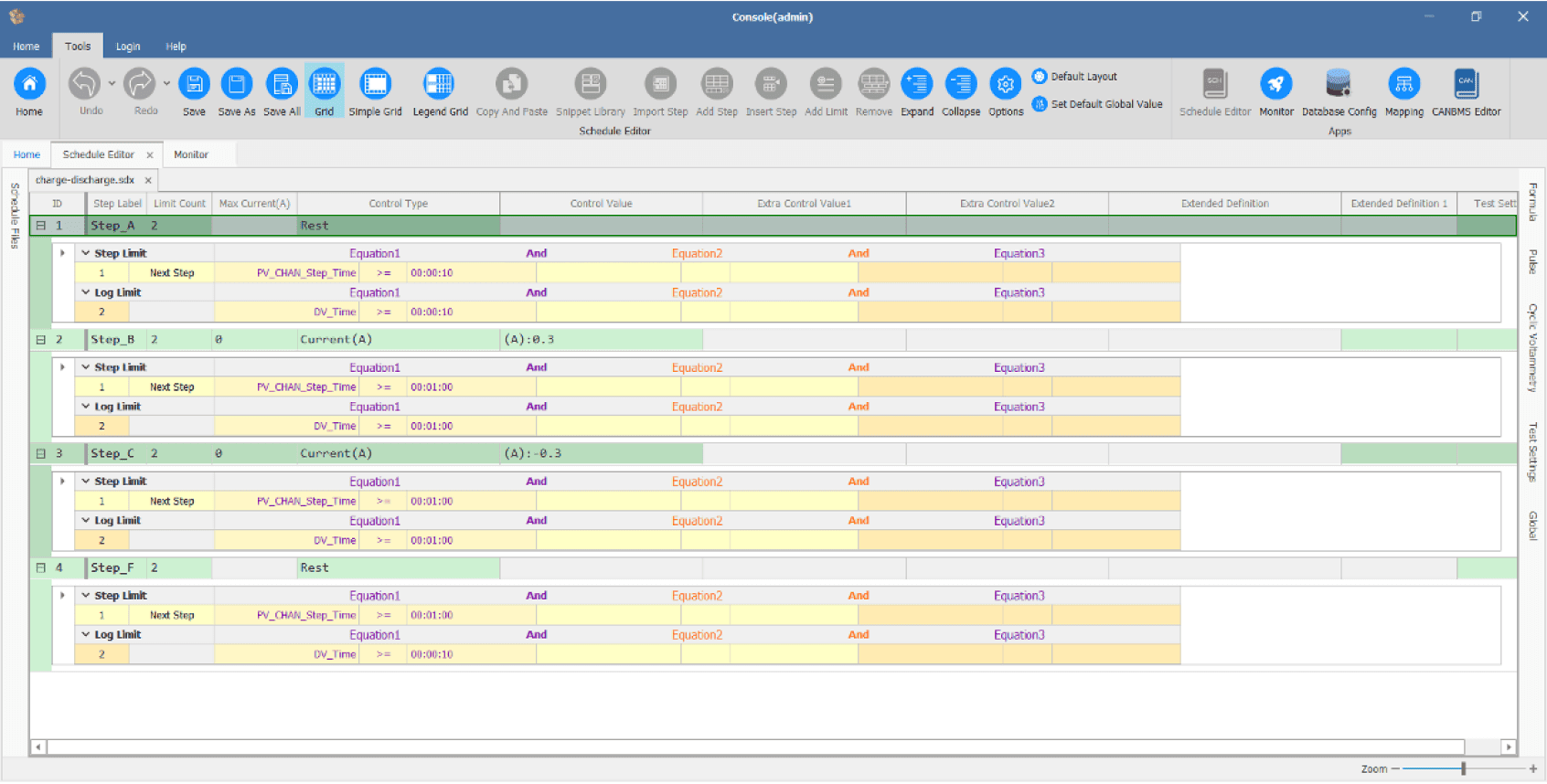
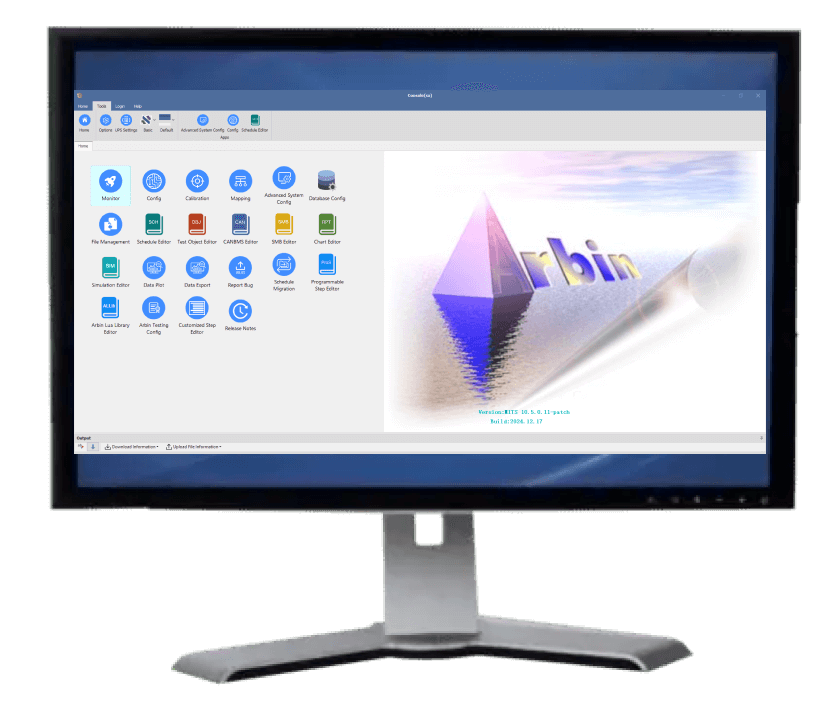
The MITS platform
Four layers, one codebase — from schedule design through to database and API integration.


What you can run on these channels
Every method below is built and executed in the same platform above, on any system on this page.
Beyond the Cycler
Build the Complete Battery Test Laboratory
The cycler is the center. Temperature control, fixtures, auxiliary measurement and electrochemical instruments attach to it, so one system covers the whole test lab.
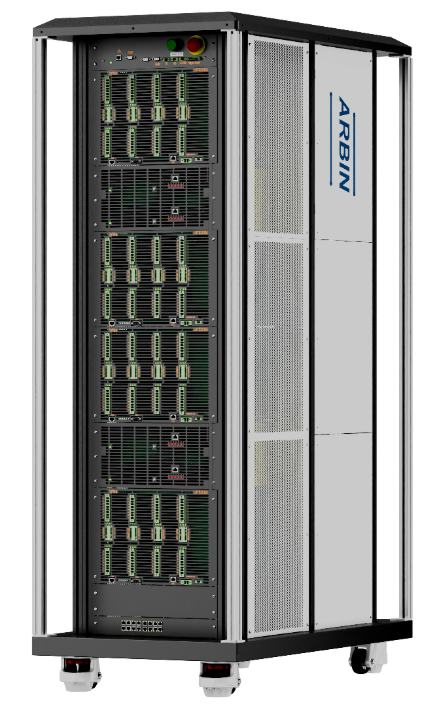
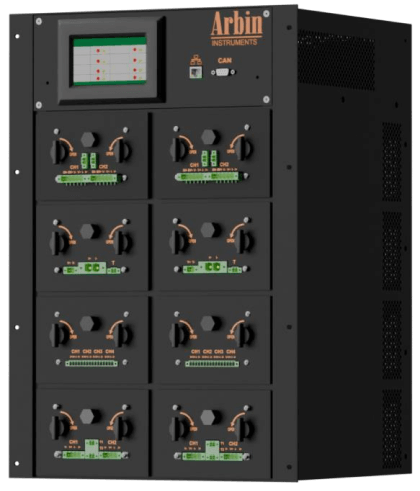
10 µA to 1,600 A across the range, every channel independently controlled. Everything around it attaches to this chassis and is configured in one schedule.
Control the environment
Temperature Control
Arbin MZTC chambers give each zone its own setpoint. A compatible third-party chamber can be driven from the same schedule instead.
Temperature control →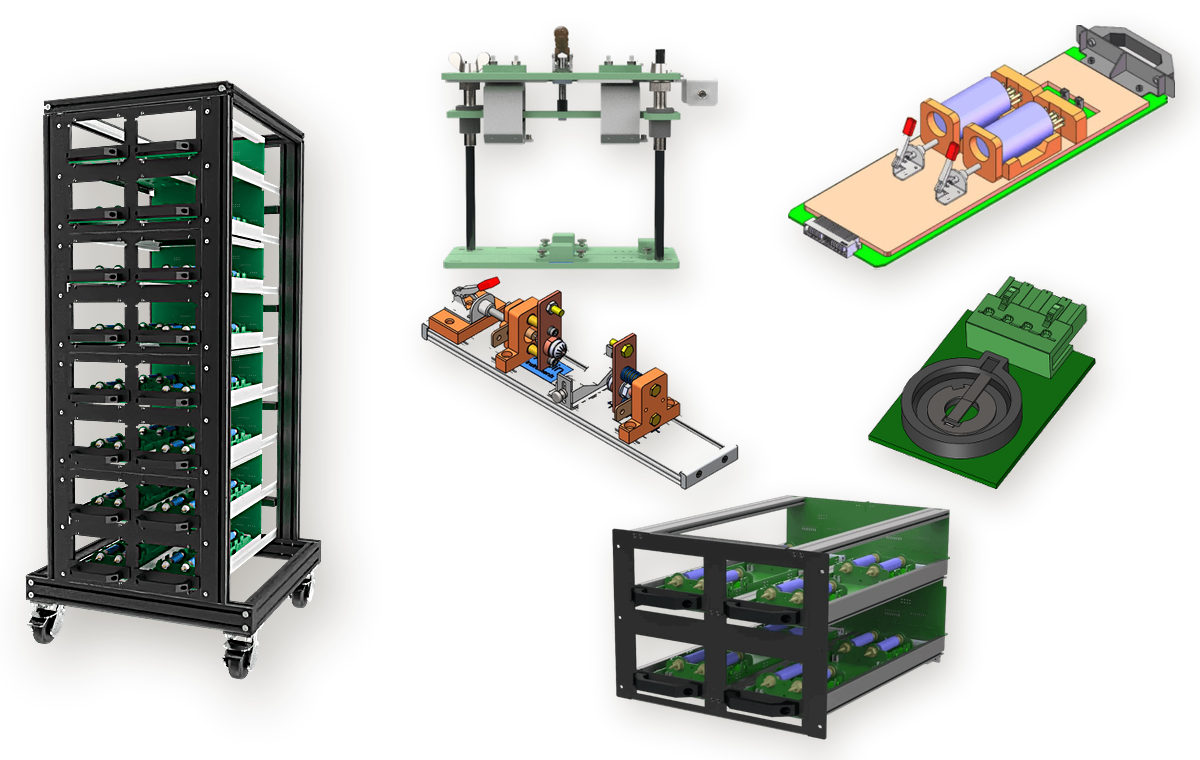
Connect the cell
Cell Holders & Fixtures
Purpose-built holders for coin, cylindrical, pouch and prismatic cells, plus racks that keep contact repeatable across a batch.
Holders & fixtures →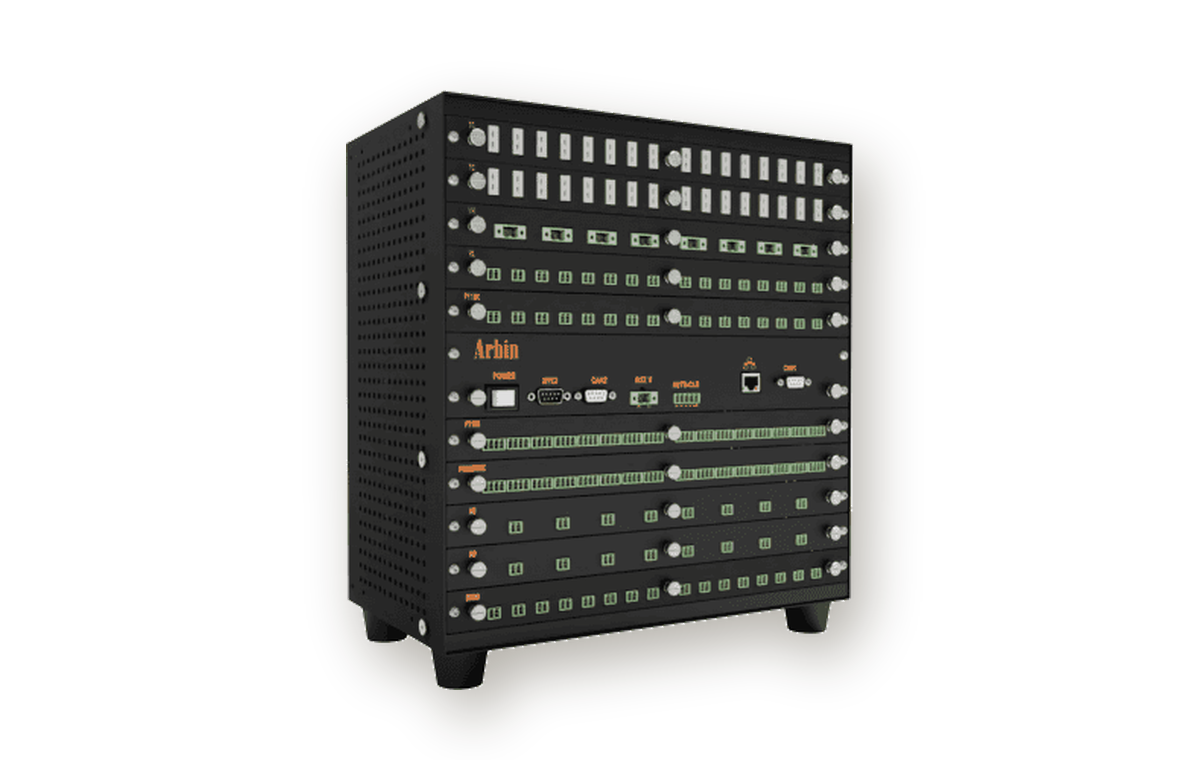
Expand measurement
Auxiliary Measurements
Temperature, sense voltage and analog I/O logged on the same time base as the channel data, in one dataset rather than two.
Auxiliary options →
Add electrochemistry
Electrochemical Add-Ons
Integrated Gamry EIS on compatible systems, sequenced from the same schedule as the cycling steps.
EIS application notes →Built on high-precision measurement
A cycler is a metrology instrument, and its value over a test schedule depends on whether the specifications it was sold on still hold over the year. The four points below cover where Arbin's measurement architecture comes from, how it is verified, and what it measures to.
Supported from your region
Arbin systems are running in more than 55 countries. Alongside the 65,000 sq ft headquarters and production facility in College Station, Texas, regional offices carry their own service and applications engineers, so installation, calibration and support happen locally rather than remotely.
Side by Side
Compare Arbin Battery Testing Systems
Compare Arbin systems by application, voltage range, current capability and channel count — from laboratory cell research through module, pack and production-scale formation.
| Product | Best For | Voltage Range | Current Range | Channel Range |
|---|---|---|---|---|
| Core Cell Cyclers | ||||
| LBTS-Cell All-Purpose High-precision linear cell cycler | General cell R&D, characterization, lifecycle testing, grading and incoming quality control. | 0–5 V / 0–10 V Configuration dependent | 10µA–500A/channel Wide range of low- and high-current configurations | 4–256 Configuration dependent |
| RBT-Cell Regenerative High-current regenerative cell cycler | High-current cells, fast-charge development, pulse testing and energy-efficient long-term cycling. | 0–6 V / 0–20 V Configuration dependent | 100–400A/channel Up to 1,600A with channel paralleling | 4–64 Voltage and current dependent |
| LBTS-Cell High Throughput High Throughput High-density cell testing system | Incoming cell quality control, grading, validation and large-scale repetitive testing. | 0–5 V | 1mA–1A or 10A/channel High-density 1A and 10A configurations | 192 or 256 Per system |
| Benchtop & Specialized Research | ||||
| LBT-Benchtop Compact Laboratory Battery Tester | General laboratory research, capacity testing, aging, quality control, impedance and self-discharge measurement. | 0–5 V | 100µA–10A/channel 1A, 5A and 10A models | 8–16 |
| HPS Ultra-High Precision High-Precision Battery Tester | Coulombic-efficiency testing, materials research and early detection of small battery degradation trends. | ±6 V | 100µA–5A/channel Six automatically selectable current ranges | 2 Per benchtop unit |
| PDBT Parallel Testing Parallel Differential Battery Tester | Cell-to-cell comparison, parallel current-sharing behavior, cell matching and self-discharge measurement. | Cell-level See product configuration | 1mA–5A Four current ranges | 8 Parallel differential channels |
| Integrated Cell Test Systems | ||||
| LBTS-MZTC Turnkey Integrated cycler and multi-zone thermal system | Turnkey cycler with integrated multi-zone temperature chamber with 16 independent temperature zones. | Cell-level Configuration dependent | 5, 10 or 20A/channel Four current ranges per channel | 32 Integrated test channels |
| SBTR Integrated Thermal Smart Battery Tray | Dedicated TEC and closed-loop temperature control for every individual cell.. | Cell-level Depends on paired cycler | 30–200A/cell Configuration and cell-format dependent | 4–96 Standalone trays or integrated racks |
| Module & Pack Testers | ||||
| LBTS-Module Linear Laboratory module testing | Module R&D, characterization, cycle-life testing and BMS validation. | 20–100 V | Up to 80A/channel Higher current through channel paralleling | Up to 32 Per chassis |
| RBT-Module Regenerative High-current module and small-pack tester | High-current module cycling, drive profiles, BMS validation and incoming quality control. | 30–200 V | 75, 150 or 300A/channel Up to 1,800A with channel paralleling | 2–24 Configuration dependent |
| RBT-Pack Regenerative High-voltage battery pack tester | EV and energy-storage pack validation, life-cycle testing and drive-cycle simulation. | 300–1,500 V | 100, 150 or 200A/channel Higher current through channel paralleling | Up to 6 Configuration dependent |
| Cell Formation & Finishing | ||||
| SPT Cell Formation Formation Series Parallel Technology formation solution | Production-scale cell formation, aging, self-discharge monitoring and grading. | Application-specific Configured around cell requirements | Application-specific Formation architecture configured around cell requirements | 336 or 128 336 for 18650/21700; 128 for 46xx |
Product-family ranges are summarized for comparison. Available voltage, current and channel-count combinations depend on the selected system configuration.
Tell us what you are testing
Whether you are testing a cell, module or pack, share your requirements and we’ll help configure the right system. Start with the details below. If you don’t have every answer yet, send what you know and a sales engineer will help work through the rest.
Frequently asked questions
Choosing battery test equipment
What is a battery cycler?
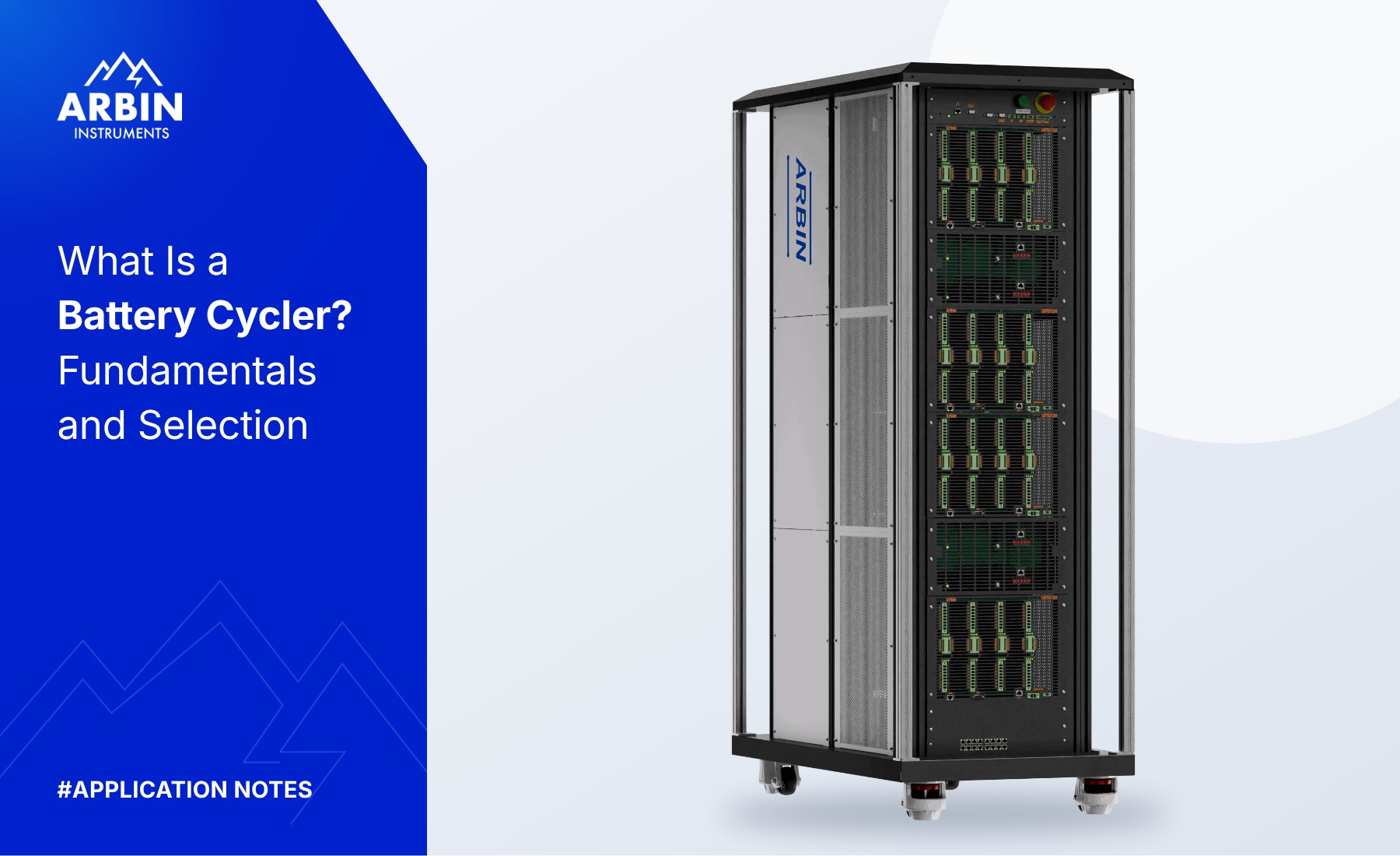
A battery cycler is a programmable instrument that charges and discharges a cell, module or pack on a defined schedule while measuring voltage, current, capacity and energy. Beyond the electrical channel, a test-grade cycler also coordinates temperature, auxiliary measurements, BMS communication and simulated load profiles, so the data reflects the conditions the battery will actually see.
What is the difference between cell, module and pack testers?
The voltage of the device under test (DUT) is the deciding factor. Cell systems here run at ±5 to 20 V and compete on measurement quality or channel density. Module systems run 20 to 200 V and compete on current and integration. Pack systems run 300 to 1,500 V, are regenerative by necessity at that power, and are bought largely on CAN and BMS integration and on facility fit. A pack tester is not a cell tester scaled up: resolution drops from 24-bit to 16-bit at pack scale, which is why the specification is published per class.
What is the difference between precision and accuracy on a datasheet?
Accuracy is how close a reading is to the true value; precision is how repeatable it is. They are different numbers and should be published separately, never merged into one figure. For degradation work precision usually matters more, because the question is whether a small change between cycle 400 and cycle 500 is real. Resolution is a third thing again: the number of counts the converter can express, which sets the floor on what either figure can mean.
Can Arbin integrate temperature control?
Three ways, and the right one depends on whether cells need to be at different temperatures at the same time. A third-party chamber under MITS control gives one condition to everything inside the chamber. The Arbin system can control multiple chambers at once, with cells inside the chamber synchronized to transition together. Any system can be paired with Arbin's MZTC stand-alone mini chambers for individual climate zones. The LBTS-MZTC provides an integrated cycler + chamber system with sixteen thermally isolated mini-chambers from 10 to 60 °C at ±0.5 °C. The SBTR puts a thermoelectric plate against each cell, for per-cell surface temperature on cylindrical formats.
When should I use a regenerative battery tester?
When current or power is high and the duty cycle is long. A linear system dissipates discharge energy as heat, which the facility then has to remove. A regenerative system returns it, at 80 to >90% for the RBT-Module and Pack series. For short characterization runs the saving rarely justifies it; for channels cycling at high rate for months, it changes both the electricity bill and the cooling load.
How do I choose a current range?
Start with the maximum charge and discharge current, then check the lowest current you need to measure accurately, because that is what most specifications hide. A system with two or four auto-switching ranges per channel keeps the measurement meaningful across both ends of the same test.
Can different Arbin systems share the same software?
Yes. Every system on this page is written and run in MITS, across Windows, macOS and Linux, so a schedule developed on a benchtop research channel runs on a pack tester without being rebuilt. Data from all of them lands in one format, and the Central Data Solution aggregates it across a facility rather than leaving files on individual machines.
Not sure which system you need?
Voltage, current, channel count and cell format is enough to configure one. Tell us the test and an applications engineer will come back with the tester, fixtures, thermal equipment and software options together, rather than a channel in isolation.
