 Deutsch
  English
  简体中文
简体中文  한국어
한국어 
So plottest du ein Potenzial-gegen-Strom-Diagramm mit dem Arbin Data Watcher
1. Einleitung 1.1 Hintergrund Arbin DataWatcher wird hauptsächlich als…

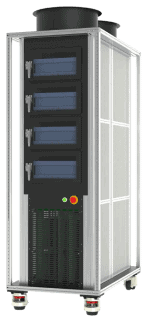
1. Einleitung 1.1 Hintergrund Arbin DataWatcher wird hauptsächlich als…

1. Einleitung Batterietests sind im Grunde eine Messaufgabe. Ob die Ermittlung der Zyklenlebensdauer…
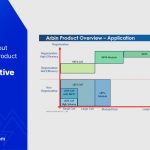
Energieeffizienz ist ein wichtiges Anliegen für jedes Werk und jede Abteilung…
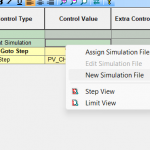
Informationen und Anleitungen zur Verwendung der Simulation…
Cyclic Voltammetry sweeps a potential (or current) linearly between set limits at a fixed scan rate, then reverses it to form a complete cycle. It’s used to study redox reactions, kinetics, and the electrochemical behavior of materials. In Arbin, a CV routine is defined at two levels: CV level: identifier (CV Label), number of sweep […]
Test Settings Test Settings is a feature in Arbin’s MITS software that lets you control peripheral hardware — third-party temperature chambers, digital output (DO), and analog outputs (AO) — directly from the test schedule. Use it to: Set the target temperature on a temperature chamber Set target pressure and humidity on a pressure/humidity chamber Send […]
Arbin Software lets you control a test with variables instead of fixed values. For example, rather than entering 4.2 V as a control value, you can set the next step’s control type to Last Step Maximum Voltage. These variables can also be combined into formulas that drive the test. For example, you can define FORMULA […]
Please see details in this following links: Arbin Instruments Standard Limited Warranty | Arbin Instruments
With Lua scripting, you gain precise, programmable control over your Arbin test equipment. Combined with Schedules, Lua scripts provide a more advanced way to automate and fine-tune your tests. Lua scripting can reference and calculate live testing Lua metavariables, dynamically adjust channel output using complex logic, change ODR within a step, log data at any […]
Arbin SMB, unlike CAN BMS, supports a maximum of 128 variables — a limit shared by both MITS8 and MITS10.
MITS 8 supports 512 variables. MITS 10 and onward support 2500 variables. Meta Variable Name — The meta variable name is predefined in MITS 10 and cannot be edited. Meta variables store the values of CAN signals and make them available for use in the schedule. They are named CAN_MV_RXn, where n = 1, 2, […]
Yes, Arbin MITS software provides several tools to help you during schedule writing. You can import content from other schedules, and you can also duplicate content within a schedule itself. In MITS 10, a sub-schedule option is also available. We’ll walk through each of these. Importing content from another schedule: a. Click the “Import Step” […]
Arbin battery testers are primarily used for electrical performance testing. For mechanical abuse tests such as vibration, crush, or nail penetration, Arbin can be integrated with third-party mechanical/safety test equipment to control charging/discharging, monitor battery response, log synchronized data, and trigger safety actions through auxiliary I/O. For vibration testing, the main machine is usually a […]
Besides the main chassis, Arbin offers a wide range of auxiliary devices to support battery research and testing, including: Auxiliary temperature and humidity measurement Auxiliary second voltage measurement Auxiliary pressure measurement MTCI – for integration with third-party chambers DIDO – Digital Input / Digital Output AIAO – Analog Input / Analog Output EIS – integrated […]
In general, we offer holders for cylindrical, pouch, coin, and prismatic cells. We also provide battery racks for both coin cells and cylindrical cells. Cell type Max current Coin cell 3 A, 5 A Pouch cell 10 A, 60 A, 300 A Cylindrical cell 10 A, 30 A, 60 A, 200 A Prismatic cell 300 […]
Physically, yes. The MZTC can be connected to the cycler through the charge/discharge port. On the MZTC, each mini chamber’s temperature can be controlled directly using the built-in LCD screen. However, we currently do not have a communication protocol that allows the cycler to control the MZTC through software.
