简体中文
简体中文  English
  한국어
한국어 
How Can Current Measurement Offset Make Coulombic Efficiency Appear to Exceed 100%?
One common reason that measured coulombic efficiency…

One common reason that measured coulombic efficiency…

A common end-of-life criterion for lithium-ion cells…
1. 引言 1.1 背景 Arbin DataWatcher 主要用于…

1. 引言 电池测试本质上是一项测量任务。无论是评估循环寿命……
Four notes most engineers read first.
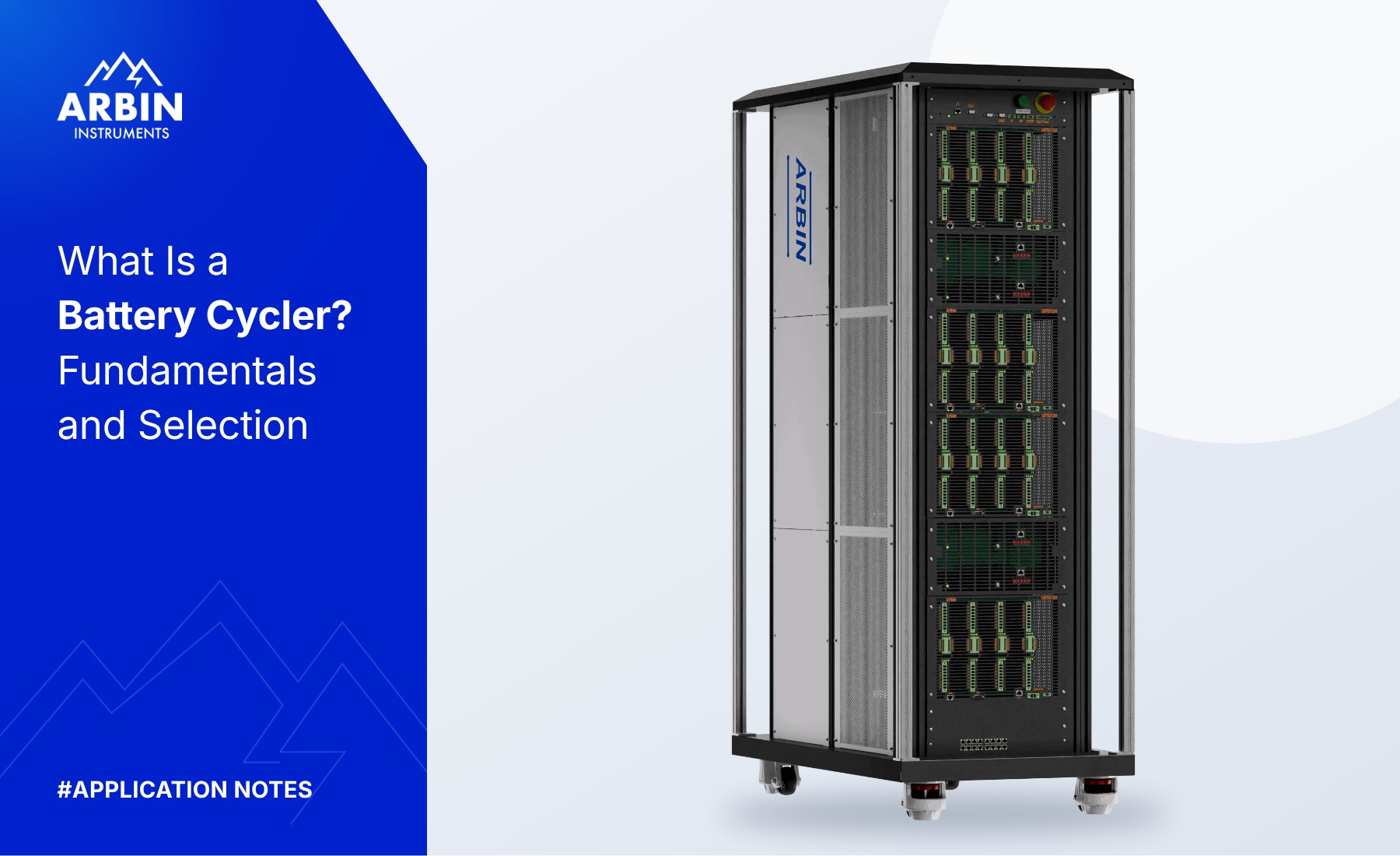
How a battery cycler works, the specifications that decide data quality, and how to choose a cell testing system.
Home › Resources › Application Notes › Cell Grading & Matching Application Note AN-025 Battery Cell Grading and Matching: Why Measurement Precision Determines Pack Performance Summary A battery pack is only as good as its weakest cell. In a series string, charging stops when the first cell reaches its upper voltage limit and discharging stops […]
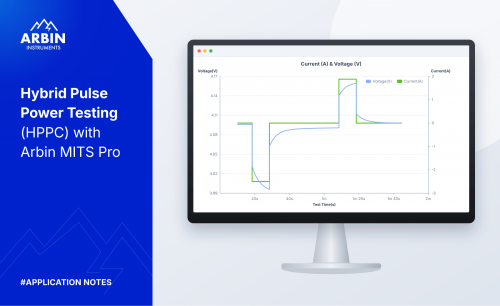
Home › Resources › Application Notes › HPPC Application Note AN-024 Hybrid Pulse Power Characterization (HPPC) Testing with Arbin MITS Pro Summary The Hybrid Pulse Power Characterization (HPPC) test measures the pulse resistance and pulse power capability of a battery across its state-of-charge (SOC) range. This application note describes the HPPC method, the cycler characteristics […]
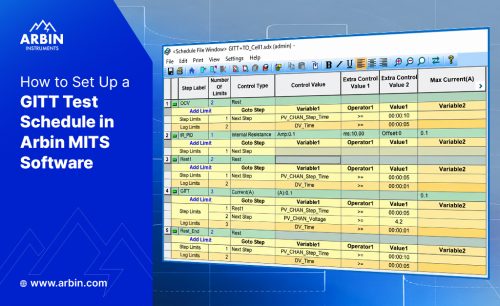
I. Introduction The Galvanostatic Intermittent Titration Technique (GITT) is an electrochemical method commonly used to study ion diffusion behavior and transport kinetics in battery electrode materials. A typical GITT test consists of a sequence of constant-current pulses followed by open-circuit relaxation periods. During each current pulse, the cell voltage changes as the state of charge […]
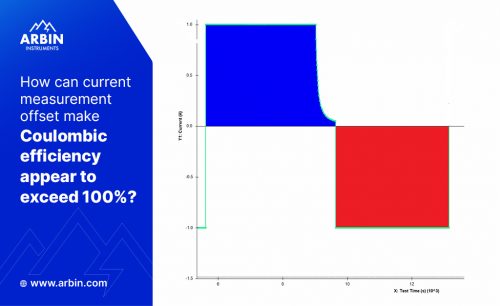
One common reason that measured coulombic efficiency (CE) can appear to exceed 100% is a current measurement offset. In this example, assume the cycler has a constant negative current offset e. This means the measured current is lower than the true current by e throughout the test. To simplify the analysis, assume an ideal battery […]
A common end-of-life criterion for lithium-ion cells is when the measured discharge capacity falls to 80% of its initial value. This document demonstrates how to configure an Arbin test schedule to automatically cycle a cell until this threshold is reached. Overall test procedure: Initial capacity measurement → Cycling loop → Compare capacity to 80% → […]
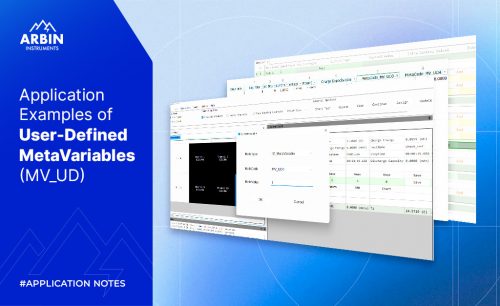
在Arbin软件中,MV_UD(用户自定义元变量)是控制电池测试仪的强大工具。本文将介绍如何在Arbin MITS软件中使用MV_UD。使用SetValue(s)在MV_UD中存储值在“控制类型”列表中,选择“SetValue(s)”。SetValue(s)将某个物理量在特定时刻的固定值赋给 […]
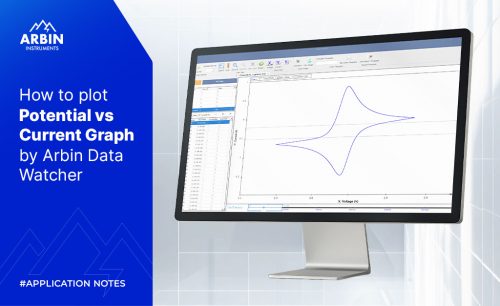
1. 引言 1.1 背景 Arbin DataWatcher 主要用作实时数据分析和可视化工具。它允许用户高效地监控测试数据、绘制曲线和导出数据文件。它使用户能够可视化和分析电压、电流、容量和时间等关键电化学参数。 1.2 本应用笔记的目的 [ […]
我们之前的一篇文章探讨了测量精度方面的影响。在本文中,我们将重点转移到电池测试仪精度对电池研究的影响。在许多研究应用中,dV/dt 和 dQ/dV 等参数被广泛使用。这些测量的可靠性在很大程度上取决于 [...] 的精度。
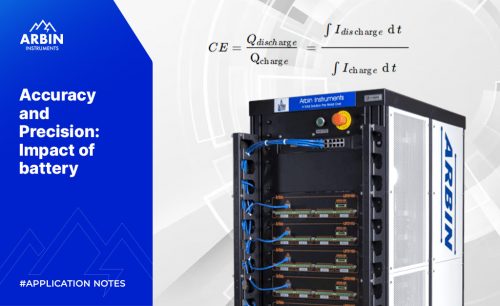
在上一篇文章中,我们介绍了准确度和精度的概念,并简要概述了它们对电池测试的影响。在本文中,我们将深入探讨准确度的影响。我们将以容量测量和库仑效率测量为例来分析其影响。正如我们所…
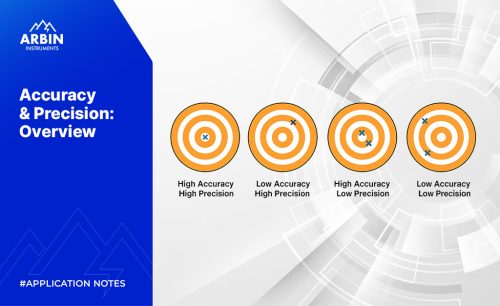
1. 引言 电池测试本质上是一项测量任务。无论是评估循环寿命、库仑效率、电压响应还是退化机制,结论的质量都取决于数据的质量。在任何电池测试系统中,有两个概念决定着数据的完整性:准确性和精确性。尽管它们经常被一起提及,但它们描述的是测量性能的不同方面。 […]
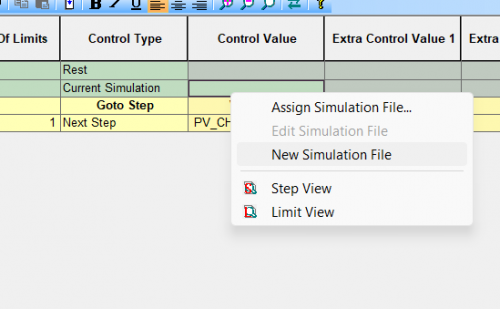
模拟控制类型的信息和说明。1. 通用描述 模拟是指能够将从非制定动态模式(即恒定电流、恒定电压、恒定功率、斜坡、阶梯、脉冲或公式以外的模式)收集的数据作为控制函数输入的能力。有三种控制类型:1. 电流模拟 – 使用 [...]
Send us your test plan. An Arbin applications engineer will recommend a system and write the first schedule with you.