 简体中文
简体中文  English
  한국어
한국어 
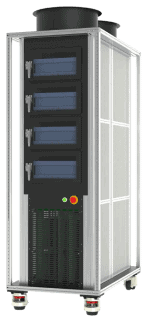
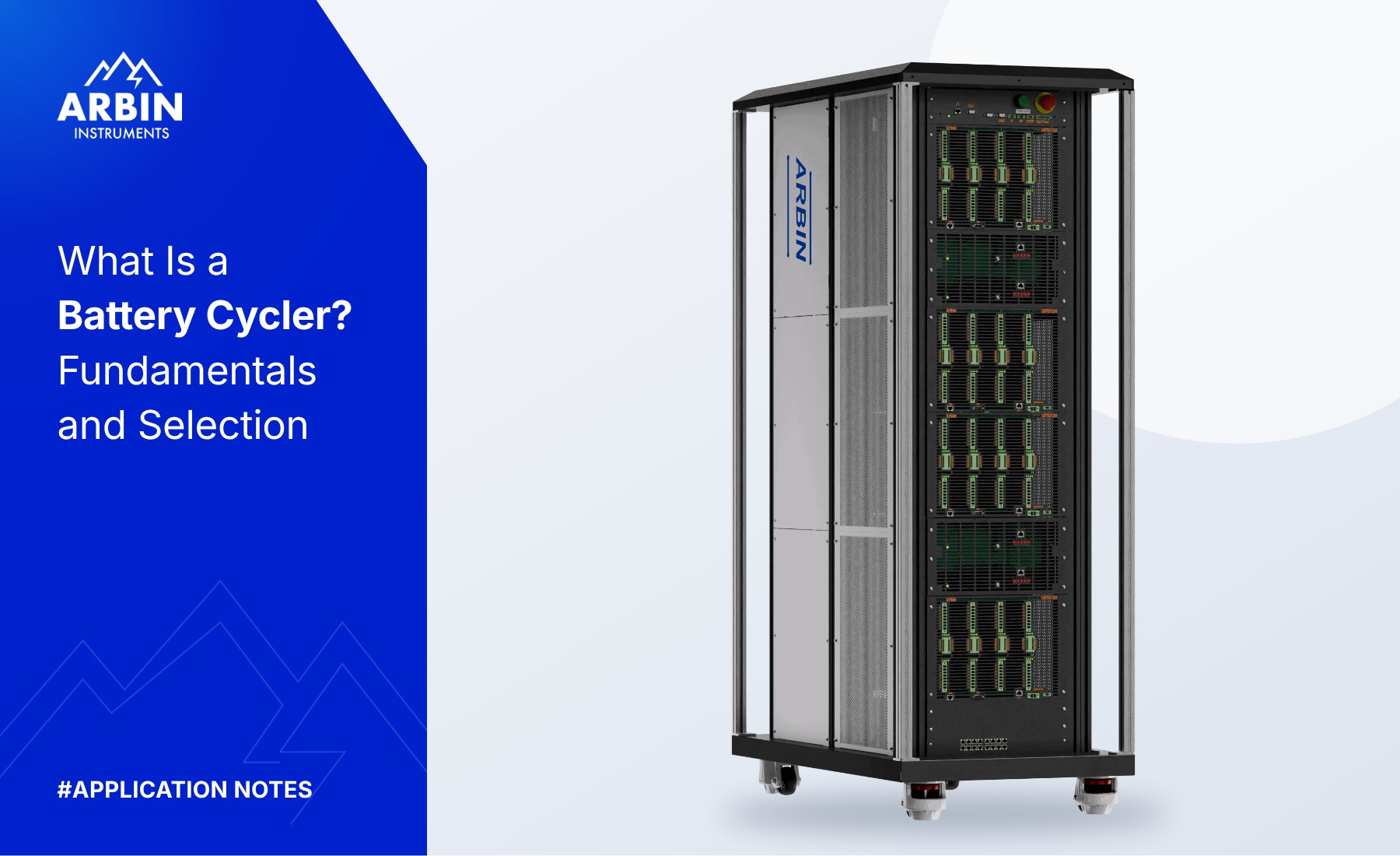

What Is a Battery Cycler?
摘要
A battery cycler charges and discharges a battery under programmed control while measuring voltage, current, time and temperature. This note explains how a cycler works, which parameters decide data quality, and how to select an Arbin cell testing system.
1What Is a Battery Cycler?
A battery cycler, or cell tester, is a programmable bidirectional source and load with high-accuracy measurement. Each test channel runs a schedule of steps and records voltage, current, time, capacity and energy. Beyond simple charge–discharge cycling, modern cyclers run pulse, drive-cycle and electrochemical techniques. Because every result is derived from its measurements, measurement quality decides how small a difference, or how early a degradation trend, can be detected.
Table 1. Battery cycler applications at a glance
| 应用 | EV and e-mobility · Energy storage (ESS) · Consumer electronics · Aerospace · Medical devices · Power tools |
| Chemistries | Li-ion (NMC, NCA, LFP) · LTO · Solid-state · Lithium metal · Sodium-ion · Li-S · Lead-acid · NiMH · Supercapacitors |
| Cell formats | Coin · Cylindrical (18650, 21700, 46xx) · Pouch · Prismatic · Blade · Three-electrode |
| Test level | Materials · Cell · Module · Pack |
| Test methods | CC-CV cycling · Lifecycle testing · Rate capability · DCIR · HPPC · GITT · PITT · Cyclic and linear sweep voltammetry · EIS · dQ/dV · Coulombic efficiency · Self-discharge · Drive cycles · Formation and grading |
2How a Battery Cycler Works
2.1The Test Channel
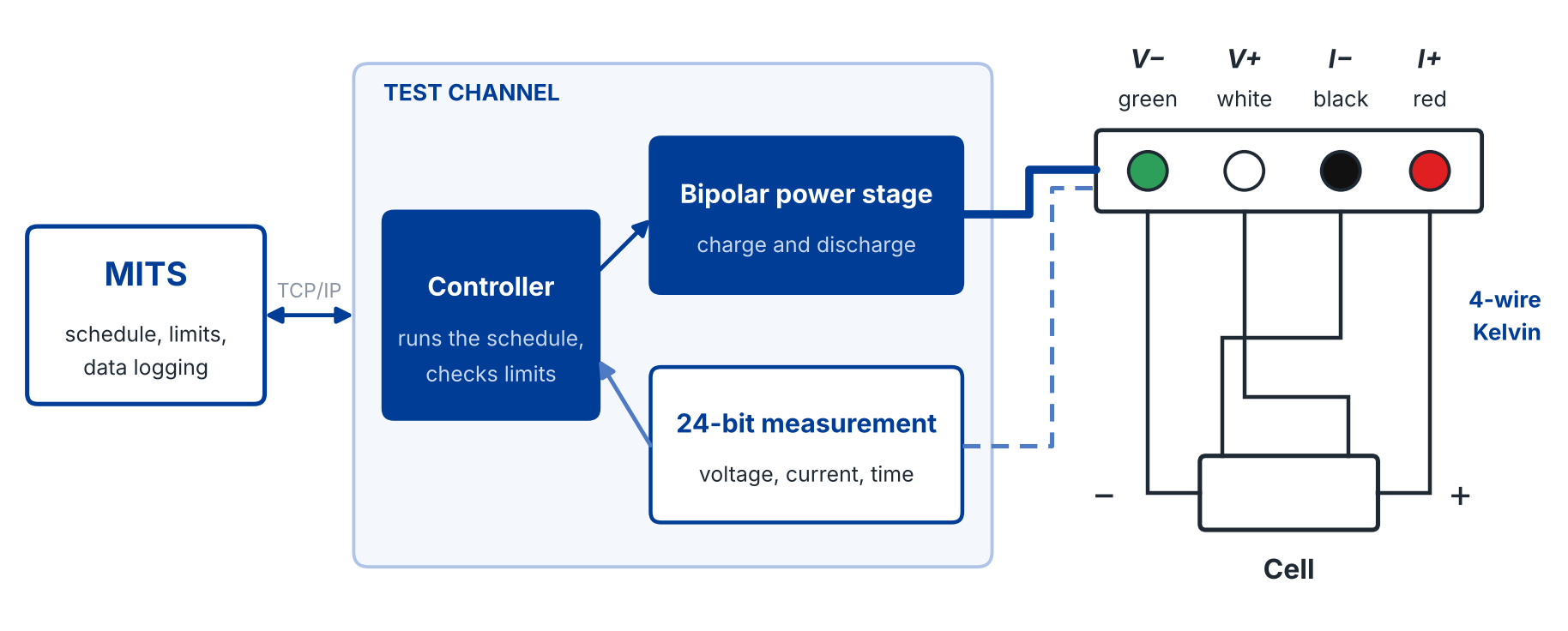
A controller runs the schedule, a bipolar power stage charges and discharges the cell without relay switching, and 24-bit circuitry measures voltage, current and time (Figure 1). Force leads (I+, I−) carry the current; sense leads (V+, V−) measure voltage directly at the cell, so cable losses do not affect the reading [1][2].
2.2Control Modes
Table 2. Common control modes
| Control mode | Typical use |
|---|---|
| 休息 | Relaxation, OCV, thermal soak |
| Constant current / C-rate | Capacity tests, standard charge and discharge |
| Constant voltage | CV phase of CC-CV charge |
| Constant power / resistance | Energy tests, load emulation |
| Pulse | DCIR, HPPC [4] |
| Drive cycle / simulation | EV and field profiles |
| Voltage sweep | Cyclic and linear sweep voltammetry |
2.3Steps, Step Limits and Log Limits
A schedule is a list of steps. Each step answers three questions (Figure 2, Table 3); safety limits run in the background and stop the test if a value leaves its window.
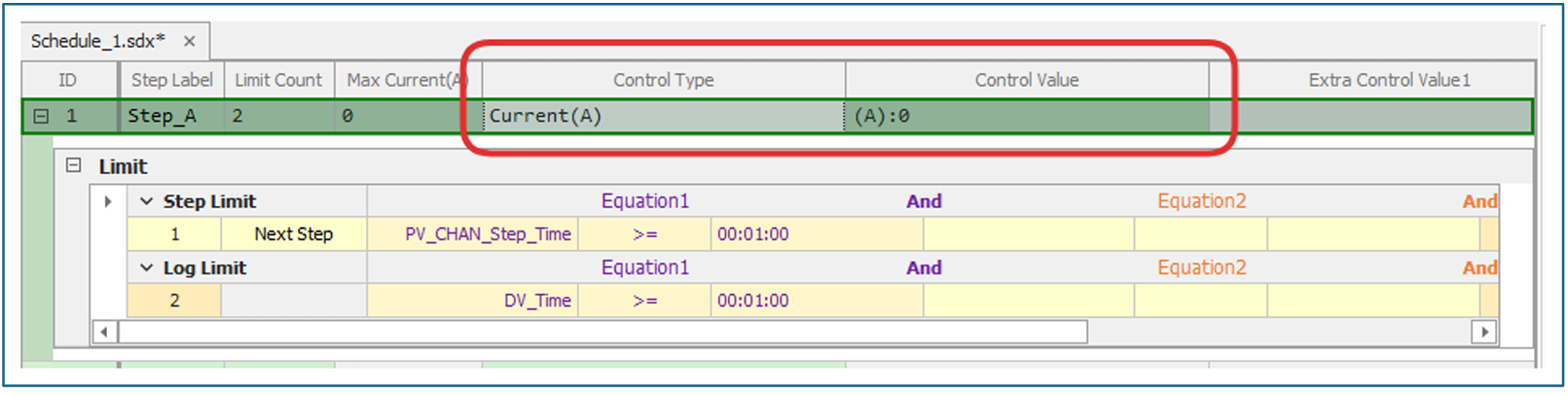
Table 3. The three parts of a step
| Part | Question | Example in Figure 2 |
|---|---|---|
| 控制 | What does the channel do? | Current (A) at 0 A |
| Step limit | When does the step end? | Step time ≥ 1 min → next step |
| Log limit | When is data recorded? | Every 1 min |
3What to Look For in a Battery Cycler
Many battery testers show similar headline specifications, but the quality of the results depends on how the hardware is designed and built. The parameters below should be evaluated together, never individually; each one is described in general terms, followed by what Arbin offers [2].
3.1分辨率
Resolution is the smallest change in measurement that the sense and control circuitry can detect, expressed in bits or in absolute units such as µV or µA. It is set by the analog-to-digital and digital-to-analog converters (ADC/DAC): analog signals vary continuously, while digital signals change in discrete steps, so more bits means finer steps [2].
Higher resolution makes subtle changes visible that would otherwise be missed, for example a small rise in resistance as a cell approaches end of life, or a slight dip in coulombic efficiency [2].
24-bit resolution, one part in 16,777,216: a 256-fold improvement over the 16-bit resolution (one part in 65,536) that is the industry standard [2].
3.2测量与控制精确度(Precision)
Precision is the level of noise in the measurement, and therefore its consistency and repeatability. It is expressed in parts per million (ppm): 100 ppm means the reading varies by no more than 0.01%. Resolution, quality of materials and thermal management all contribute [2]. Coulombic efficiency and differential capacity (dQ/dV) are two metrics that need very high precision to give meaningful conclusions.
When comparing datasheets, watch for these warning signs [2]:
- precision is not specified at all;
- precision is derived from averaged values or very slow logging that hides the noise;
- precision is quoted for a coulombic-efficiency calculation instead of the hardware itself.
Precision specified for voltage, current and time for each class of equipment: ±0.01% FSR (100 ppm) on cell testers and below 10 ppm on the HPS. Quartz timing crystals are used for measurement and time stamps [1][2][3].
3.3测量和控制准确度(Accuracy)
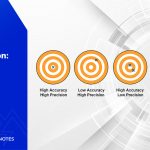
Accuracy is the trueness of the measurement: how close the average reading is to the true value. It is specified by comparison with a known source, such as a high-performance meter. Accuracy largely ignores noise, so an instrument with good accuracy can still produce noisy data if its precision is poor or if it is sensitive to temperature (Figure 3) [2].
Two testers with similar accuracy specifications can therefore give very different data during the same current pulse: one smooth, one noisy. Because many testers have similar accuracy figures, accuracy should always be evaluated together with resolution and precision; on its own, it can hide real performance differences [2].
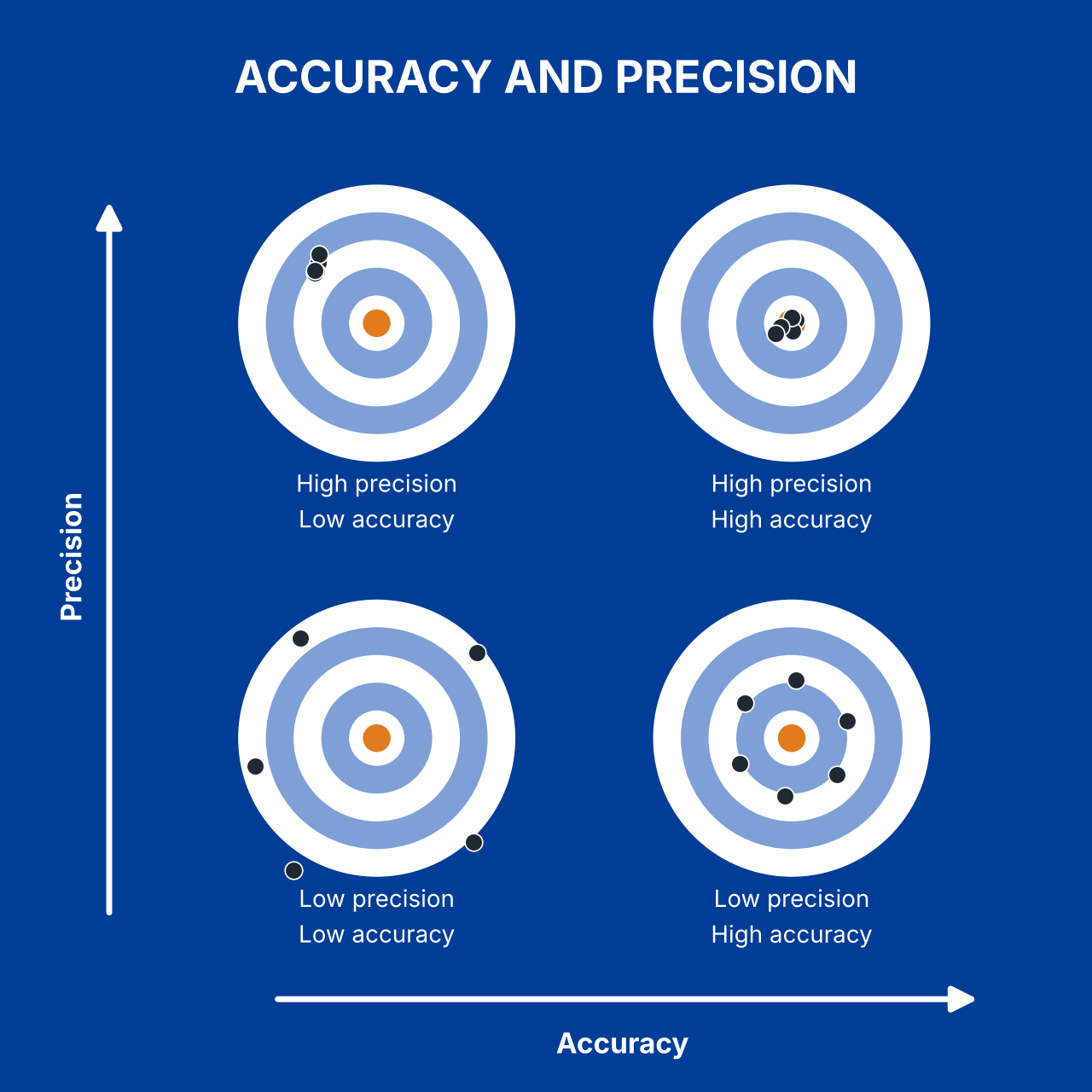
±0.02% FSR accuracy, published as a separate figure from precision [1].
3.4电流量程
Accuracy is expressed as a percentage of the full-scale range (FSR). A small current measured on a large range therefore carries a large relative error, while the same current on a smaller range is measured far more accurately. Each range acts like a higher magnification: moving from a 5 A to a 5 mA range reduces the error on a 3 mA reading from ±1 mA to ±1 µA (Figure 4).
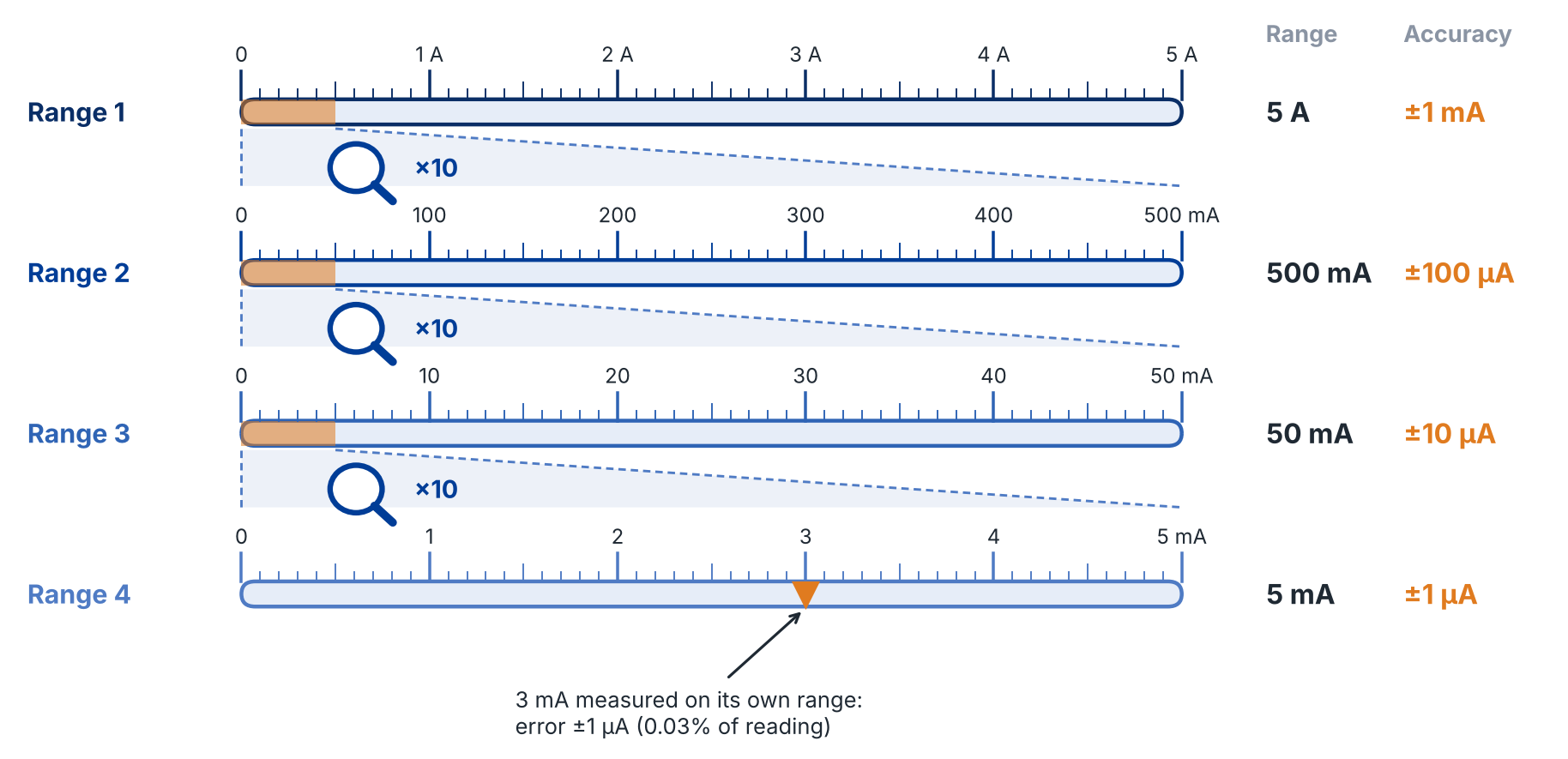
Multiple ranges matter whenever one test spans a wide current window, for example high-current pulses followed by the low-current tail of a CV charge, or self-discharge and coulombic-efficiency measurements. Check how many ranges each channel has, whether switching is automatic, and whether the accuracy specification still applies on the lowest range.
The first to apply multiple current ranges on a single test channel [2]. 2 or 4 auto-switching ranges per channel on cell testers and six on the HPS, with the accuracy specification valid on the lowest range [1].
3.5Temperature Stability
Temperature changes of the test equipment and of the cell always affect the measurement. This cannot be avoided, but it can be minimised. Gradual temperature changes slowly skew results, while sudden changes cause jumps in the data [2]. Check the temperature coefficient of the tester and how sensitive components are protected, and keep the cell itself at a constant temperature in a chamber.
About 0.000185% / °C through patented shunt designs and materials resistant to temperature fluctuation. Some systems also isolate and regulate sensitive components, using techniques developed in a multi-year investigation with Ford Motor Company and Sandia National Laboratories [2].
3.6Timing and Data Logging
Capacity and energy are current integrated over time, so clock accuracy, minimum step time and logging rate directly affect the results. It also matters where capacity is calculated: values computed from the instrument’s own sampling are more accurate than values calculated from logged or post-processed data [2]. Long tests and drive-cycle simulations can produce 100,000 points or more, so a non-proprietary database with backup is needed.
Under 20 ppm accumulated time error and 5 ms minimum step time [1]. Standard logging of 2,000 points per second per system, down to 0.05 ms with high-speed pulse hardware; capacity and energy calculated from microcontroller sampling; results stored in SQL [2].
3.7Robustness, Duty Cycle and Power Rating
Quality of materials and construction determine how long the equipment lasts and how long it holds calibration. Modern batteries must last thousands of cycles, and EV and grid-storage cells tens of thousands, so the tester must run continuously. Many testers are not rated for their full calculated power (maximum voltage × maximum current) at a 100% duty cycle. Low-quality equipment fails more often and needs frequent recalibration, which affects the validity of the data [2].
Rated for full voltage and full current at a 100% duty cycle; corrosion-resistant coatings on all circuitry; thermal management for sensitive components; true bipolar circuitry that removes switching time between charge and discharge and avoids relay wear in drive-cycle profiles [2].
3.8校准
A tester can be no better than the reference used to calibrate it. Equipment that can be calibrated with a simple hand-held meter will not produce results better than that meter. Proper calibration needs a 6.5-digit or better digital multimeter, and some equipment requires 8.5 digits. Currents above the range of most multimeters need precision shunts [2].
4Software and Data
Software should not restrict the user to predefined tests, but give full control over voltage, current, power and load. Useful questions when evaluating cycler software [2]:
- Are capacity and energy calculated at the microcontroller level or from post-processed data?
- Is the number of steps limited?
- Are branching, looping and combined conditions supported?
- Can tests use formulas and meta variables, for example stopping at 80% of discharge capacity?
- Can current be set as a C-rate, and can channels be connected in parallel for higher current?
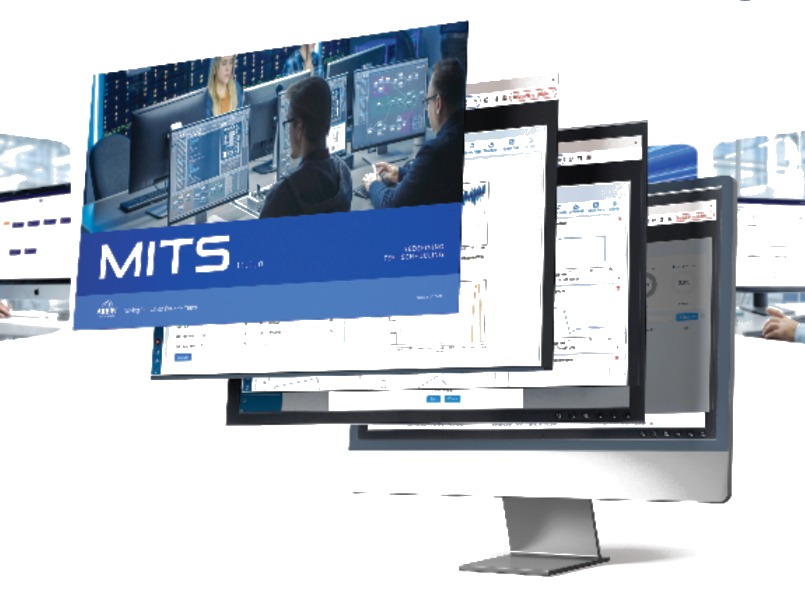
MITS runs on Windows, macOS and Linux from one codebase: 30+ control types, 90+ meta variables plus user-defined variables, 9 nested loops and adaptive logging. Data is stored in SQL and analysed in DataWatcher; ArbinCTI provides a TCP/IP API with Python and C# clients and Lua scripting; CDS and CMCS centralise data and monitoring (Figure 5) [1][2].
5Auxiliaries and Options
Table 4. Typical auxiliary options [1][2]
| 该选项 | Function |
|---|---|
| Auxiliary voltage and temperature | Reference electrodes, cell voltages in a pack; thermocouples, PT100 or thermistors for logging and safety limits |
| EIS接口 | Integrated Gamry EIS to 100 kHz, multiplexed across channels |
| I/O and chamber control | Analog and digital I/O; control and step synchronisation of temperature chambers |
| CAN bus and SMBus | Communication with a battery management system |
| Holders and racks | From coin cells up to 300 A pouch and 200 A cylindrical fixtures |
6Safty: 安全保护
Even small cells can release significant energy in a failure, and thermal runaway is especially dangerous where many cells are tested in a small space and safety equipment may be lacking. Safety is addressed through prevention, with multiple layers of limits and redundant internal monitoring, and through containment, by isolating cells so that a failure cannot propagate [2].
Multiple layers of safety limits; a redundant microcontroller dedicated to safety monitoring; tests stop on loss of communication; multi-zone chambers isolate cells to prevent propagation [2].
7Linear and Regenerative Architectures
The key difference is what happens to the energy taken from the cell during discharge (Figure 6).
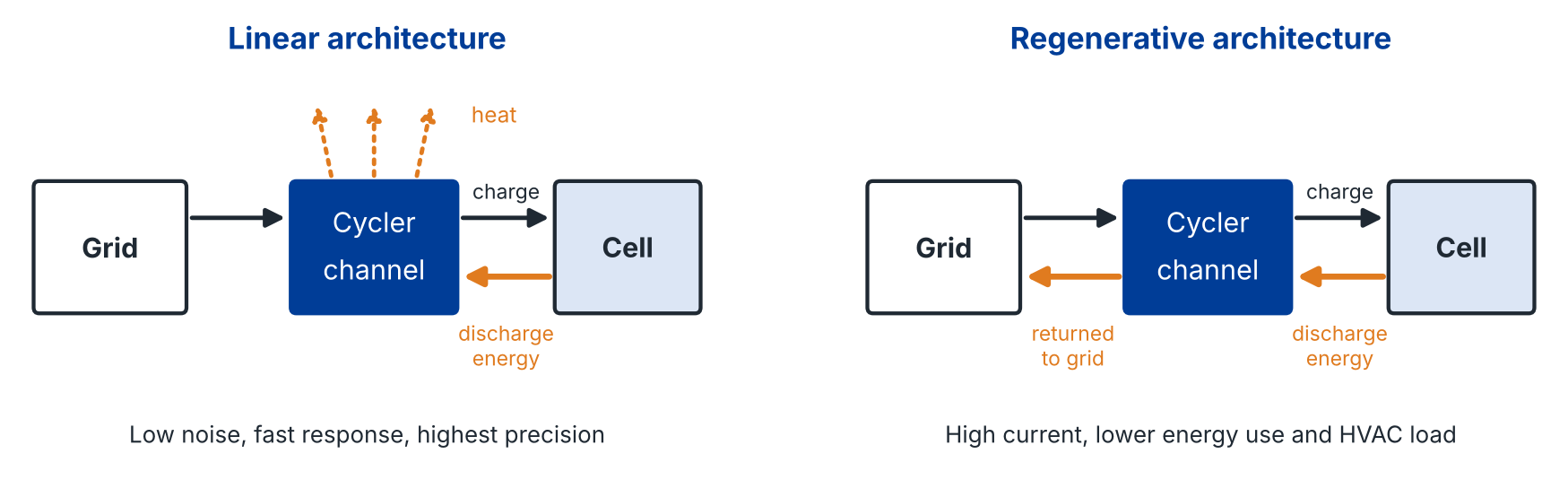
| Linear | Regenerative | |
|---|---|---|
| Best for | Highest precision, low to medium current | High current, energy savings |
| Typical use | Research, characterisation, lifecycle testing | High-capacity cells, fast charge, pulses |
| Arbin systems | LBTS-Cell, LBT-Benchtop, HPS, PDBT | RBT-Cell 电芯测试 |
8Arbin Cell Tester Portfolio
Arbin cell testers cover 10 µA to 1,600 A per channel, from benchtop R&D systems to industrial-scale and temperature-integrated cyclers. All systems share the same measurement core and the MITS software platform (Table 5) [1].
Table 5. Specifications common to Arbin cell testers [1]
| Parameter | 规格 |
|---|---|
| 分辨率 | 24-bit on voltage and current (1 part in 16,777,216) |
| 测量和控制准确度(Accuracy) | ±0.02% FSR, published separately from precision |
| 测量与控制精确度(Precision) | ±0.01% FSR (100 ppm) for voltage, current and time; below 10 ppm on HPS |
| Current ranges | 2 or 4 auto-switching ranges per channel (6 on HPS); accuracy valid on the lowest range |
| Minimum step time | 5 ms |
| Time accuracy | Under 20 ppm accumulated error |
| Temperature coefficient | ~0.000185% / °C |
| Connection | 4-wire Kelvin on every channel |
| 测试软件 | MITS Pro, DataWatcher, ArbinCTI; Windows, macOS and Linux |
| 校准 | ISO/IEC 17025-accredited laboratory; annual system calibration |
8.1Laboratory and Industrial Scale
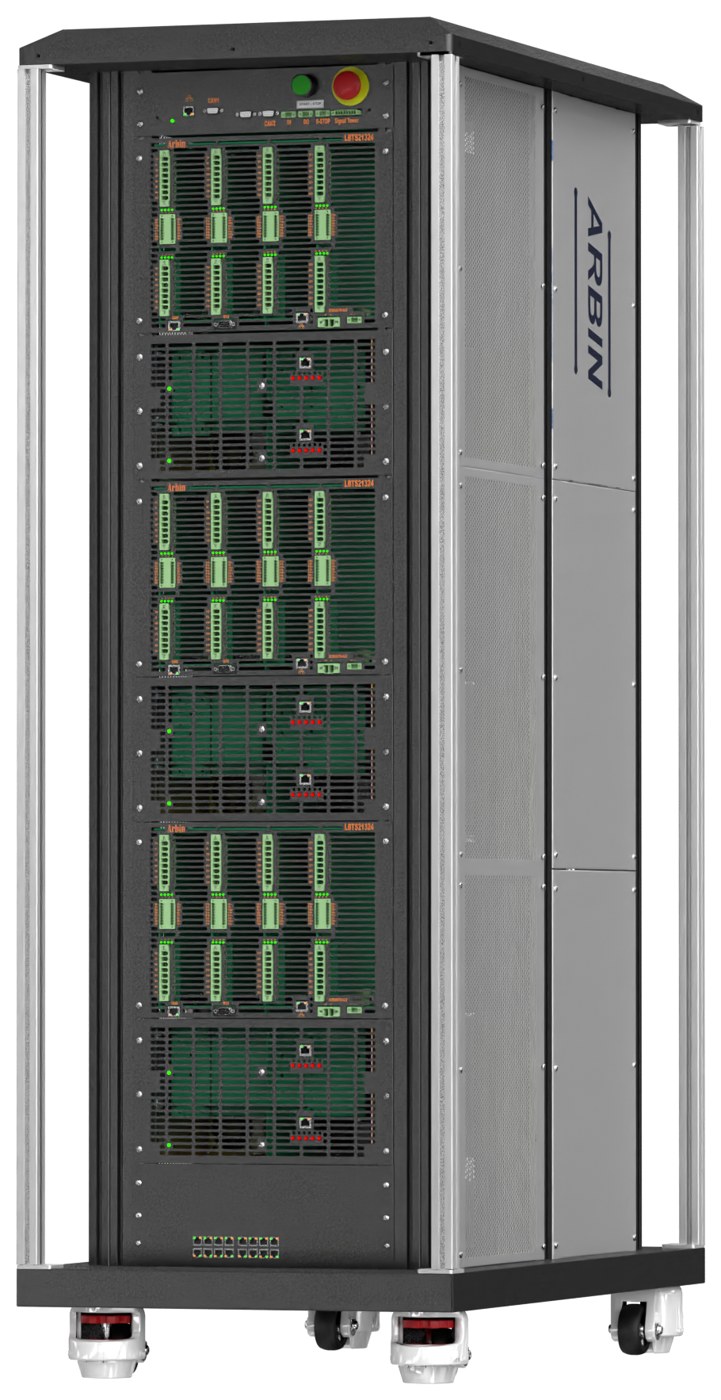
LBTS-Cell 电芯测试
- 10 µA – 500 A per channel
- Voltage: 0–5 V or 0–10 V
- Channels: 4–256
- Linear architecture, auto-switching ranges
- Thermal: MZTC or external chamber
Use: cell R&D, characterisation, lifecycle testing, grading, incoming QC
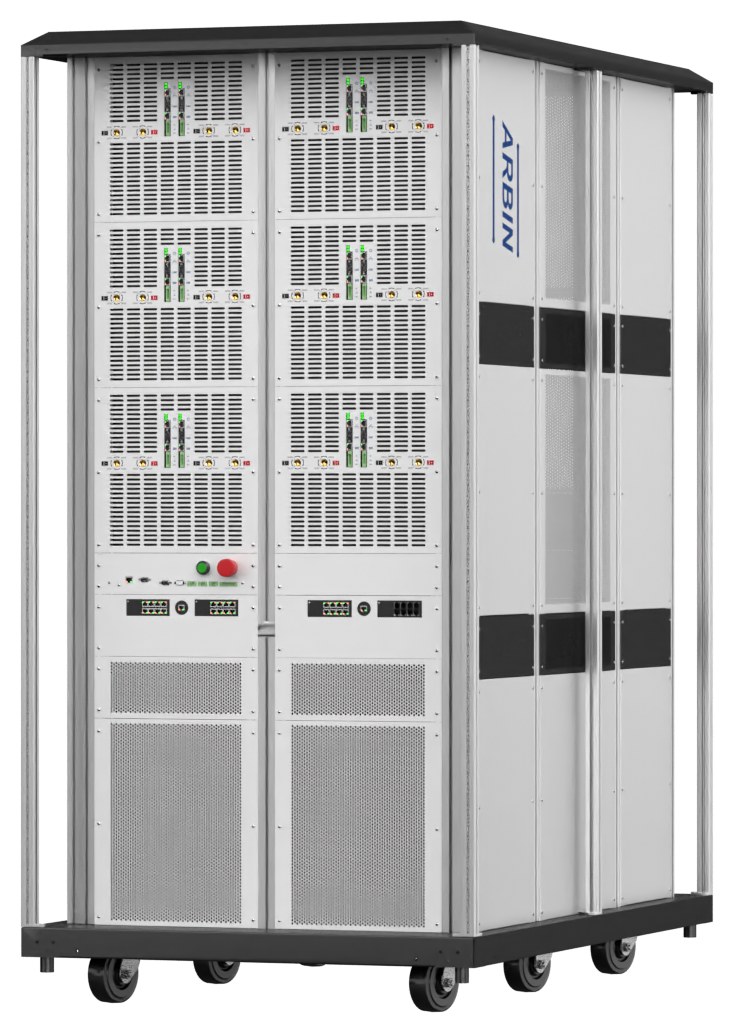
RBT-Cell 电芯测试
- 100 – 400 A per channel, up to 1,600 A in parallel
- Voltage: 0–6 V or 0–20 V
- Channels: 4–64
- Energy returned to the grid, not dissipated as heat
Use: high-capacity cells, fast-charge development, pulse testing, energy-efficient cycling
8.2Benchtop Systems for R&D
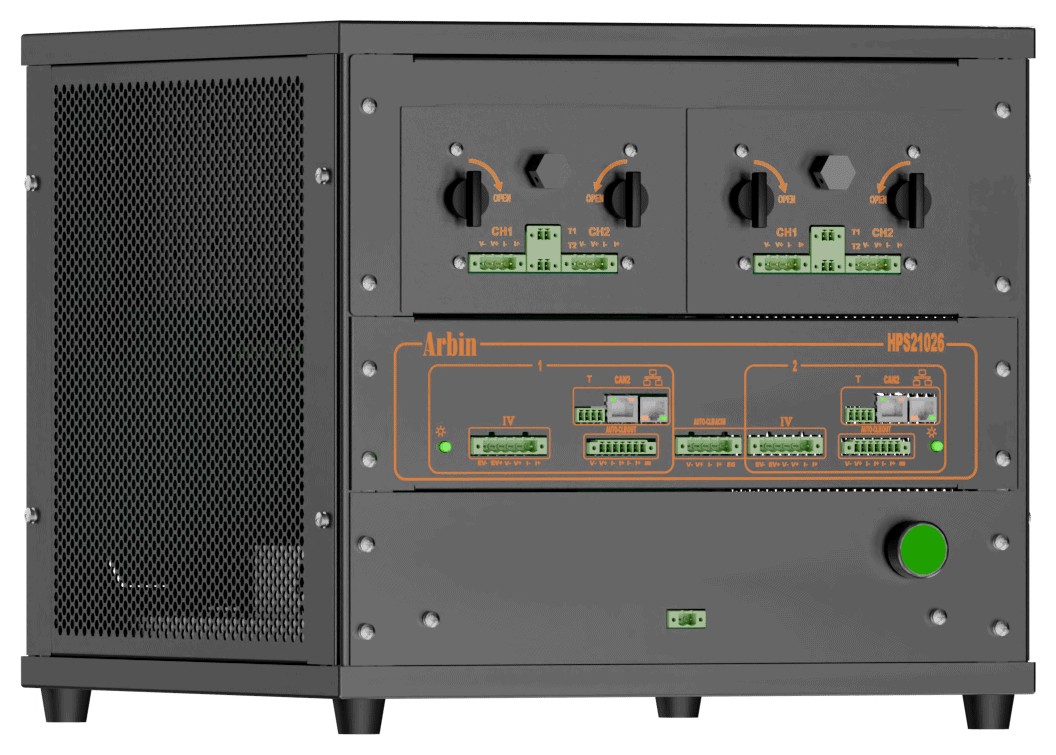
HPS
- 100 µA – 5 A per channel
- Six auto-selectable current ranges
- Voltage: ±6 V bipolar
- Precision below 10 ppm
- 2 channels per unit; optional integrated chamber [3]
Use: coulombic efficiency, materials research, early degradation detection
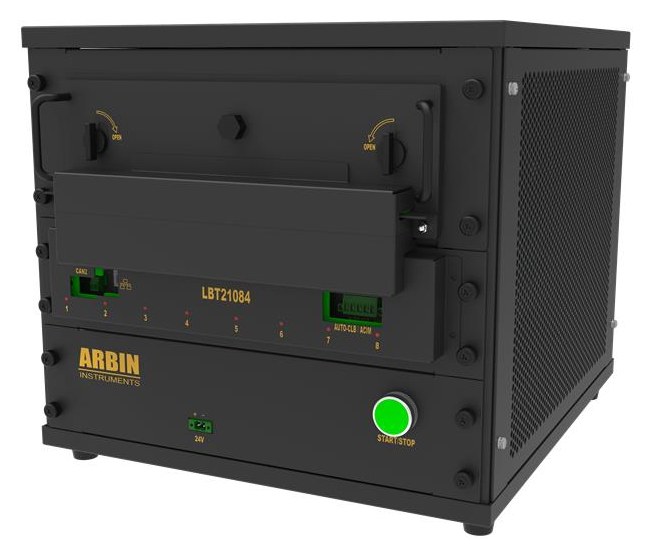
LBT-Benchtop
- 100 µA – 10 A per channel
- Voltage: 0–5 V or 0–10 V
- Channels: 8–16
- Standalone or with integrated chamber
Use: laboratory research, capacity, ageing, QC, impedance, self-discharge
8.3集成温度控制器
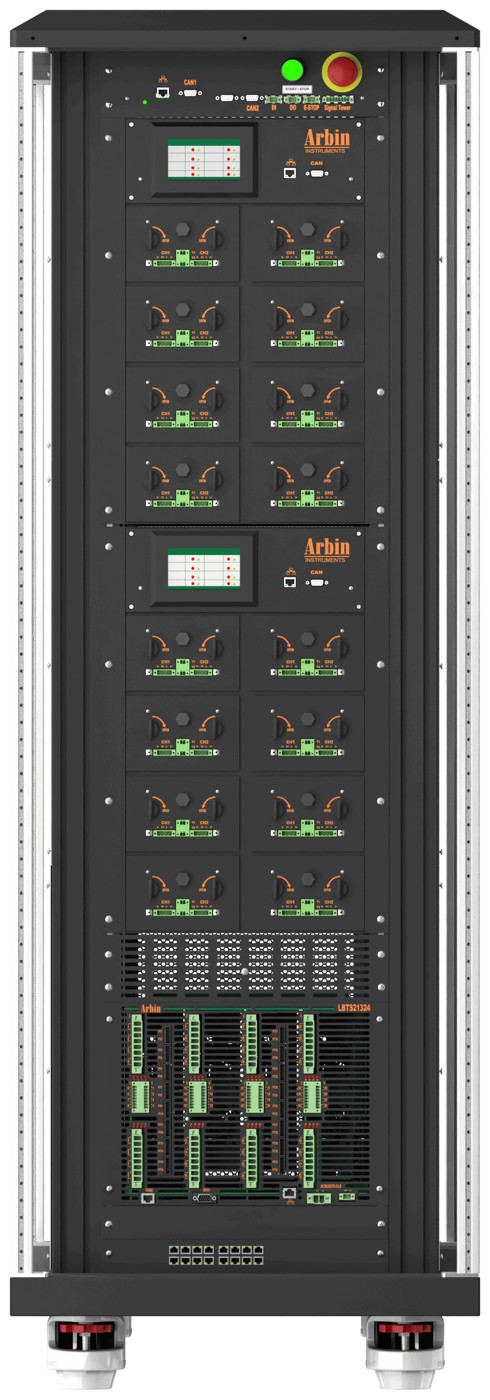
LBTS-MZTC集成温箱系列
- 5, 10 or 20 A per channel
- 32 integrated test channels
- 16 isolated temperature zones
- Independently managed setpoints
Use: multi-temperature cell development, electro-thermal characterisation
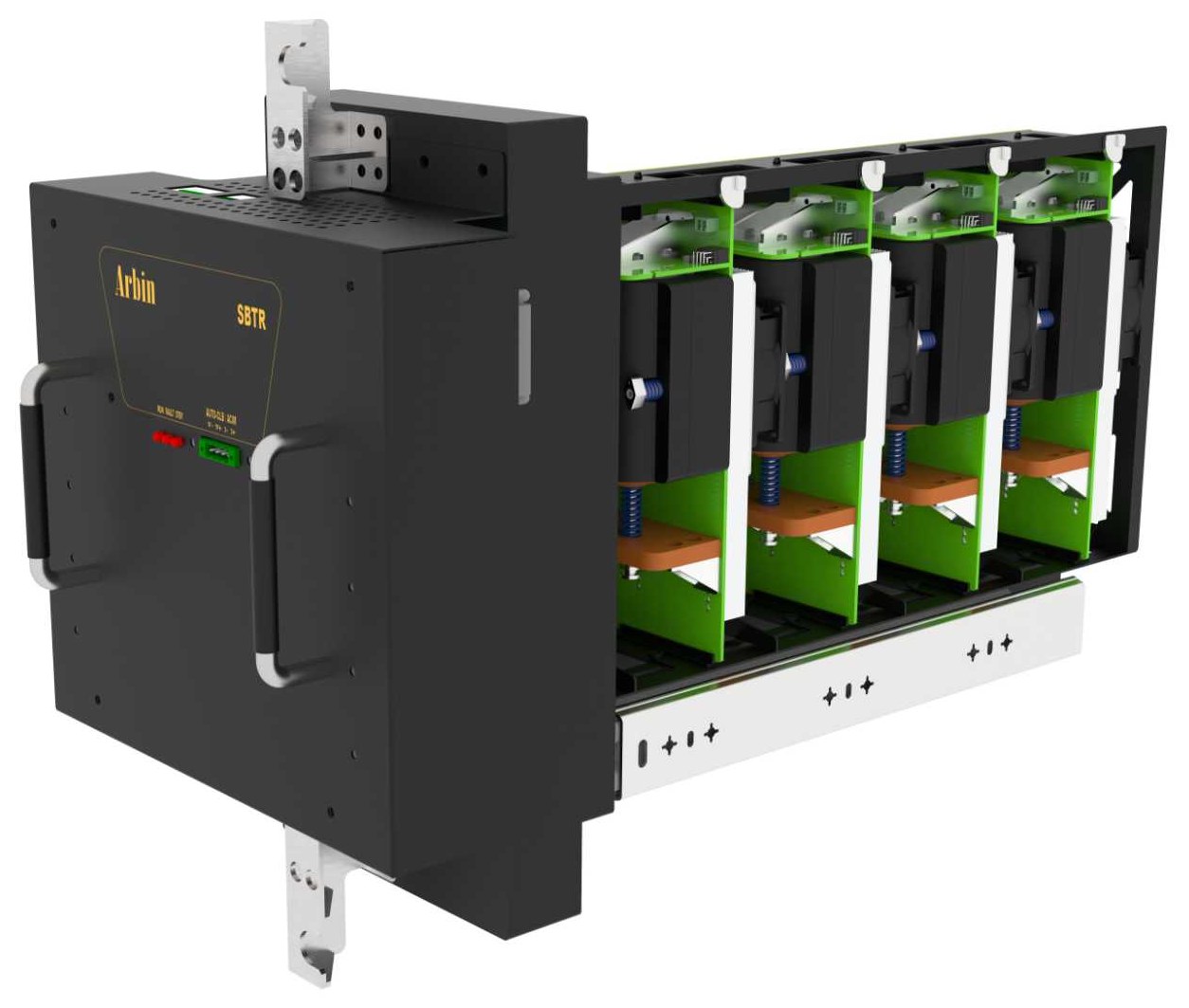
SBTR
- 30 – 200 A per cell
- Channels: 4–96
- Individual TEC per cell, ±2 °C
- Independent closed-loop heating and cooling
Use: fast-charge testing of 18650, 21700 and 46xx cells
9总结
A cycler’s resolution, precision, accuracy, current ranges, stability and calibration decide how far its results can be trusted, and should be evaluated as a set. Arbin cell testers cover 10 µA to 1,600 A per channel on one MITS platform, backed by ISO 9001:2015 quality and ISO/IEC 17025 calibration [1].
Founded in 1991, Arbin supports systems worldwide with a two-year standard warranty [1][2]. For a recommendation for your application, contact [email protected] or +1 979 690 2751.
References
- [1]Arbin Instruments, “Battery Cell Testers & Cyclers,” arbin.com/battery-test-equipment/cell-testers.html
- [2]Arbin Instruments, “How to Evaluate Battery Test Equipment,” rev. 4, PDF
- [3]Arbin Instruments, “HPS Ultra-High Precision Battery Cycler,” arbin.com/battery-research/high-precision-tester.html
- [4]Arbin Instruments, “Hybrid Pulse Power Characterization (HPPC) Testing with Arbin MITS Pro,” Application Note AN-024, 2026. Read the note
Systems in this note
Arbin Cell Testers
10 µA to 1,600 A per channel, 24-bit measurement and control, ±0.01% FSR precision, auto-switching current ranges and optional integrated temperature control — all on the MITS platform.
Not sure which cycler fits your cells?
Send us your cell format, current and voltage window, and the tests you plan to run. An applications engineer will recommend a configuration.
Related application notes
Measurement quality, resistance and cell selection on Arbin systems.
Hybrid Pulse Power Characterization (HPPC) Testing
Pulse resistance and pulse power, measured on an Arbin HPS.
Read note →Battery Cell Grading and Matching
Why measurement precision determines how narrowly cells can be binned.
Read note →DC Internal Resistance measurement with Arbin
How MITS measures DC internal resistance with the pulse method.
Read note →如何评估电池测试设备
The full guide to the specifications covered in section 3.
Open PDF →