简体中文
简体中文  English
  한국어
한국어  Deutsch
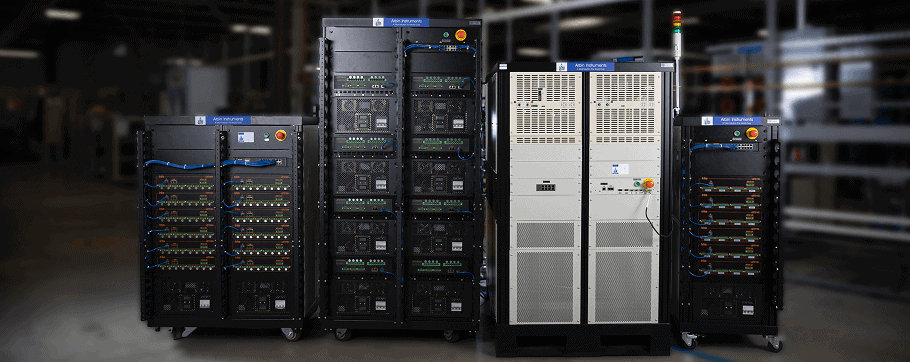
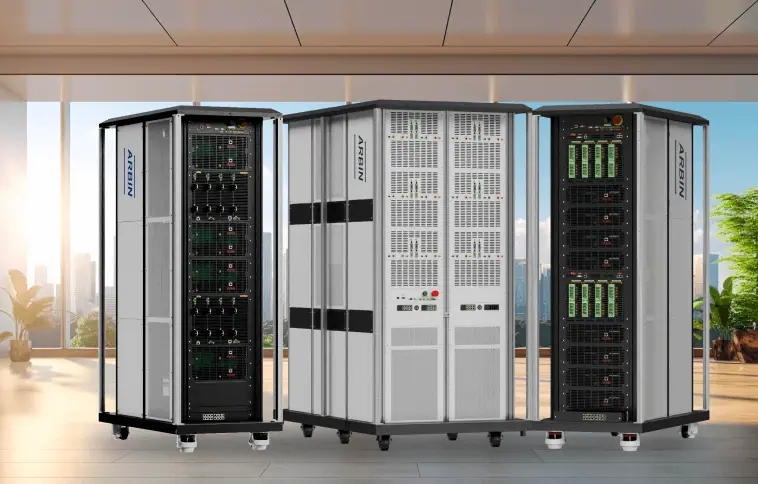




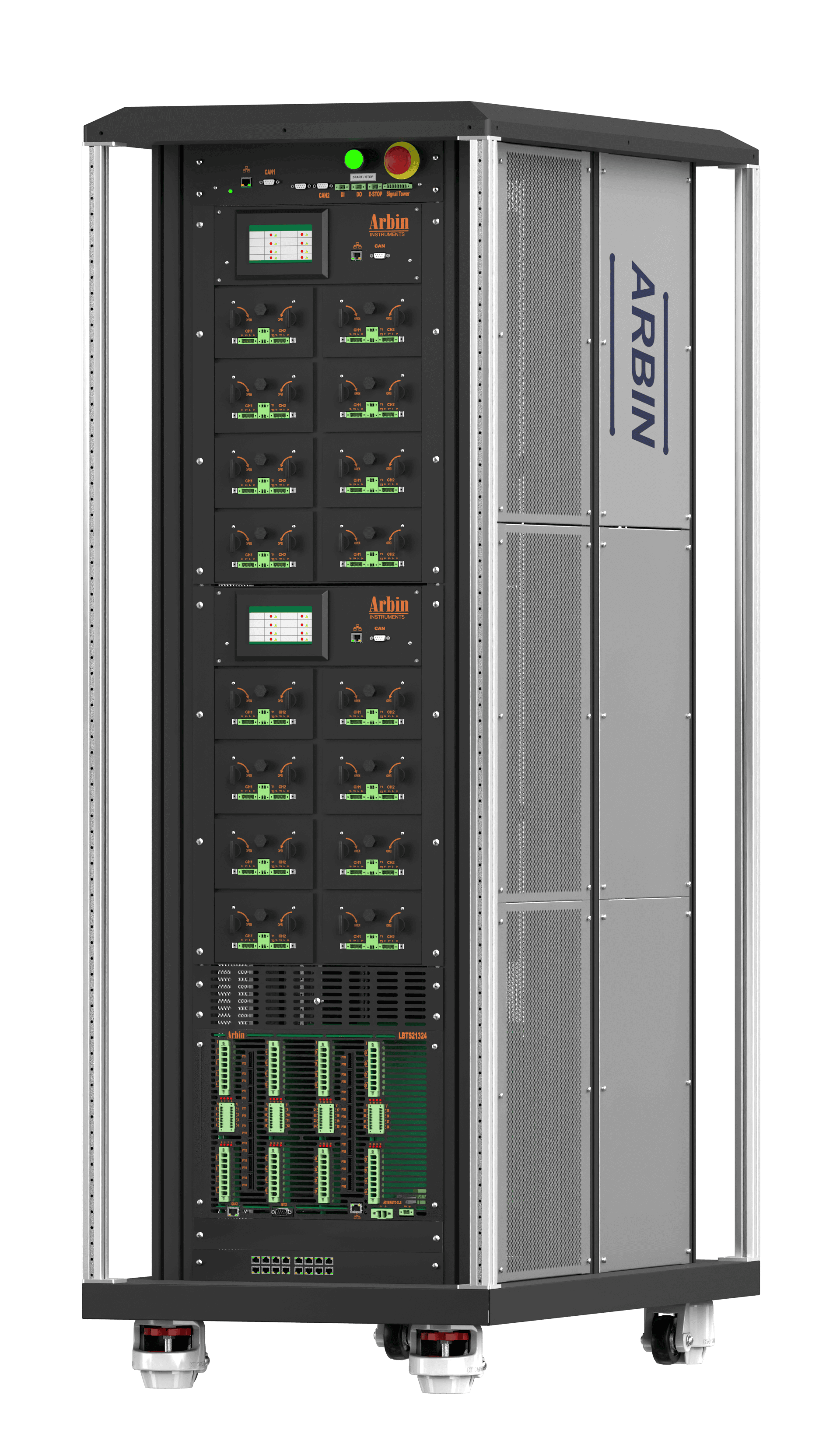
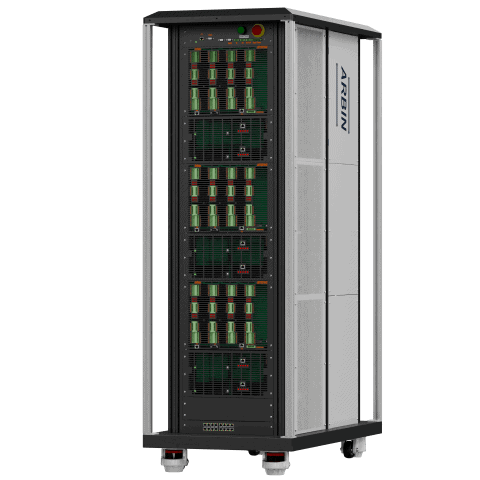
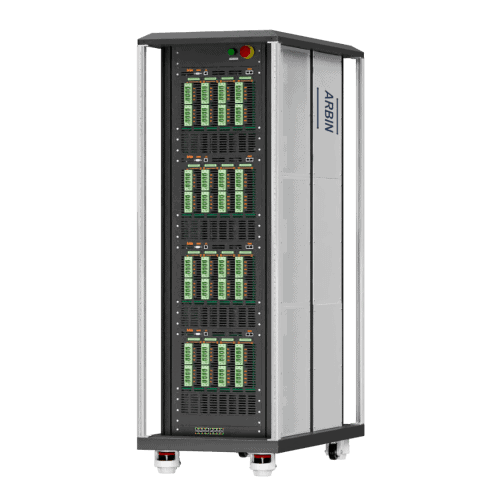
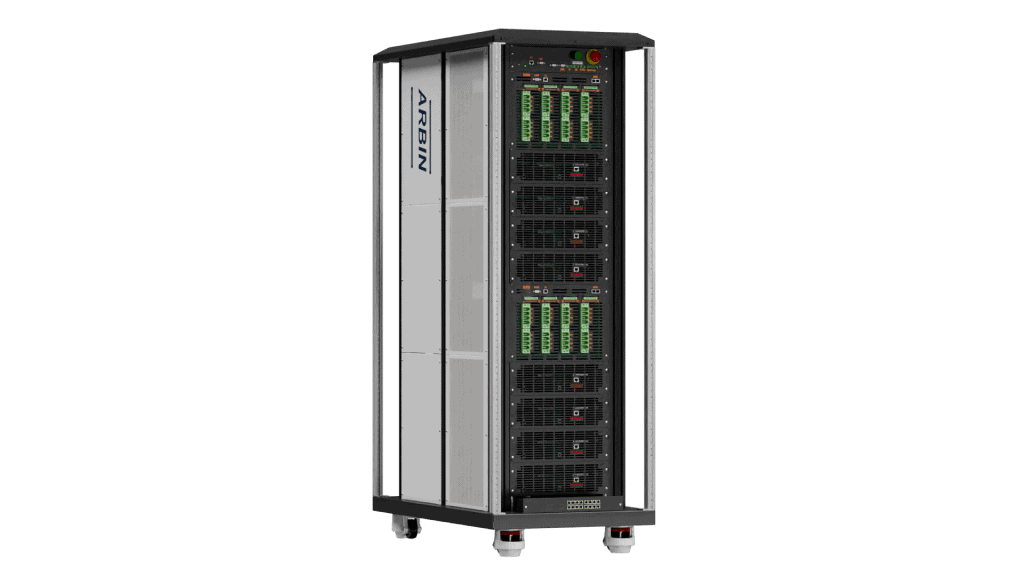
Regenerative Battery Testing System
RBT-Pack Series
High-power, fully digital battery pack testing from 300 V to 1,500 V — built on Gen3 SiC regenerative circuitry that returns up to 92% of discharge energy to your facility, with ±0.02% FSR accuracy and true bipolar switching for seamless charge–discharge transitions.
20 - 1,500V
Voltage range across the series
Up to 1.4 MW
360kW per Chassis, up to 4 Chassis Array
Up to 1,200A
Per chassis, parallel channel operation
±0.02% FSR
Voltage & current accuracy
Accuracy you can audit
Accuracy and precision are published as two separate numbers, never blended into one, so you can verify the spec yourself instead of taking a vendor's word for it.
Independently verified
Designed and manufactured under an ISO 9001:2015-certified quality system, supported by an ISO/IEC 17025-accredited testing and calibration laboratory.
35 years of instrumentation
Founded 1991. Arbin reinvests 30% of profits into R&D, funding the precision architecture provided with every Arbin test station.
Built for any lab
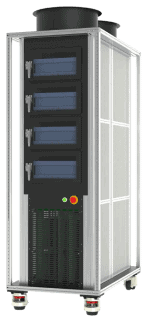
Scalable channel density in a compact, air-cooled footprint, with open Python and C# API for the automation you already run.
Highlights of the RBT-Pack Series
Four hardware decisions that separate the RBT-Pack from a conventional high-power cycler.
Regenerative Energy Recovery
up to 92% returned to the grid
Cut the energy cost of pack cycling
Gen3 SiC power stages return up to 92% of discharge energy to the facility grid, at 94% charge efficiency. Channels share a common DC link, so energy leaving a discharging pack is reused directly by a charging channel before anything is drawn from the mains.
At up to 360 kW per chassis, both the recovered energy and the HVAC load it avoids are measured in tens of kilowatts.
Series and Parallel Scaling
voltage, current, or power
Build the channel around the pack
Channels combine in series to raise voltage, or in parallel to raise current and power, reaching 1,500 V, 3,000 A, and 1.8 MW. One chassis carries up to 6 channels and up to 360 kW, specified in 45 kW increments.
Paralleled channels gain a combined full-scale current range while keeping their lower native ranges for measurement accuracy.
Dual Voltage Ranges
auto-selecting, every channel
Full accuracy on lower-voltage packs
Every channel carries two voltage ranges and up to two current ranges. The voltage range is selected from the maximum voltage in the test object file, and the current range from what the test step actually draws.
A 1,000 V channel tests a 400 V pack on its 500 V range, so the rated specification follows the DUT.
Built-In Safety Features
safety monitoring for every channel
Engineered for high-voltage packs
Precharge circuitry matches the DC bus to pack voltage under digital control before the main contactor closes, preventing inrush. Anti-islanding disconnects the regenerative stage within roughly 40 ms if line voltage or frequency leaves its limits.
A channel-level interlock responds in about 20 µs, backed by integrated breakers, fuses, and isolation contactor relays.
Applications and Test Methods
From incoming QC through end-of-line, the RBT-Pack Series is purpose-built for full-pack test programs — not a module tester scaled up.

Pack and module life cycle testing
Cycle full packs and modules at up to 200 A and 100 kW per channel. Two auto-selecting voltage ranges keep the rated specification matched to the pack under test across long-duration programs.

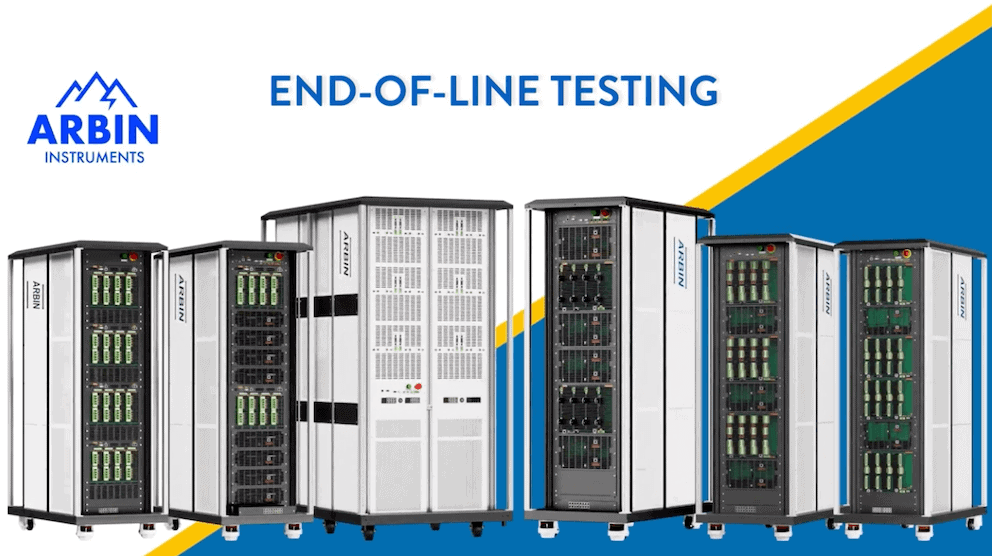
End-of-line and incoming QC
Capacity, resistance, and voltage verification on incoming or finished packs. Precharge circuitry matches the DC bus to pack voltage before the contactor closes, and every channel enforces its own safety limits.

Drive cycles and BMS validation
Run FUDS, HPPC, DST, and WLTP profiles with set points down to 10 ms, uploaded or streamed over CAN. Rint-model battery simulation supports closed-loop HIL work and BMS validation.

Automated and adaptive testing
Drive the tester from your own software. ArbinCTI over TCP/IP plus Lua scripting support BMS emulation, digital twins, and adaptive fast-charge strategies.
Supported Test Methods
DRIVE-CYCLE & PROFILE SIMULATION
- FUDS (Federal Urban Driving Schedule)
- HPPC (Hybrid Pulse Power Characterization)
- DST (Dynamic Stress Test)
- WLTP and custom drive-cycle files
- Time vs. Current / Power / Load profiles
Cycling and lifetime
- Battery life cycle testing
- Battery Simulation (Rint model-based)
- Closed-loop HIL testing of external devices
- Dynamic fast-charging optimization
Production and Validation
- Incoming quality control
- Battery Pack End-of-Line (EOL)
- BMS validation over CAN 2.0 / CAN-FD
- Battery Pack R&D
Voltage, Current, and Power Configurations
One measurement specification, one software platform, across the full current span Arbin builds for module and pack testing — up to 1,200 A high-current cycling.
Comparing systems?
Four hardware parameters decide whether test data is suitable to draw a conclusion from. Here is where the RBT-Pack lands on each, and the question worth putting to every vendor on your shortlist.
Software and Safety
The two questions a lab asks after the specifications check out: can my team actually drive it, and what happens when a cell misbehaves.
MITS Software
MITS scales from basic charge–discharge cycling to complex protocols with nested conditions. Most tests can be built through the menu-driven interface, while Lua scripting and ArbinCTI are available for advanced automation and external control
- ✓ 30+ programmable control types, 90+ meta variables, and up to 9 nested loops
- ✓Up to 127 reusable sub-schedules, so a validated procedure gets called rather than rebuilt
- ✓Adaptive logging raises acquisition rate during transients and state transitions
- ✓DataWatcher queries the SQL database directly — filter by channel, barcode, or cycle count, overlay up to 9 plots
- ✓PostgreSQL, Microsoft SQL Server, and Apache Kafka streaming
- ✓ArbinCTI TCP/IP API plus Lua scripting for BMS emulation and adaptive control

Safety Architecture
Protection is distributed across channel hardware, an independent controller, and step-level software limits. Critical safeguards remain active independently of the test sequence.
-
- ✓Hardware E-Stop with all-pole disconnection, plus a 2-pin dry-contact trip circuit
- ✓Channel-level safety interlock (~20us) independently disables a faulted channel
- ✓Built-in circuit breakers, protective fuses, and software current/power clamps on every channel.
- ✓Test Object profiles auto-set thresholds from the cell spec and block a test on reverse polarity
- ✓Anti-islanding protection disconnects the regenerative stage within ~40 ms of abnormal grid conditions.
- ✓Behavioral checks flag abnormal rates, voltage excursions, and capacity anomalies
- ✓Tri-color light tower, audible alarms, thermoswitches, variable-speed ventilation


丰富的辅助设备和可选配件--有效改善用户体验

Thermal and Environmental
- Seamlessly communicate and control third-party temperature chambers in real-time
- Synchronized multi-channel test logic; temperature-driven step control and automated standby modes
- Chamber temperature and humidity logged alongside electrical measurements for complete test traceability
CAN & SMBus / BMS Integration
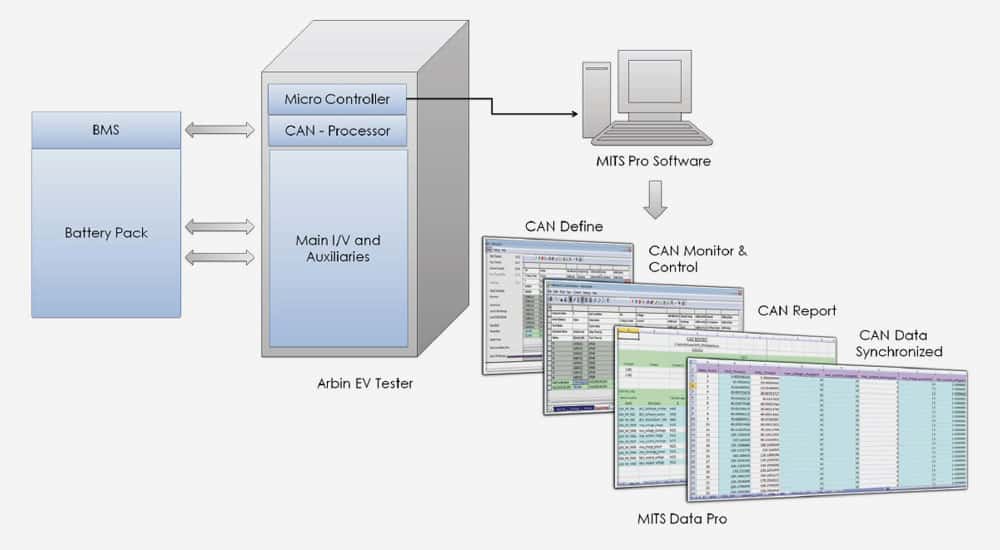
- CAN 2.0 / CAN-FD support — communicate with battery management systems and third-party controllers over standard or flexible-data-rate CAN networks
- Custom CAN message transmission — send scheduled or triggered frames to simulate BMS commands or vehicle network traffic
- Real-time BMS signal logging — capture and timestamp CAN/BMS signals alongside voltage, current, and temperature in a single synchronized dataset
- SMBus 2.0 / I2C support — read and write smart battery registers directly from the test schedule
选配辅助功能模块
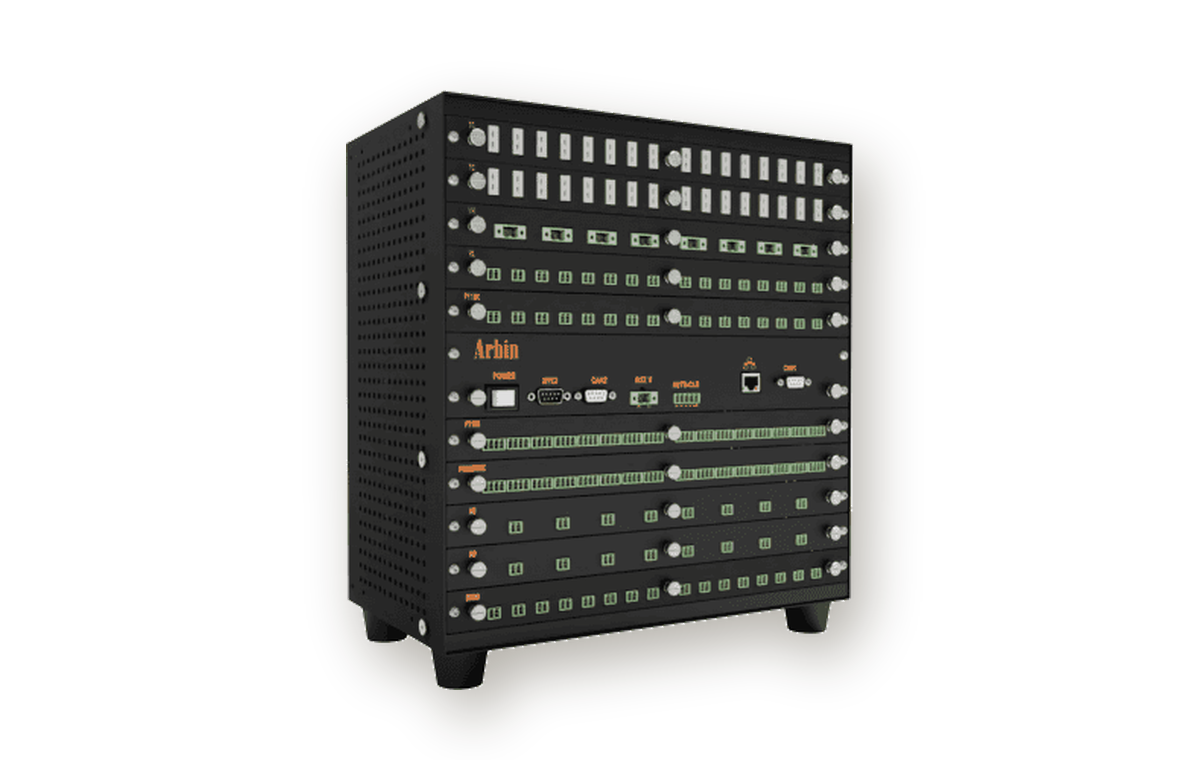
- Temperature sensing — real-time thermal monitoring for chambers and cell surfaces
- Auxiliary voltage inputs — monitor individual cell voltages or reference electrodes within packs
- Analog & Digital I/O — control external devices like pumps, fans, valves, and safety interlocks
- Uninterruptible Power Supply (UPS) — detect power loss and safely pause or resume tests

CTI & External Controls
- Custom Test Instructions (CTI) — script test logic beyond standard commands, written in C#/.NET
- Application Programming Interface (API) — connect MITS Pro to LIMS, MES, or in-house systems for automated data exchange
- External device control — drive third-party power supplies, DAQs, or lab instruments directly from the test schedule
- Custom hardware drivers — integrate vendor-specific communication protocols not natively supported out of the box
Tell us what you're testing
Share your cell format, voltage and current requirements, channel count, and test objectives. An Arbin sales engineer will recommend the appropriate system configuration and supporting options.